The Demographic That Changed the Menu
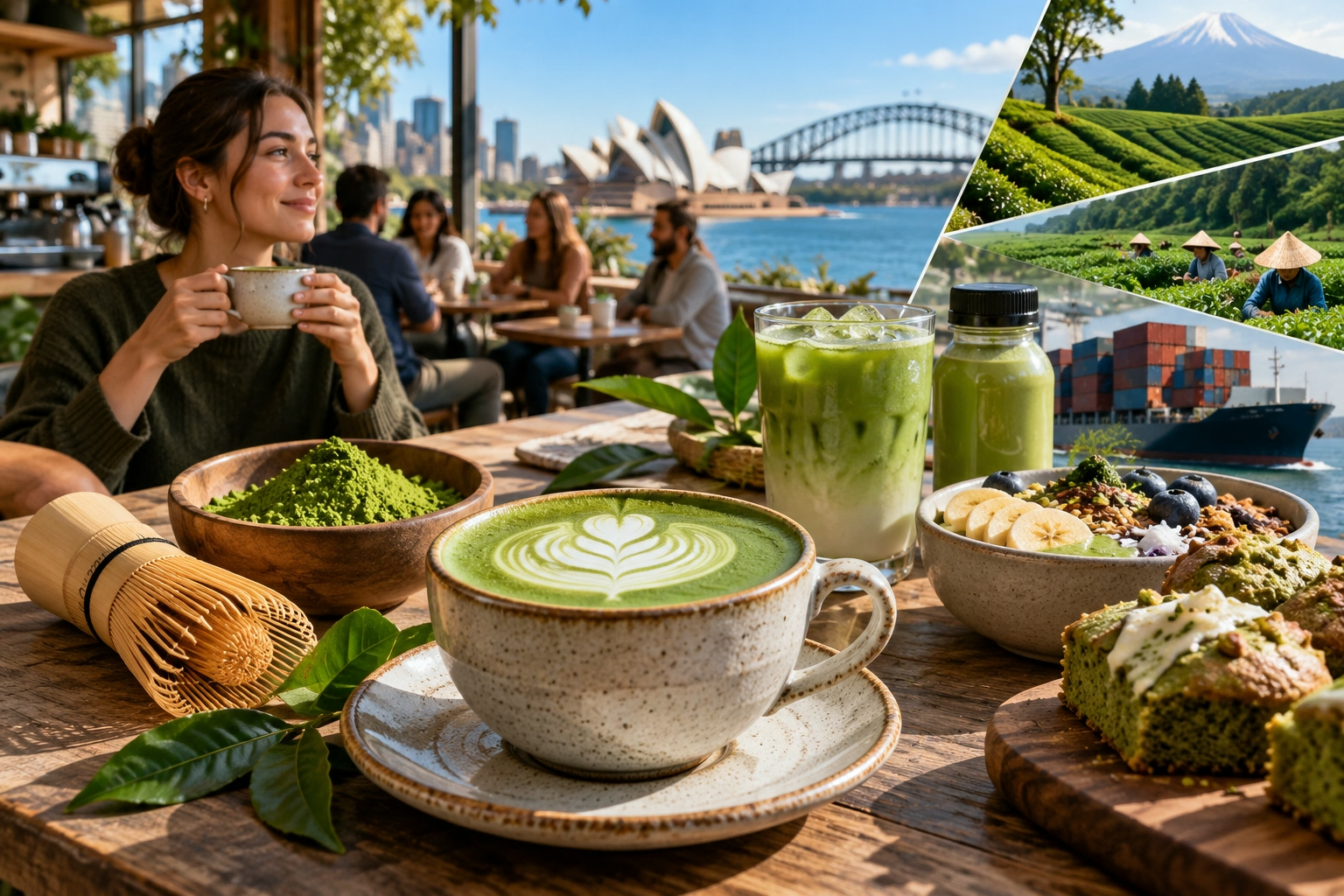
The matcha boom in Australia is not evenly distributed across the population. It is concentrated among younger consumers, and that concentration explains why the category has moved so quickly from niche to mainstream. A 2025 survey by dairy alternative brand Milklab found that 40% of Australians aged 18 to 24 had ordered a matcha drink in the previous six months. More revealing: one in three Gen Z respondents named matcha as their favourite café beverage, compared to just 15% who preferred a flat white. The generational preference is not a minor variation in taste—it is a structural handover in café culture.
The L-Theanine Proposition
The appeal is partly physiological. Matcha contains L-theanine, an amino acid found in shade-grown green tea that moderates caffeine absorption and promotes calm, focused alertness without the anxiety spike that can follow a double espresso. For a generation navigating chronic overstimulation, that distinction matters. The Guardian’s reporting captures the sentiment directly: one matcha drinker described the switch as replacing a daily oat latte because she wanted a “mild start” to her mornings. Another noted that a standard serve of matcha contains roughly 70mg of caffeine compared to the 80–100mg found in coffee, and that the difference in how she feels is the point. This is not an anti-coffee stance; it is a recalibration of what a caffeinated drink is supposed to do.
Social Media as the Distribution Engine
The generational shift has been accelerated by social platforms. TikTok has over 5 million videos under the #matcha hashtag, and the visual nature of the drink—layered iced lattes, strawberry matcha, pistachio matcha—makes it inherently shareable. Pureprofile’s data shows that TikTok views of pistachio matcha lattes more than doubled in eight months, while Asian-inspired food and drink now accounts for 28% of online share. The drink is not just consumed; it is documented, ranked, and reproduced. Social media has effectively become the distribution channel for matcha culture, turning café menus into content calendars.
Mainstream Following the Young
The younger demographic has also pulled mainstream brands into the category. McDonald’s Australia launched a nationwide matcha drink range in October 2025 after sustained consumer demand, and The Coffee Club introduced four matcha-based drinks across its national network in November 2024. When mainstream chains follow specialty cafés, the category stops being a trend and becomes an expectation. For under-35 consumers, matcha is not a discovery—it is a default. That default is now shaping what cafés stock, what bakeries bake, and what brands launch. The green shift is generational, and the generation is not waiting for permission.