The commercial viability of gender-fluid fashion is often discussed in theoretical terms: shifting consumer attitudes, evolving identity categories, the slow dismantling of binary retail structures. Five by Flynn offers a more grounded data point. The Sydney label, which operates a flagship store in Paddington and has collaborated with Red Bull, Porsche, and Puma, has built a following not by leading with a gender-neutral message, but by solving a practical problem.
The Wardrobing Proposition
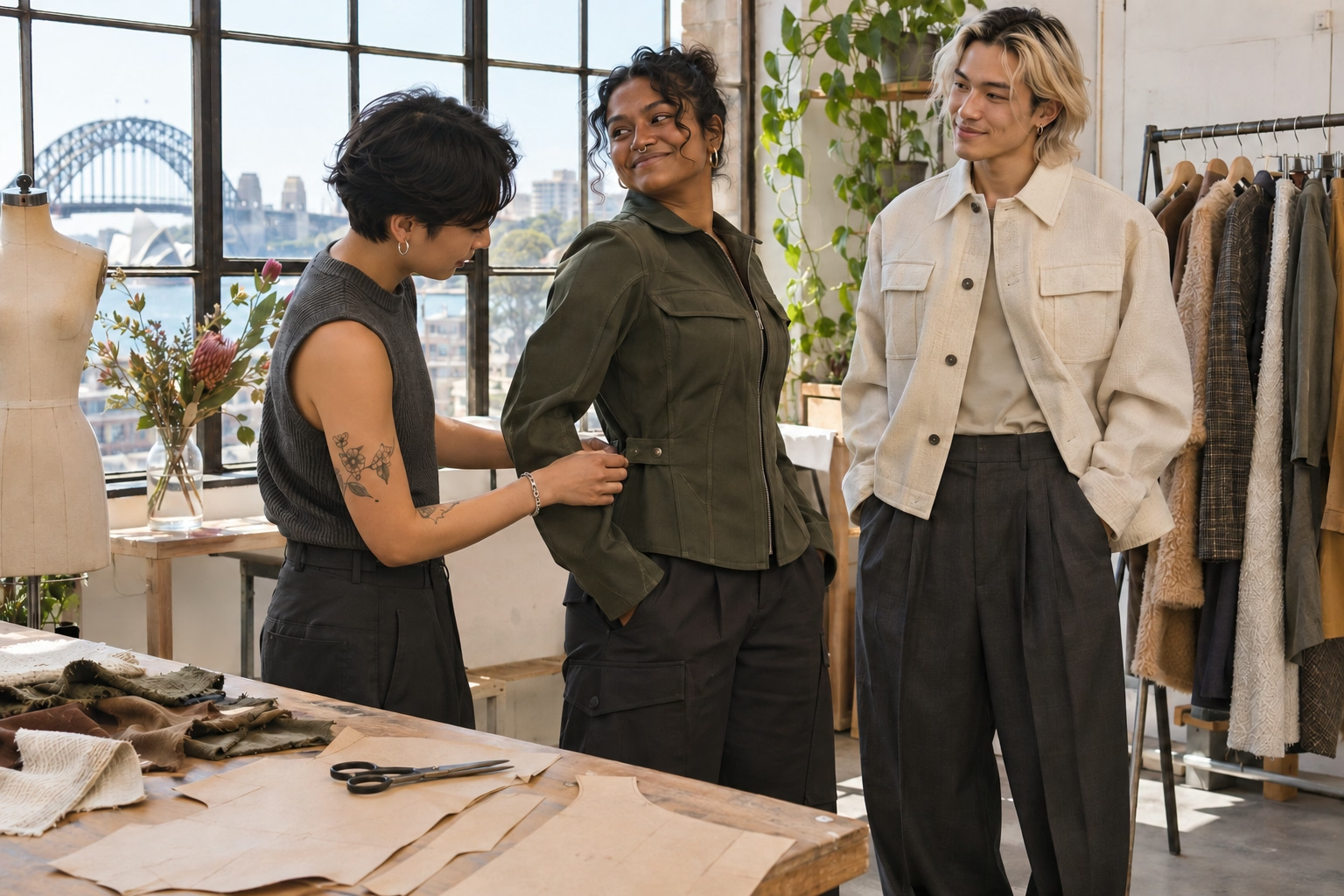
Five by Flynn’s collection is built around the concept of rotation—garments designed to work with one another across a tonal palette of navy, brown, black, soft blue, green, and occasional red accents. The pieces are unisex in the sense that they are not cut to gendered fit models, but the brand’s appeal rests more on versatility than on identity politics. A two-in-one top that can be worn on or off the shoulder. Wide-leg trousers with an adjustable waistband. A layered racer tank with a built-in contrast layer.
This approach reflects a broader consumer behaviour that has been visible in Australian fashion for several seasons: shoppers are buying fewer pieces and expecting each piece to do more work. The National Designer Award finalists interviewed by Ragtrader in early 2026 repeatedly emphasised longevity, versatility, and emotional durability as the values driving purchasing decisions. Five by Flynn’s rotation-based merchandising strategy directly addresses this demand. The clothing is presented not as a collection of individual statement pieces but as a system—a wardrobe that can be combined in multiple configurations without requiring the wearer to buy an entirely new set of garments each season.
Unisex Without the Label
What distinguishes Five by Flynn from some of its peers is the absence of explicit gender-neutral branding. The label does not market itself primarily as a gender-fluid brand. It markets itself as a contemporary Australian ready-to-wear label whose pieces happen to be unisex. This distinction matters commercially. It allows the brand to reach consumers who may be attracted to the aesthetic or the wardrobing logic without requiring them to self-identify with a particular cultural or political position.
The strategy echoes a pattern observed in the Australian market more broadly. The 2026 consumer research on modular gender-neutral apparel found that the purchasing drivers for these garments are psychological and experiential rather than demographic. Consumers buy gender-neutral clothing because it offers uniqueness, flexibility, and a sense of personal authorship over their appearance. A brand that delivers those qualities—whether or not it uses the language of gender fluidity—can capture the same consumer segment.
The Retail Footprint
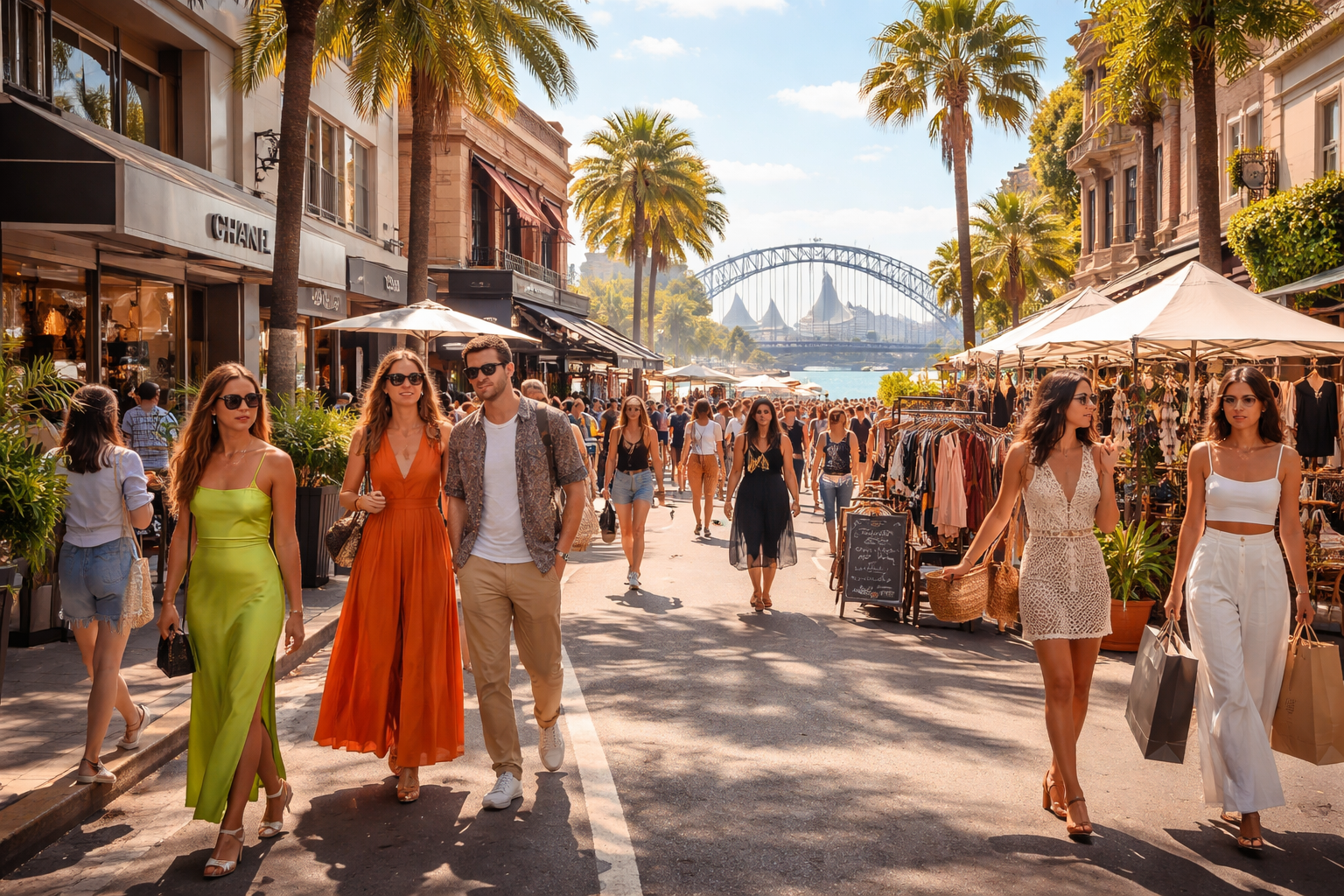
Five by Flynn’s Paddington flagship places it within one of Sydney’s more resilient fashion precincts. Analysis by The Retail Score found that fashion precincts in Paddington, Armadale, and Fortitude Valley significantly outperformed surrounding retail catchments in the first half of 2026, with Paddington same-store sales up 14 per cent from January to July. This performance suggests that consumers are still willing to shop in physical stores when the experience is compelling—when the environment offers a curated selection, a distinctive atmosphere, and a sense of connection to a local fashion community.
For a unisex label, a physical store offers a specific advantage: it allows customers to try garments without the psychological friction of navigating gendered floor layouts. A shopper does not need to decide whether to enter the “men’s” or “women’s” section. The entire store is the relevant section. This may seem like a minor detail, but in the context of retail design, it represents a meaningful departure from the organisational logic that has governed clothing stores for decades.
The Limits of the Model
Five by Flynn’s success does not mean that gender-fluid fashion has solved its commercial challenges. The brand operates in the contemporary streetwear segment, where unisex sizing is relatively common and where the aesthetic codes are already somewhat fluid. Translating the same approach to formalwear, tailoring, or occasion dressing—categories where fit and construction are more tightly bound to gendered pattern-making traditions—would require a different level of technical investment.
What Five by Flynn demonstrates is that there is a viable commercial path for gender-fluid design when it is framed around utility and versatility rather than identity alone. The brand’s customers are not necessarily buying a political statement. They are buying a wardrobe that works harder. In a retail environment defined by cautious spending and high expectations, that may be the most persuasive argument of all.