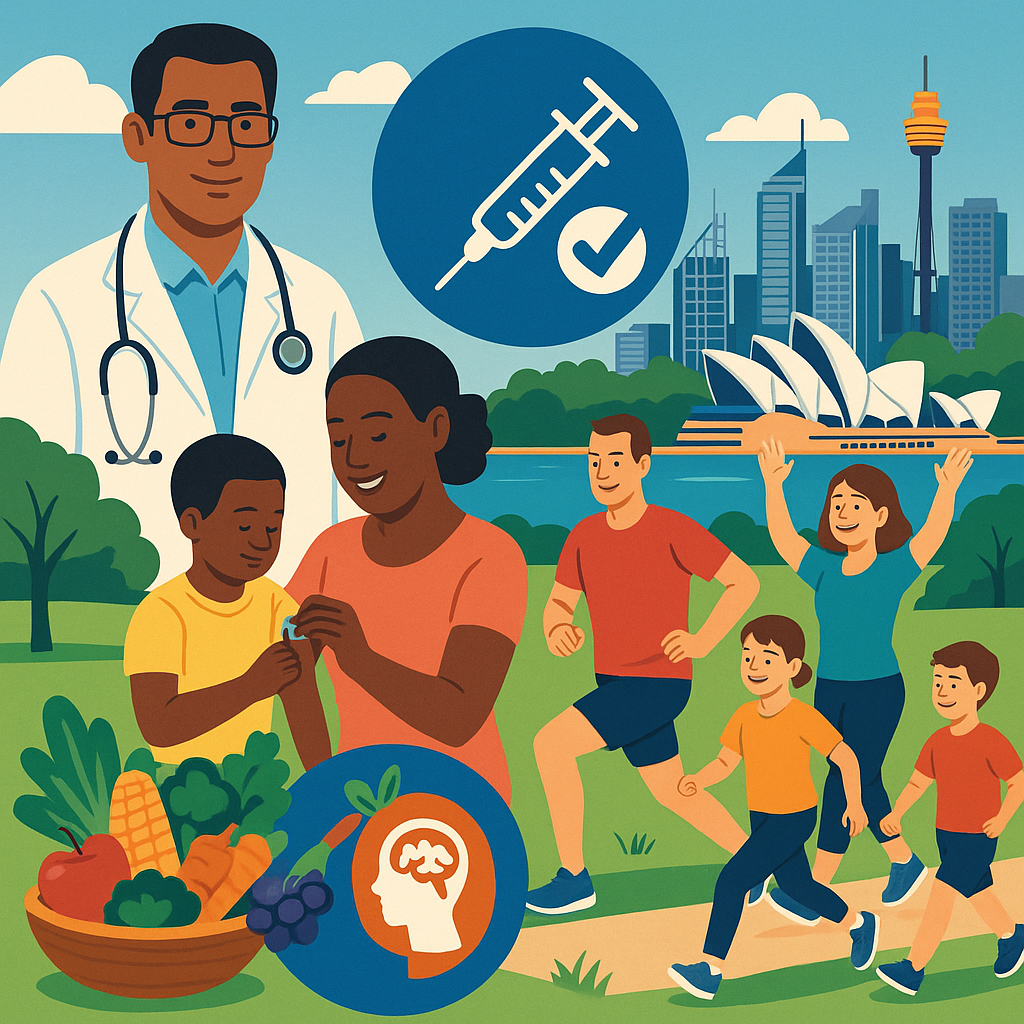
Australia’s approach to public health reflects a broad understanding of what causes disease and what keeps people well. Rather than focusing solely on treating illness, policy aims to reduce risk factors and strengthen protective ones across the population. This involves not only healthcare professionals but also schools, media, community organisations, and individuals themselves. Awareness-raising is a central tool, designed to help people understand their risks and choose behaviours that lower the likelihood of illness.
Vaccination campaigns illustrate how awareness and policy interact. The government provides vaccines at no cost for many conditions, but uptake depends heavily on public trust and understanding. To support this, information materials explain how vaccines work, how they are developed, and why high coverage is essential to protect vulnerable people. Community outreach targets groups that may have lower access or higher levels of scepticism, including newly arrived migrants or communities with limited health literacy. By tailoring messages to different audiences, health authorities aim to prevent outbreaks of diseases that are otherwise controllable.
Prevention efforts extend into areas such as nutrition, physical activity, and mental health. Australia faces rising rates of overweight and obesity, which contribute to diabetes, heart disease, and joint problems. Public health campaigns encourage people to cook at home, choose fresh produce, read food labels, and limit fast food. National guidelines provide clear recommendations for daily physical activity across age groups. Governments work with local councils to improve access to parks, walking paths, and sports facilities, making healthy options more appealing and convenient.
Mental health has also become a stronger focus within public health policy. Stress, anxiety, and depression can increase the risk of physical illness and shorten life expectancy. Awareness campaigns aim to reduce stigma, promote early help-seeking, and inform people about available support services. Schools, universities, and workplaces receive resources to support mental wellbeing, teach resilience skills, and respond appropriately when someone is struggling. This holistic view recognises that preventing disease includes protecting emotional and social wellbeing, not just avoiding infections or physical conditions.
Partnerships are a defining feature of Australian prevention policy. Governments collaborate with non-profit organisations, professional associations, and community groups to design and deliver health promotion programs. For example, cancer councils lead education on screening and early detection, while heart and diabetes foundations develop tools to help people assess their risk and adopt healthier lifestyles. These partnerships extend the reach of public messaging and tap into specialised expertise and community trust.
Communication methods continue to evolve as technology and media habits change. Traditional channels such as television and radio still play a role, but social media, podcasts, and online influencers are increasingly used to spread health messages, especially to younger audiences. At the same time, public health agencies work to ensure that information remains evidence-based and to counter misleading health claims. Through a combination of legislation, services, education, and modern communication, Australian public health policy strives to build a society where people are informed, empowered, and supported to prevent disease as part of everyday life.