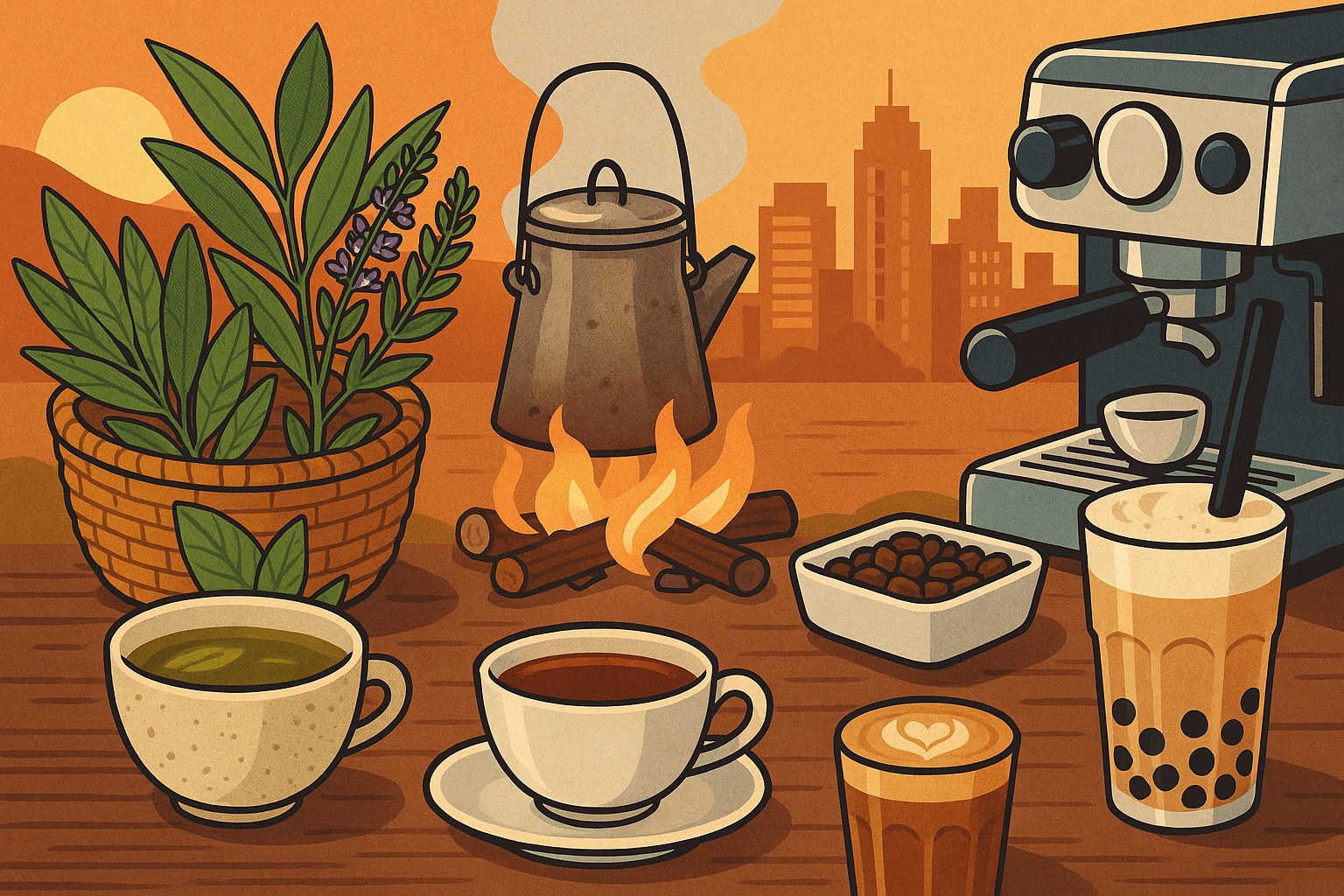
If you were to trace Australia’s history through a cup, it would begin with Indigenous plant infusions, pass through British-style tea rituals, and arrive at today’s specialty coffee bars and multicultural drink menus.
Long before Europeans arrived, Indigenous Australians understood the land through detailed ecological knowledge. Certain leaves and flowers were soaked or lightly heated to create refreshing or soothing drinks. These preparations used local species such as lemon myrtle, native mint, and other aromatic plants, chosen according to season and purpose. These beverages were part of a broader relationship with Country, passed down through generations.
Colonization brought different habits. Tea became central to domestic life, echoing British customs. Households scheduled their days around tea breaks, and workers relied on strong black tea for comfort and energy. Out in the bush, billy tea became emblematic: a rough but effective way to brew tea over a fire, often shared with coworkers at rest time.
Only later did coffee begin to rival tea. It was the mid-20th-century waves of Southern European migration that introduced espresso culture. Espresso machines, once a novelty, became standard equipment in urban cafés. Neighborhood coffee bars grew into cultural hubs where people gathered to talk, read, and watch the world go by. Drinks like the flat white, long macchiato, and piccolo became shorthand for personal preferences and local style.
In the 21st century, Australia is often cited as a leader in specialty coffee. Roasters talk openly about origin, variety, and processing methods. Light and medium roasts are favored for bringing out clarity and sweetness. Many cafés act as micro-roasteries, sourcing beans directly from growers and experimenting with small batches. Customers are invited into the process with tasting boards, explanations from baristas, and visible brewing equipment.
Equipment and techniques have become more sophisticated as well. Espresso machines feature precise temperature controls and pressure profiles. Scales, timers, and refractometers help fine-tune extraction. Filter methods like V60, Kalita, and batch brew open up a different side of coffee, offering delicate, nuanced cups that some compare to complex teas.
At the same time, tea itself is diversifying. Beyond traditional black tea, Australians are embracing green teas, oolongs, and herbal blends. Matcha lattes sit alongside chai with house-made spice mixes. Herbal infusions incorporating native Australian botanicals, such as lemon myrtle and aniseed myrtle, bring Indigenous flavors into everyday cafés and homes, especially where businesses prioritize genuine collaboration with Indigenous suppliers.
Australia’s drinks also reveal its global connections. Bubble tea from Taiwan, masala chai from India, Vietnamese iced coffee, and Middle Eastern-style coffee all have strong followings. These beverages coexist with long-standing local favorites like Milo, cordial, and ginger beer, creating a layered landscape where old and new keep intersecting.
Conversations around ethics and sustainability continue to grow. Many consumers want to know how farmers are treated, how land is managed, and what happens to packaging after use. Cafés respond with direct trade relationships, transparency reports, and initiatives like discounts for reusable cups. Plant-based milks are increasingly common, reshaping classic drinks such as lattes and cappuccinos.
Taken together, the drinks Australians choose represent more than personal taste. Whether it is an Indigenous plant infusion, a pot of strong black tea, or a meticulously prepared single-origin espresso, each cup reflects histories of colonization, resilience, migration, innovation, and a growing commitment to fairness and environmental care.