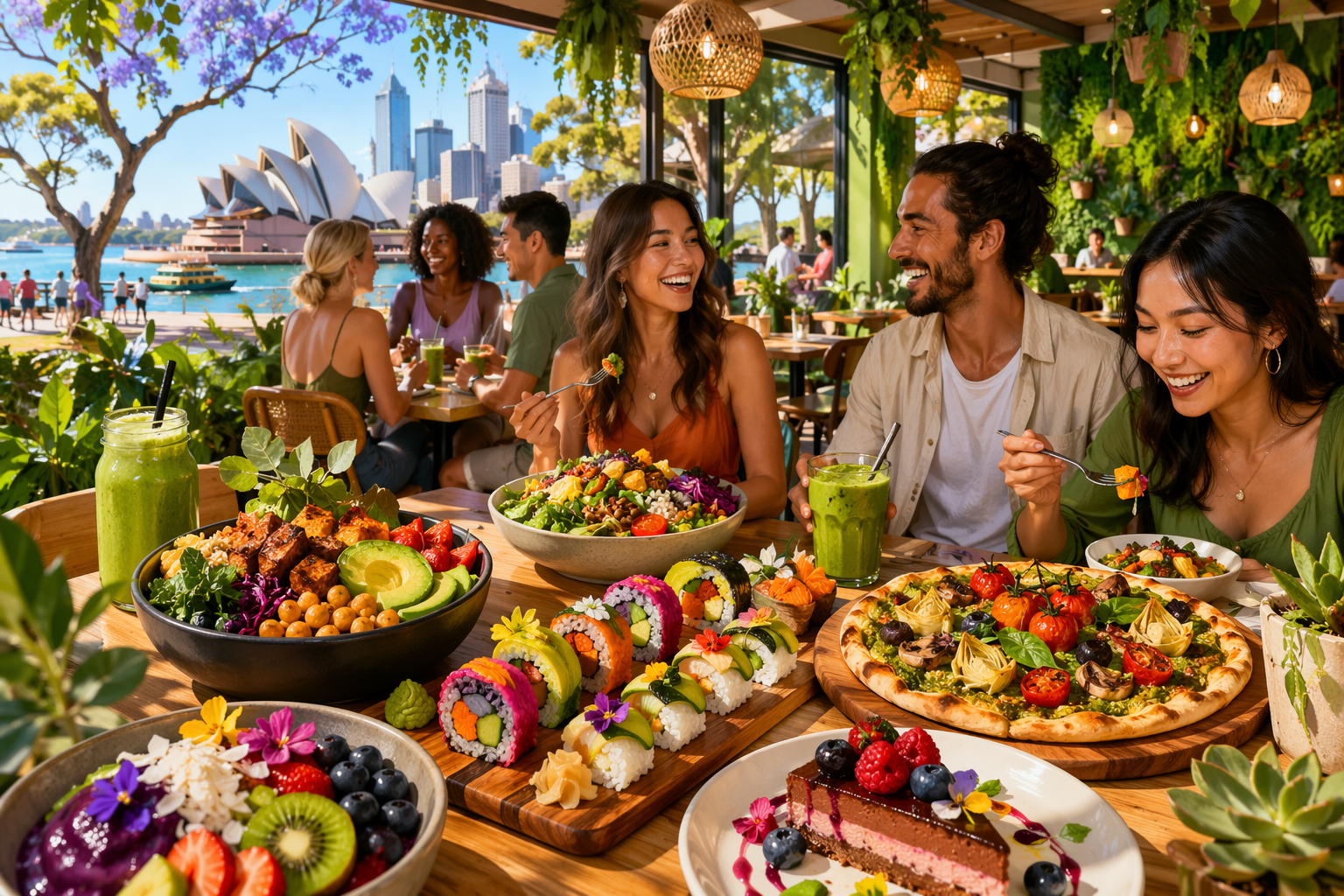
Food festivals in Australia are joyful celebrations of flavor, culture, and regional identity. They show how the country’s cuisine has developed through a combination of Indigenous traditions, fresh local produce, immigration, coastal abundance, and modern culinary imagination. Whether held in a busy city square, a vineyard, a seaside town, or a rural farming community, these festivals invite people to experience Australia through food.
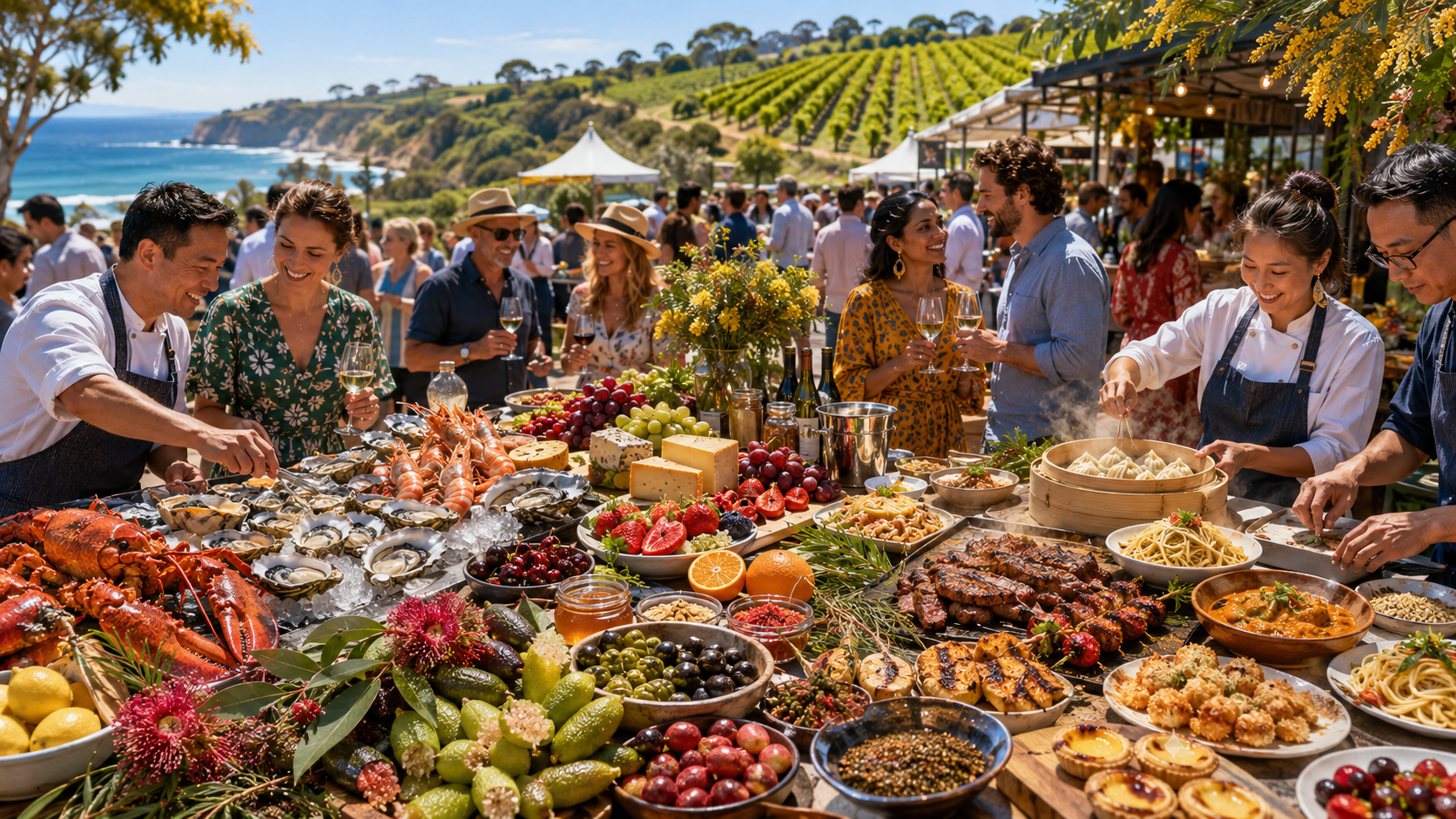
One of the strongest themes in Australian food festivals is locality. Many events are designed to highlight what a particular region does best. Coastal communities often focus on seafood, offering dishes made from oysters, prawns, fish, crabs, mussels, and lobsters. These festivals may include seafood markets, chef demonstrations, tasting plates, cooking competitions, and educational displays about marine sustainability. For many visitors, eating seafood near the waters where it was harvested creates a stronger connection to the environment and the people who work in it.
In agricultural regions, food festivals often celebrate seasonal produce. Fruit-growing areas may feature apples, cherries, berries, oranges, or grapes, while other regions highlight cheese, beef, lamb, honey, grains, truffles, olives, or vegetables. These festivals allow producers to present their work directly to the public. Visitors can taste farm-made products, ask questions about growing methods, and learn why climate and soil influence flavor. This direct interaction helps people value the effort behind everyday food.
Wine regions add another layer to Australia’s festival culture. Many food events are connected to vineyards and cellar doors, where wine tastings are paired with local menus. Guests may enjoy picnic-style events, long-table lunches, guided tastings, and chef-prepared meals using regional ingredients. These festivals often emphasize balance: the freshness of produce, the character of wine, and the skill of preparation. They also attract travelers who want a slower, more scenic food experience.
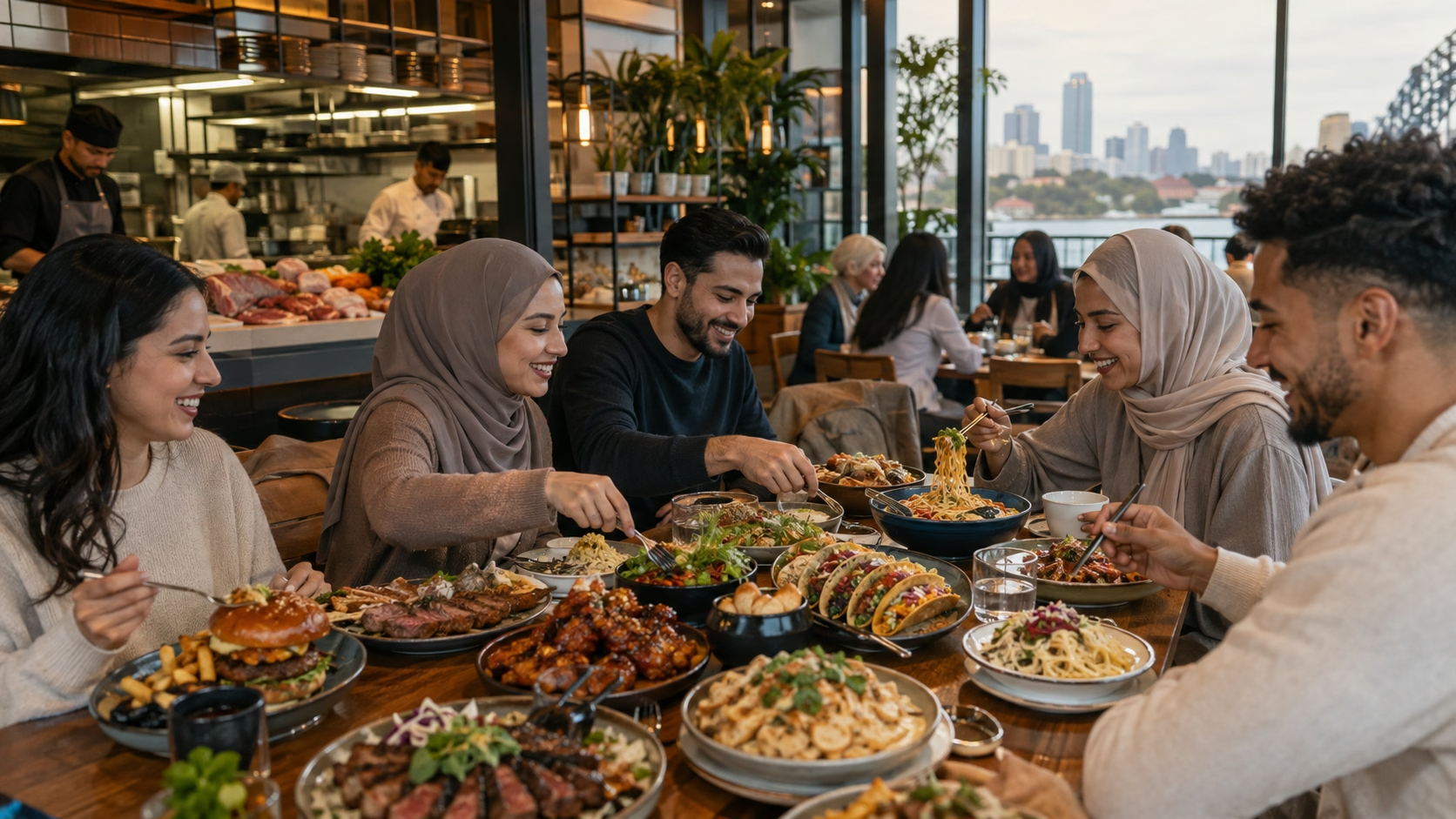
Australia’s multicultural population makes its food festivals especially rich. Migration has transformed the national palate, and festivals often reflect this through a wide range of cuisines. Visitors may find Italian pasta, Greek grilled meats, Vietnamese rice paper rolls, Chinese dumplings, Indian curries, Malaysian noodles, Japanese street snacks, Korean fried chicken, Lebanese pastries, and many other dishes. These foods are not simply menu items; they represent family histories, community traditions, and cultural exchange. Music, dance, language, and art often accompany the food, turning the festival into a broader cultural event.
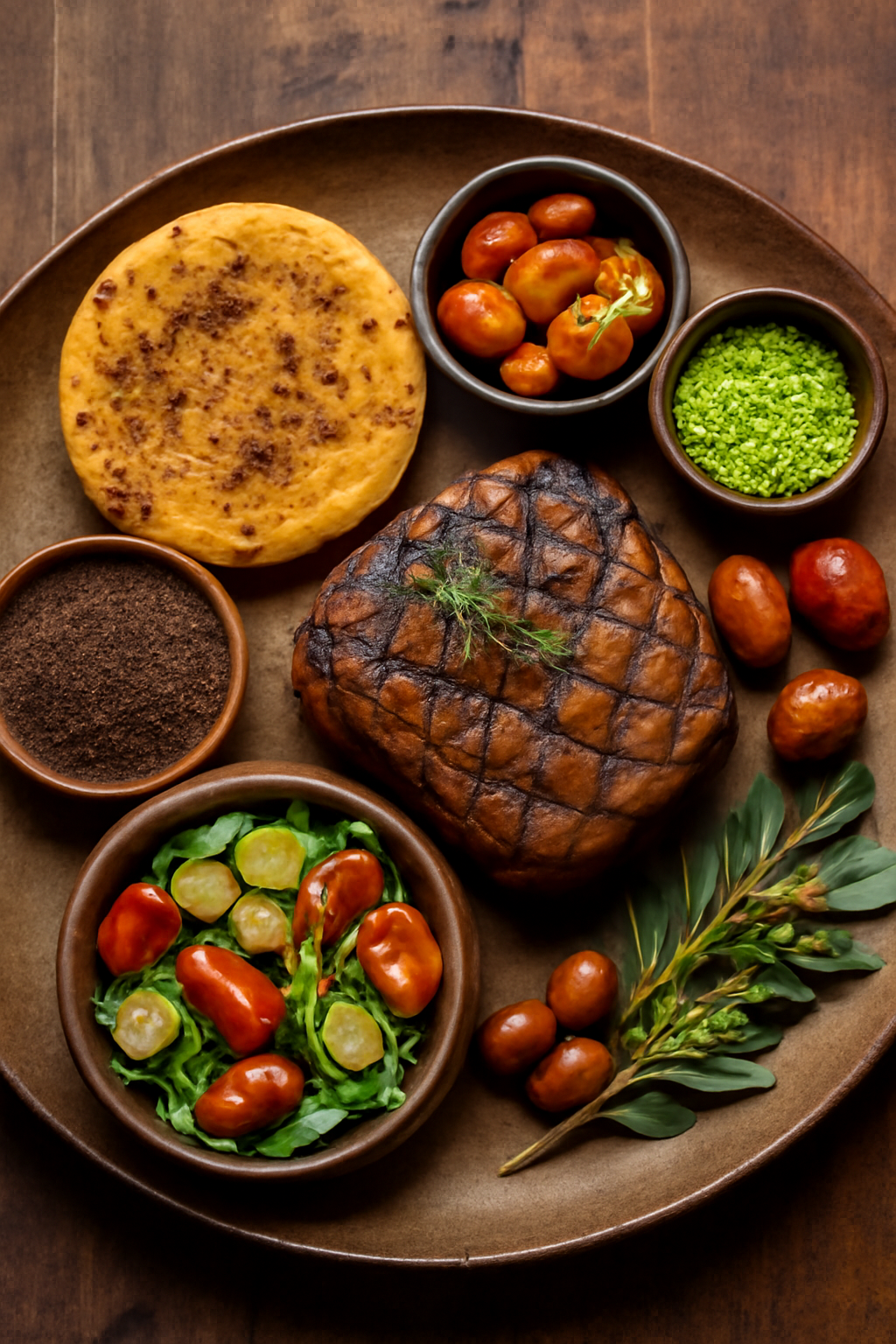
Indigenous Australian ingredients are becoming more visible in festival programs as chefs, educators, and producers introduce visitors to native foods. Lemon myrtle, finger lime, wattleseed, bush tomato, pepperberry, quandong, and saltbush are examples of ingredients that carry strong connections to the Australian landscape. Their use in modern cooking can create exciting flavors while also encouraging respect for First Nations food knowledge. When festivals include Indigenous perspectives, they help visitors understand that Australia’s culinary history is ancient, complex, and deeply connected to country.
Food festivals also strengthen communities. They support local economies by attracting tourists, increasing sales for small businesses, and giving producers valuable exposure. Restaurants, food trucks, farms, wineries, breweries, and artisan makers all benefit from the crowds these events bring. At the same time, visitors gain a more personal and memorable understanding of the places they visit.
Through seafood, wine, native ingredients, farm produce, and international dishes, Australia’s food festivals reveal a nation of many tastes and stories. They celebrate both tradition and innovation, showing that Australian cuisine continues to grow through connection, curiosity, and shared enjoyment.