Australia’s most ancient recipes come from a food culture far older than the nation itself. For thousands of generations, Aboriginal and Torres Strait Islander peoples lived with detailed knowledge of edible plants, animals, insects, fish, seeds, and roots. Their meals were guided by seasons and by respect for Country. Although many of these ingredients were pushed out of mainstream cooking after colonisation, they are now gaining renewed attention as people search for food that is local, meaningful, and sustainable.
The phrase “forgotten foods” should be used carefully. Many of these ingredients were never forgotten by Indigenous communities. They were forgotten mainly by the broader commercial food system. Ingredients such as wattleseed, murnong, quandong, Kakadu plum, finger lime, lemon myrtle, bunya nuts, saltbush, and native pepperberry all belong to a long tradition of food knowledge. Each ingredient has its own region, use, flavour, and cultural importance.
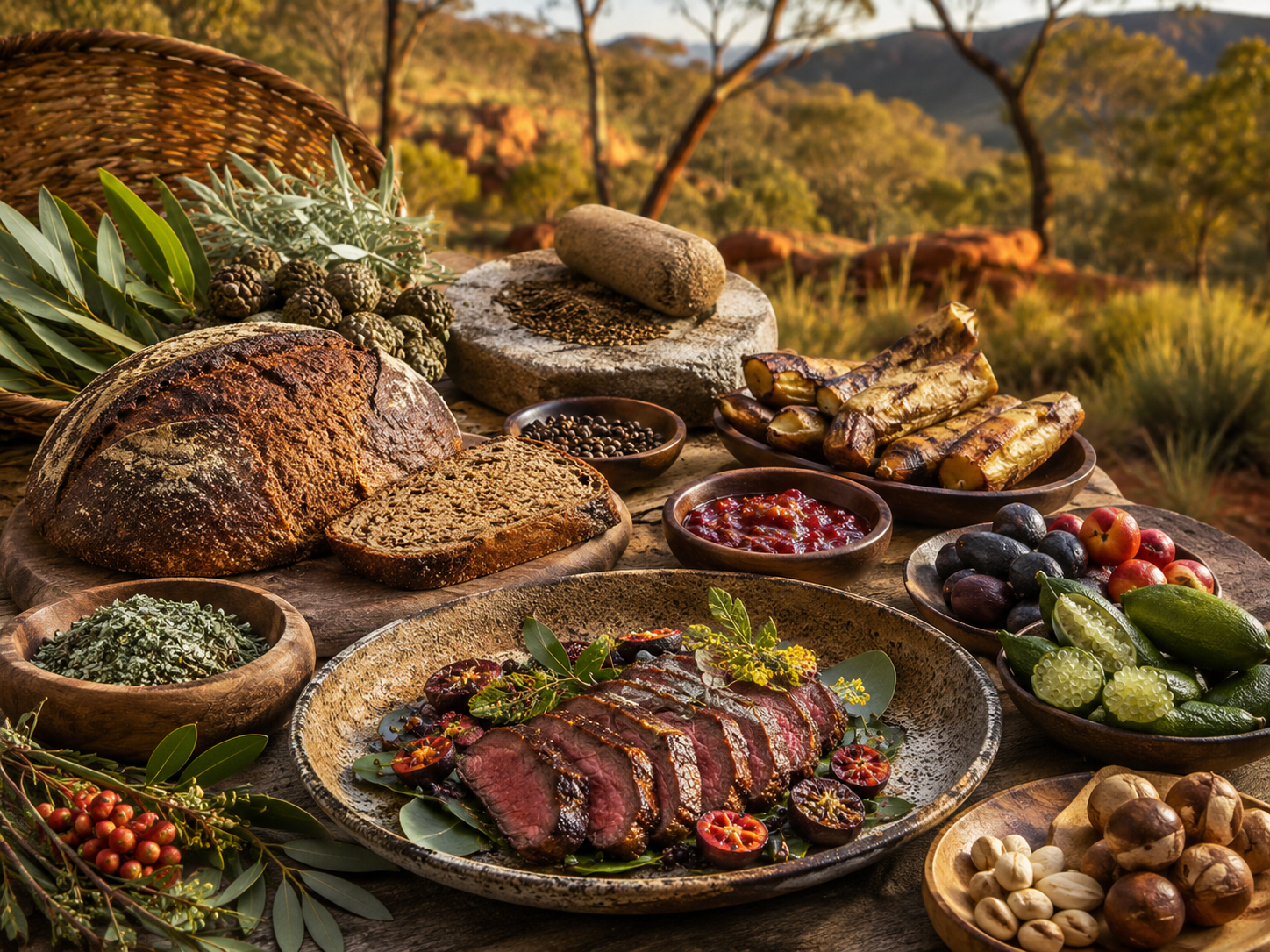
Wattleseed was traditionally collected from edible acacia species and ground into flour after processing. It could be made into simple breads cooked near fire. Today, its roasted flavour makes it popular in cakes, biscuits, sauces, and drinks. Murnong, or yam daisy, was once a common root food. When cooked, its tubers become soft and slightly sweet. Restoring murnong to gardens and farms is not only a culinary act but also an ecological one.
Native fruits offer another path into ancient recipes. Quandong can be dried or cooked into rich sauces. Kakadu plum brings sourness and exceptional nutritional value. Finger lime adds fresh citrus bursts to seafood and salads. Bush tomato, when properly prepared, contributes an intense savoury note. These ingredients show that Australian landscapes contain flavours as complex as those found in any famous world cuisine.
Protein foods were also prepared with skill. Kangaroo, emu, fish, shellfish, and eels were roasted, smoked, or cooked in earth ovens depending on region and availability. Bunya nuts were gathered during major seasonal events and could be roasted or pounded. Seeds were crushed on grinding stones, mixed with water, and cooked into nourishing breads. These methods required patience, environmental understanding, and community knowledge.
Modern cooks can revive these traditions through respectful adaptation. A meal might include wattleseed bread, kangaroo with pepperberry, roasted native roots, saltbush seasoning, and quandong sauce. Lemon myrtle can flavour tea or desserts, while finger lime can brighten fresh dishes. Such recipes do not need to be complicated. Their strength comes from the ingredients and the stories behind them.
The future of native Australian food depends on respect and responsibility. It is important to buy from ethical sources, learn from Indigenous voices, and recognise that these foods are connected to culture, land, and survival. Reviving ancient recipes is not simply about adding unusual flavours to modern plates. It is a way to honour Australia’s first food systems and to give long-overlooked ingredients the place they deserve.