Australia’s response to obesity is entering a crucial phase. The country does not lack information about healthy eating or physical activity. The more difficult challenge is building a system in which healthy choices are affordable, accessible and supported over time.
For 2026, the debate needs to move beyond personal responsibility. Obesity develops through a complex interaction of biology, mental health, food environments, income, culture, sleep, work patterns and access to professional care.
The Australian Institute of Health and Welfare has documented the national burden of overweight and obesity and its links with chronic disease. Its official overview is available through the AIHW overweight and obesity resource.
Why Traditional Weight-Loss Advice Is Not Enough
For decades, many public messages focused on willpower: eat less, move more and lose weight.
That message is simple, but the reality is not.
A parent working multiple jobs may have little time to cook. A regional family may face higher prices and fewer food choices. A person living with chronic pain may struggle to exercise. Another may need psychological support for emotional eating or disordered eating patterns.
These circumstances show why successful obesity programs must respond to real lives rather than idealised lifestyles.
Local Programs Can Close the Gap Between Advice and Action
Support Where People Live
Community-based programs can provide a practical bridge between national policy and individual health.
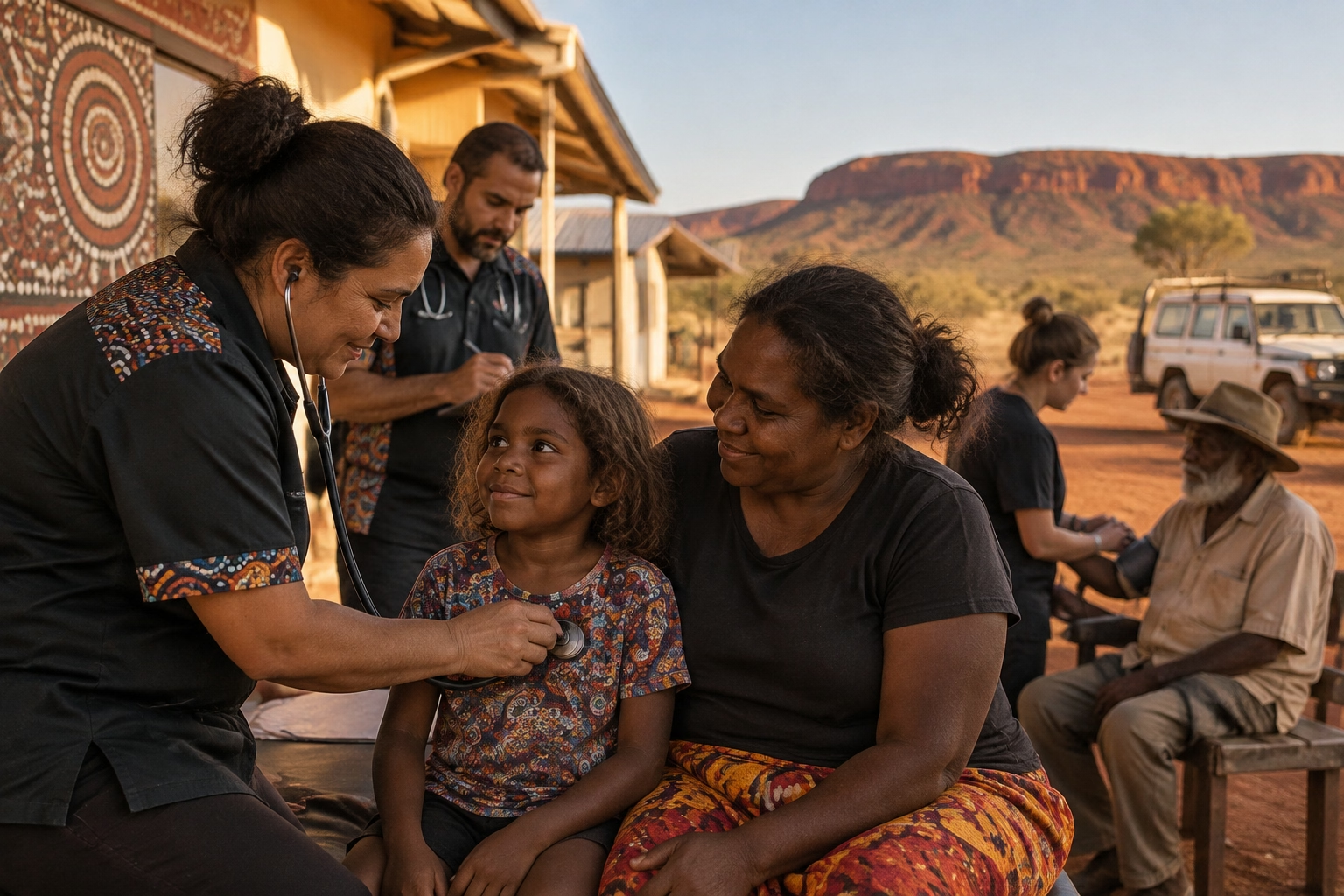
Local councils, Aboriginal Community Controlled Health Organisations, primary health networks and non-profit groups can design services around the needs of specific populations.
Effective approaches may include group exercise, cooking education, family health coaching, walking programs and culturally adapted nutrition support.
The key is consistency. A short campaign may raise awareness, but lasting health improvement usually requires continued access to services.
Better Health Care Pathways Are Essential
People seeking help with obesity often need more than one appointment with a doctor.
A comprehensive approach can involve GPs, accredited practising dietitians, psychologists, exercise physiologists and specialist medical teams.
In 2026, improving coordination between these professionals should be a priority. Patients should not have to navigate disconnected services without clear guidance.
Prescription weight-management medicines are also changing clinical conversations. For suitable patients, medical therapy may be one part of treatment under professional supervision.
However, concerns about affordability, appropriate prescribing and equitable access remain important. A system that relies mainly on expensive treatment after obesity has developed would miss the opportunity to prevent illness earlier.
The Food Environment Requires Greater Attention
Health education cannot succeed in isolation from the commercial environment.
Australians are constantly exposed to food promotions through supermarkets, television, online platforms and social media. Children are particularly vulnerable to persuasive marketing.
Policies that support healthier product formulation, transparent food information and appropriate marketing standards can complement individual health programs.
Affordability is equally important. During financial pressure, families may prioritise foods that are filling, convenient and inexpensive. Public health policy must therefore consider price and access, not simply knowledge.
The Real Measure of Australia’s Progress
Success should not be judged only by national body-weight statistics.
Other important measures include earlier intervention, reduced health inequality, better access to professional support and improvements in the environments where Australians live and work.
Australia’s strongest response in 2026 would combine evidence-based treatment with prevention. The country needs a health system that supports people already living with obesity while reducing the pressures that place the next generation at risk.