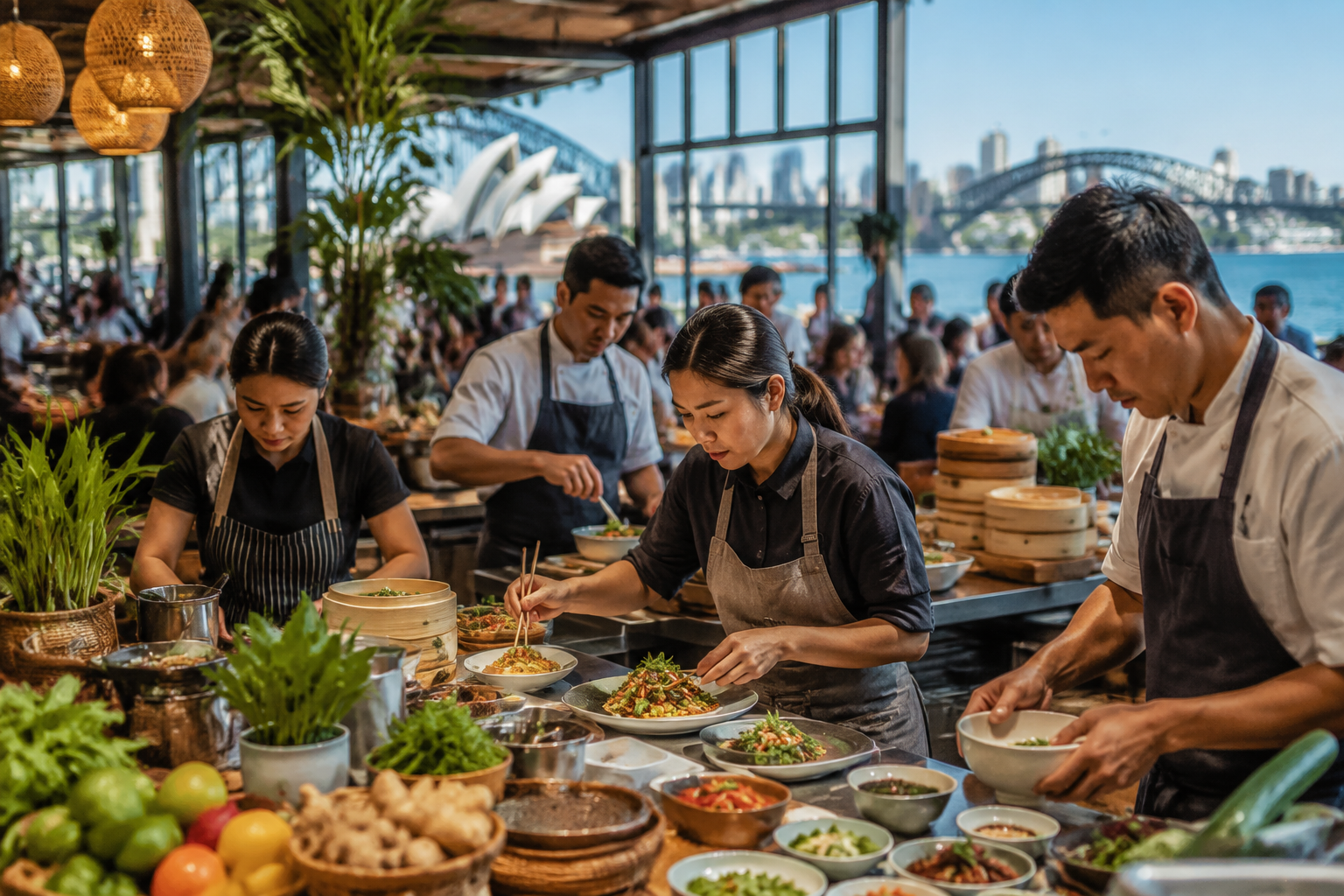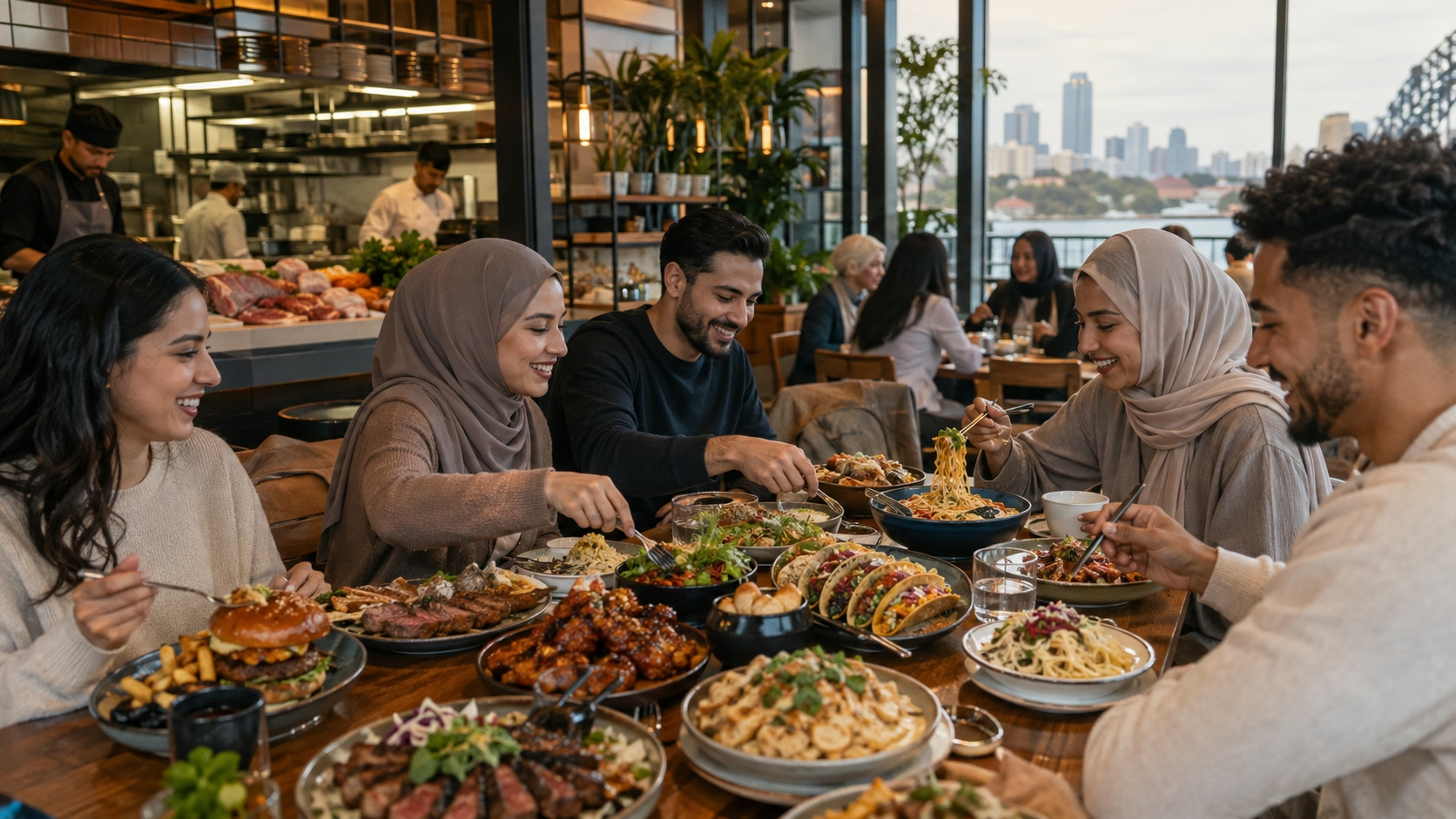
Sydney, August 2026 — When a family from Jakarta plans a holiday to Australia, their first question is often not about beaches or wildlife. It is about food: Where can we find halal breakfast? Is the hotel kitchen halal-certified? Can we eat at the airport? These questions are reshaping Australia’s hospitality industry.
The Travel Multiplier Effect
Muslim travel to Australia is growing at an estimated 8 percent annually in 2026, according to industry data cited by Austrade’s halal food market brief. Visitors from Indonesia, Malaysia, Singapore, and the Gulf Cooperation Council are among the highest-spending inbound segments, and halal dining availability is a major factor in destination choice.
The economic multiplier is significant. Muslim travellers tend to stay longer, dine in larger groups, and spend more on premium food experiences when halal options are clearly available. A family of four from Kuala Lumpur, for example, may book an entire halal food tour across Melbourne’s northern suburbs, spending hundreds of dollars per day on restaurants, bakeries, and food souvenirs.
Destination-Level Halal Readiness
Australian airports have improved halal readiness. Sydney and Melbourne airports now list halal-certified food outlets on their websites, and several international airlines offer halal meals on Australian routes. Major hotel chains have introduced halal breakfast sections, and some have dedicated halal kitchens for room service and banquets.
Tourism Australia and state tourism bodies have also begun featuring halal dining precincts in marketing materials aimed at Muslim-majority markets. Melbourne’s Coburg and Sydney’s Bankstown are increasingly positioned as halal culinary destinations, complete with guided food walks, cooking classes, and Ramadan-specific itineraries.
Food Festivals and Halal Events
Halal food festivals have become powerful tourism magnets. Events in Sydney, Melbourne, and Brisbane now attract interstate and international visitors who combine festival attendance with restaurant tours and shopping. In 2026, a major halal food festival in Sydney featured more than 120 stalls and drew visitors from 12 countries.
The Business Response
Australian food businesses are responding to this travel-driven demand. Restaurants in tourist precincts are adding halal-certified menus without changing their core offerings, and some have hired halal consultants to train staff and manage supplier audits. Food delivery platforms are also adding halal filters for international visitors using roaming apps.
The link between tourism and halal culinary growth is now unmistakable. When a destination makes halal food easy to find, Muslim travellers respond with loyalty and higher spending. Australia’s challenge is to standardise halal signage, improve digital discovery, and ensure that certification is visible across the entire tourism journey, from airport arrival to hotel check-out.
As Australia competes with Singapore, Japan, and New Zealand for the growing global halal travel market, its rich culinary diversity and trusted halal meat industry give it a distinct advantage. The next wave of halal tourism will not just be about prayer rooms and signage; it will be about creating unforgettable halal culinary experiences that travellers share with the world.