Beyond Sight and Sound: The Sensory Revolution
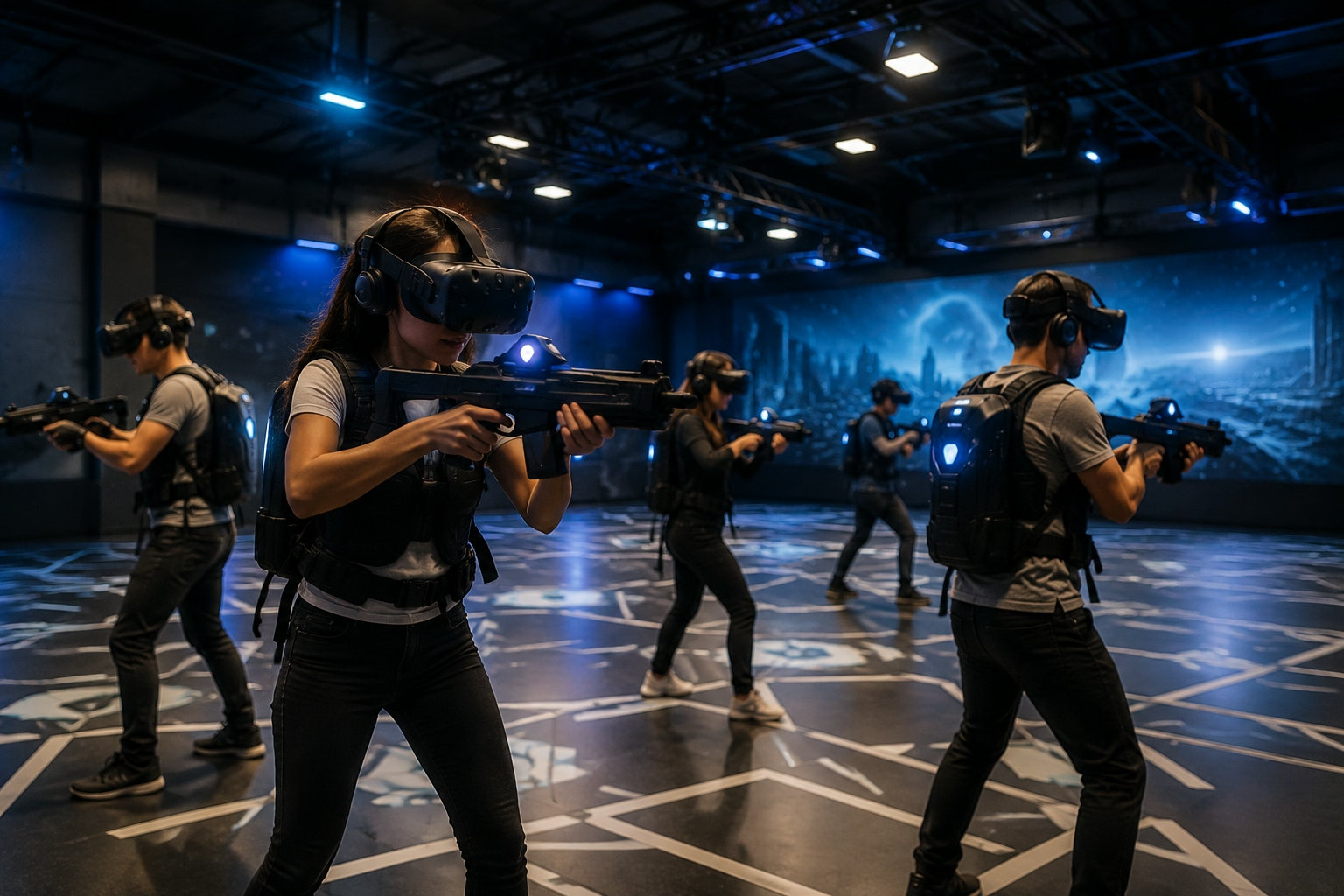
For years, virtual reality has been dominated by two senses: vision and hearing. But a quiet revolution is underway in Australian labs and entertainment venues, where engineers are adding touch, smell, and even temperature to immersive experiences. Haptic vests that vibrate with bullet impacts, wind machines that simulate ocean breezes, and scent diffusers that release eucalyptus or salt spray are turning VR into a full-body medium.
The technology is not new—military flight simulators have used motion platforms for decades—but the consumer-grade version is finally affordable. Australian startup SenseHub, based in Adelaide, began shipping its third-generation haptic suit in March 2026 at AUD 899 per unit. The suit contains 32 vibration motors and 6 heating/cooling pads, synced wirelessly to any major VR headset.
Real-World Applications in Australian Venues
Several high-end VR experiences across Australia now combine headsets with haptic wearables. In Sydney’s Barangaroo precinct, Ocean Rift VR equips visitors with waterproof haptic gloves and a scent machine that releases brine and salt spray as they swim alongside digital humpback whales. The experience lasts just 20 minutes but commands a AUD 75 ticket price—three times the cost of a standard movie ticket.
According to a 2026 technology adoption report by CSIRO’s Data61, investment in wearable haptic technology for entertainment grew by 28% in Australia between 2024 and 2026, outpacing the global average. The full report is accessible at https://www.csiro.au/ .
Case Study: Full-Body Tracking in Fitness VR
Beyond passive entertainment, haptic wearables are transforming VR fitness. Australian gym chain Fitness Playground now offers VR workout pods where members wear motion-capture suits that track every joint movement while they box, dance, or climb virtual mountains. The suits provide resistance feedback and heat simulation, making the workout feel more physical than traditional exergaming.
Early data is promising. Members who use VR pods burn an average of 480 calories per 30-minute session, comparable to high-intensity interval training. Retention rates for VR fitness are 63% higher than for standard gym classes, likely because the gamified environment feels less like exercise.
Scent and Temperature: The Final Pieces
Scent technology is the hardest to scale because smells dissipate quickly and require frequent cartridge changes. Australian researchers at the University of Canberra are developing a scent synthesiser that uses electrically activated chemical compounds to produce up to 50 distinct smells from a compact cartridge. Prototypes are being tested in partnership with the National Zoo and Aquarium, where visitors can smell eucalyptus, wet earth, and even animal musk during a VR safari.
Temperature simulation is simpler. Haptic suits with integrated Peltier plates can heat or cool small areas of skin, creating the illusion of sun, wind chill, or fire. At Melbourne’s Antarctic VR experience, visitors feel the cold of a simulated blizzard even as the room temperature remains a comfortable 22 degrees Celsius.
The Road to Mainstream Adoption
Wearable VR entertainment still faces hurdles: hygiene concerns, battery life, and cost. Operators must disinfect suits between sessions, which adds turnaround time. Yet early adopters are willing to pay a premium for the added immersion. Industry analysts predict that by 2028, one in five location-based VR venues in Australia will offer haptic-enhanced experiences as a standard option.