The Myth of the Healthy City
When Australians think of Indigenous health disadvantage, they often picture remote communities. But a landmark report released in April 2026 shatters that assumption. The State of Play Report 2026, produced by the UQ Poche Centre for Indigenous Health for the Research Alliance for Urban Community Controlled Health Services, provides the first national overview of the health and wellbeing of Aboriginal and Torres Strait Islander people living in capital cities. What it reveals is a population experiencing rapid growth, significant unmet health needs, and a health system that is not keeping pace.
The report highlights that urban Aboriginal and Torres Strait Islander populations are growing rapidly, yet the health services designed to support them remain underfunded and under-resourced. Aboriginal and Islander Community Controlled Health Services (AICCHS) in capital cities are delivering innovative models of care, but they are doing so within a funding environment that was not designed to support their comprehensive, holistic approach.
Underfunded Models Delivering Better Outcomes
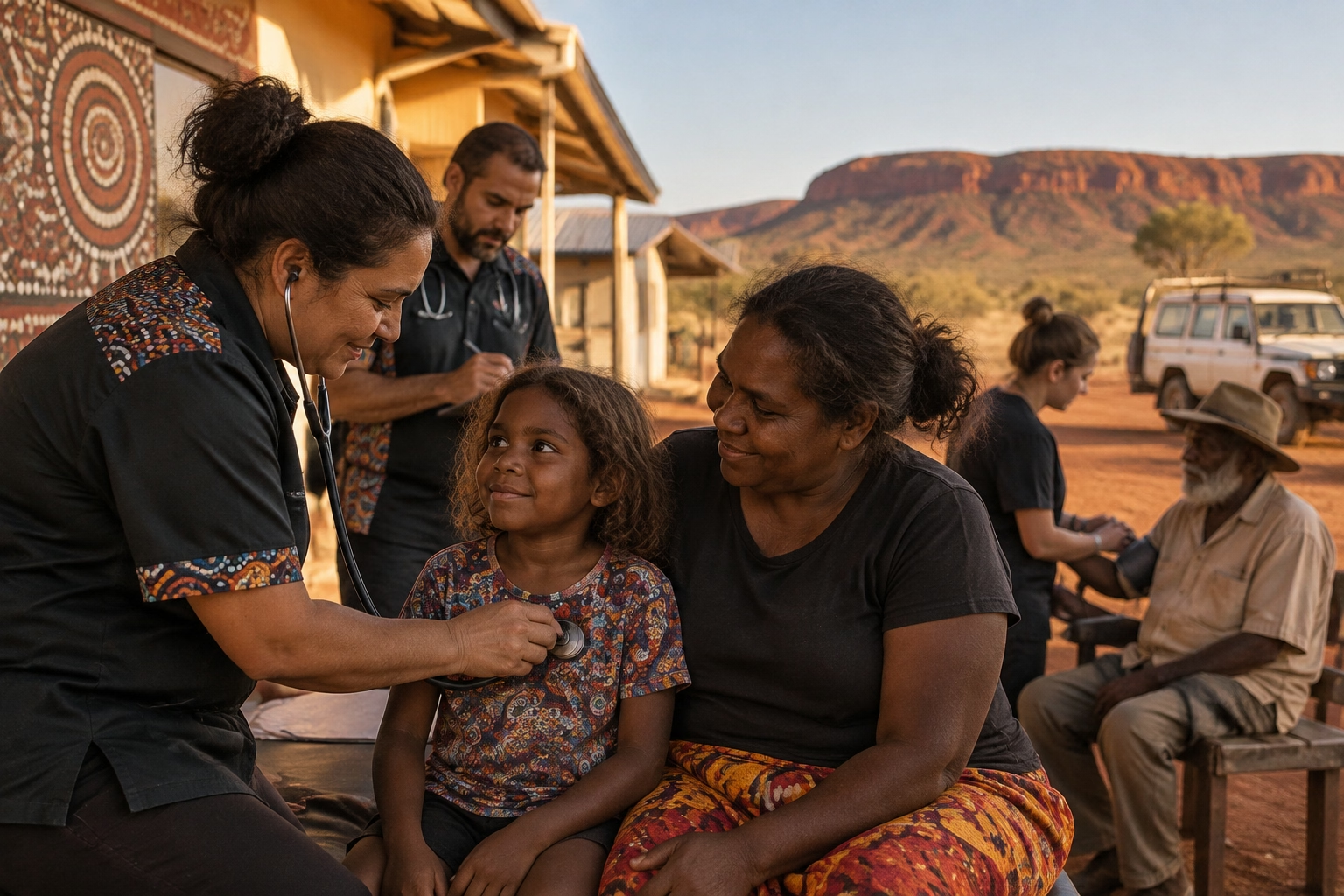
Despite operating under significant financial constraints, urban AICCHS are demonstrating that their model of care delivers results. The State of Play Report documents that these services achieve better attendance rates and improved health outcomes compared with mainstream providers. They reduce pressure on hospitals, provide culturally safe primary care, and address the social determinants of health that drive inequity. Yet the report makes clear that these services are operating under innovative but underfunded models of care, relying on short-term grants and precarious funding arrangements that make long-term planning impossible.
The 2026-27 Federal Budget included $248.7 million for new co-designed programs to improve Aboriginal and Torres Strait Islander health outcomes, with $200 million matched by states and territories. An additional $144.1 million was announced for Aboriginal Community Controlled Health Services infrastructure to expand on more than 100 projects already delivered or underway. While these investments are welcome, the scale of unmet need in urban Indigenous communities demands far more.
The Invisibility of Urban Disadvantage
One of the most significant challenges facing urban Indigenous health is invisibility. Because disadvantage in cities is less visually apparent than in remote communities, it often escapes policy attention. Yet the data tells a different story. The Aboriginal and Torres Strait Islander Health Performance Framework 2026 report for Western Australia confirms that Aboriginal people often have relatively poorer access to health services than non-Aboriginal Australians in relation to need, for a range of reasons. These barriers include cost, cultural safety, discrimination, and a lack of services designed to meet the needs of Indigenous patients.
The State of Play Report emphasises the essential role of Aboriginal Community Controlled Health Services in addressing these barriers. These services are not just health providers; they are community hubs that address housing, connection to country and culture, and the social determinants of health that mainstream services often ignore.
The Path to Urban Health Equity
Achieving health equity for urban Indigenous populations requires proper resourcing of capital city AICCHS, recognition of their unique contribution to the health system, and a funding model that supports comprehensive, holistic care rather than episodic treatment. The 2026 Close the Gap Report celebrated community-led solutions, highlighting the leadership of Aboriginal and Torres Strait Islander communities in driving improved health and wellbeing outcomes. That leadership is alive and well in Australia’s cities. What is needed now is the investment to match it.