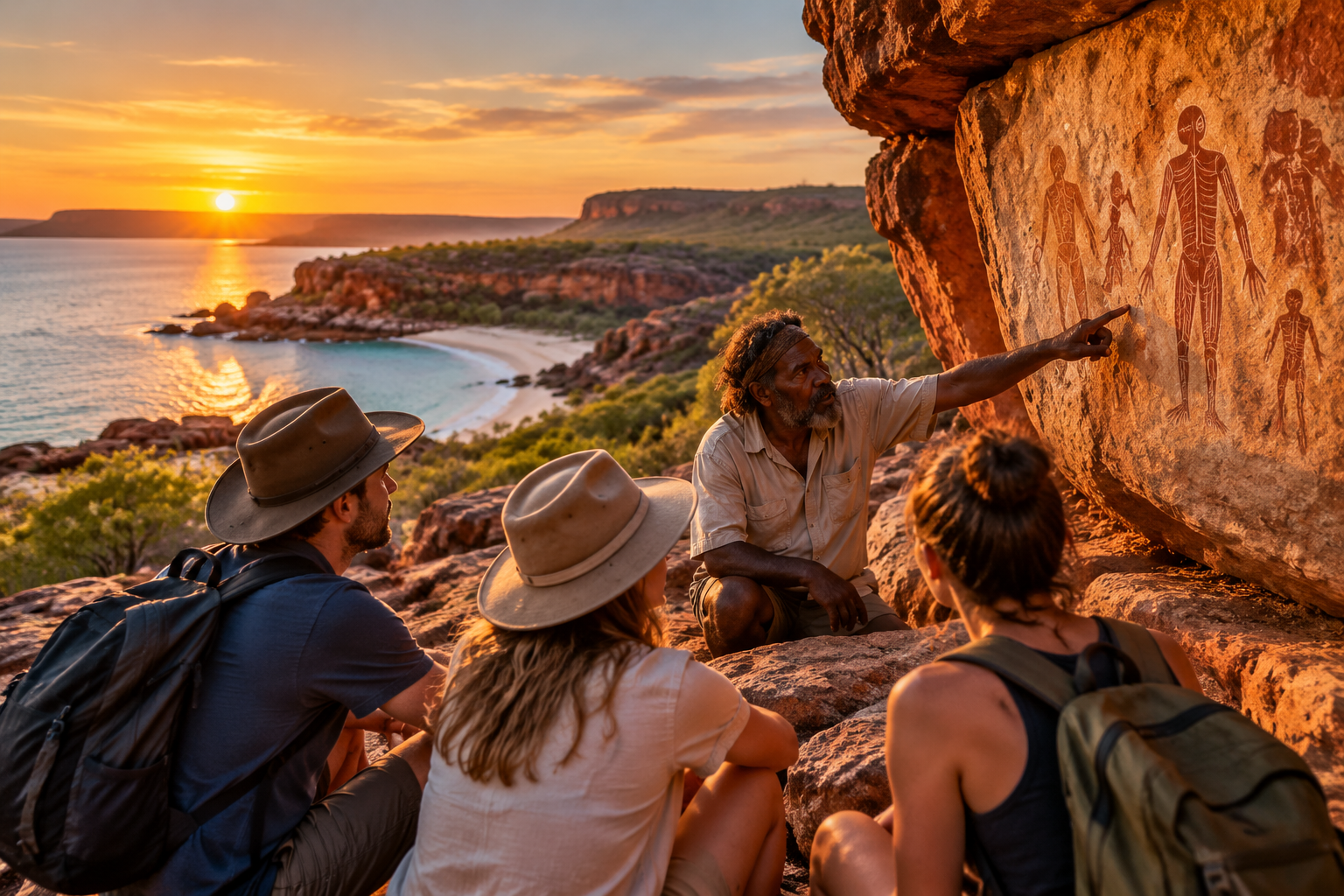
A Sector at an Inflection Point
The numbers tell a story of remarkable momentum. Close to 1.25 million international trips included an Indigenous experience in the year ending March 2026, reflecting a 6.7% increase from the previous year and a 4.8% compound annual growth rate over the last decade. The United Kingdom was the largest source market with more than 173,000 trips, followed by the United States (162,000) and China (141,000).
Tourism Australia’s Discover Aboriginal Experiences collective has expanded to include 53 Indigenous tourism operators — up 32% since 2018 — offering more than 200 Aboriginal cultural experiences across the continent. More than 65% of businesses in the collective are First Nations owned or operated.
The Luxury Segment Is Booming
The Australia Indigenous-Led Luxury Cultural Immersion Tourism market is projected to grow at 18.9% annually, potentially reaching USD 3.48 billion by 2034 from its current USD 620 million. Future developments include Indigenous-owned luxury resorts, AI-curated cultural itineraries, and carbon-positive tourism experiences.
Longitude 131°, the luxury camp near Uluru, has announced its 2026 First Nations Artists-in-Residence Program with Ernabella Arts, bringing artists from the APY Lands for four special residencies across the year. This fusion of high-end hospitality with living cultural practice represents a template for the sector’s future.
Governance and Ethical Infrastructure Are Catching Up
The sector’s growth has been accompanied by robust governance frameworks. Tourism Australia’s Stretch Reconciliation Action Plan for July 2026 to June 2029 sets out a vision where “First Nations cultures are embraced and celebrated, Australia’s full history and its impacts are acknowledged”.
The Connecting to Culture Toolkit, launched in May 2026, provides practical support for non-Indigenous tourism operators to build respectful connections with Aboriginal and Torres Strait Islander partners. In Queensland, the Lazy Lizard Motor Inn in Port Douglas used the resource to address gaps in its cultural engagement, including sourcing First Nations-produced products and broadening the range of Indigenous-led experiences recommended to guests.
The Tension: Growth vs. Integrity
As the sector scales, questions of integrity intensify. Dr Akbar of the University of Adelaide warns that with increased interest comes competition from non-Indigenous operators. “Anyone can really say that they have Aboriginal tourism and market themselves in that way,” she said. “We are in a position where we need the customers to be somewhat discerning”.
The future of First Nations tourism will depend on whether the industry can maintain the cultural integrity that makes these experiences powerful, even as demand — and commercial pressure — continues to rise.