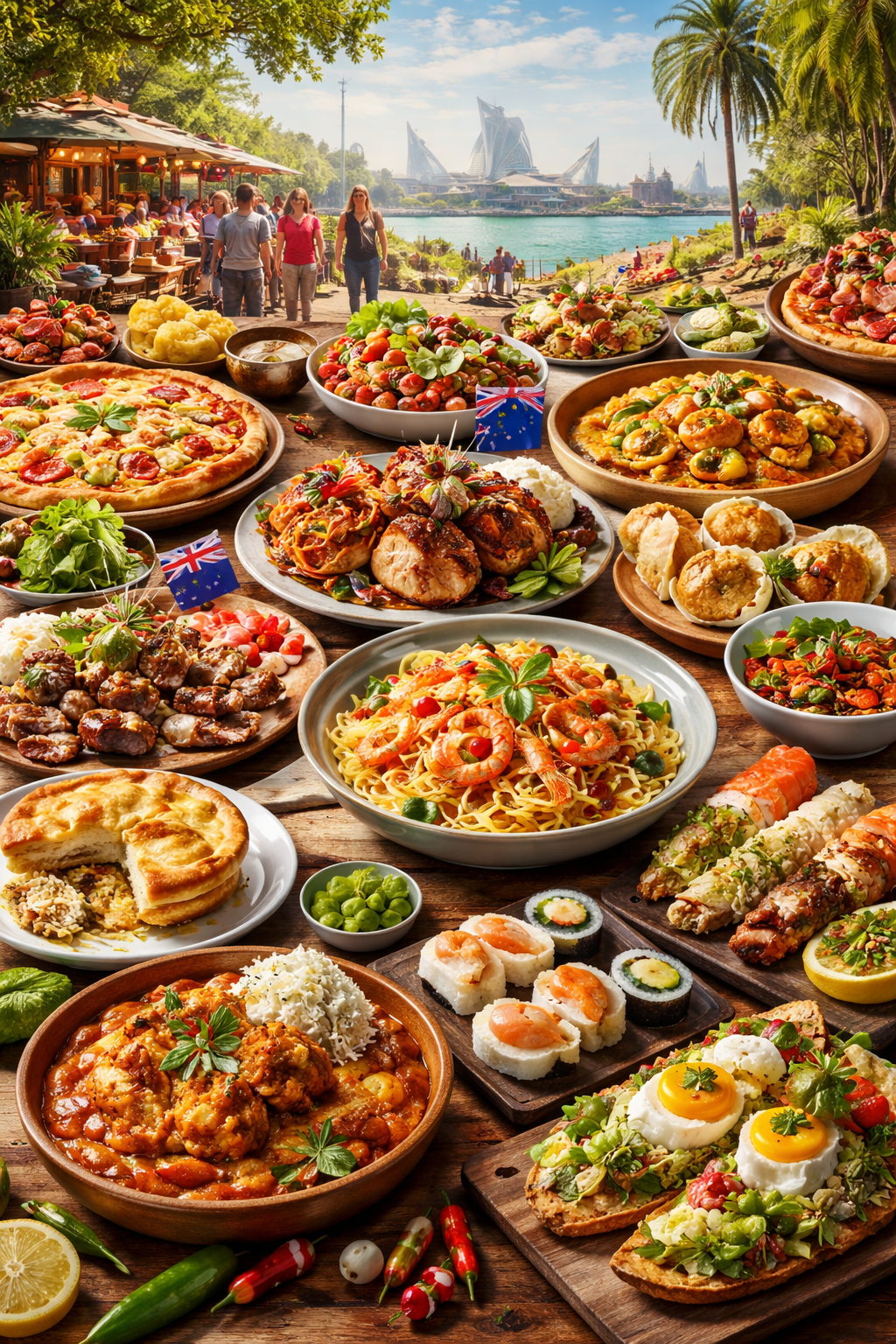
Australian cuisine has a rich history, shaped by its British colonial roots and transformed by centuries of cultural exchange and migration. From early meals based on British fare to a modern, cosmopolitan culinary landscape that embraces global flavors, the evolution of Australian cuisine reflects the country’s social and cultural shifts.
The British were the first to influence Australian cuisine, introducing dishes that were simple and filling, designed to provide sustenance in a new and often harsh environment. The early Australian diet included British classics like meat pies, roasts, and hearty stews. These meals were comforting, but they lacked the variety and complexity that would come with later waves of immigration.
Following World War II, Australia saw a large influx of European immigrants, particularly from Italy and Greece. This wave of migration brought fresh ingredients and cooking methods that introduced Mediterranean flavors to Australian kitchens. Italian pasta dishes, Greek-style salads, and pizza became popular, signaling a shift away from the heavy British meals that had once dominated the culinary scene.
In the decades that followed, Asian and Middle Eastern immigrants brought further diversity to Australian food culture. The 1970s and 1980s saw the rise of Chinese, Thai, Vietnamese, and Indian cuisines, which introduced new spices, herbs, and cooking techniques to the Australian palate. Dishes like stir-fries, curries, and noodle soups became staples in Australian restaurants and households, marking the beginning of Australia’s love affair with Asian cuisine.
Today, Australian cuisine is a celebration of multicultural influences, incorporating not only British, European, and Asian flavors but also indigenous Australian ingredients. Modern Australian chefs are known for their creative use of native foods, such as wattleseed, bush tomatoes, and finger limes, often blending these ingredients with international cooking styles. This approach has led to the rise of “fusion” cuisine, where local and global ingredients are combined to create unique and innovative dishes.
The evolution of Australian cuisine has been shaped by the country’s multicultural history, and today, its food scene is an exciting blend of flavors and traditions from around the world. From British-inspired meals to global fusion, Australian food continues to evolve, reflecting the changing tastes and cultural influences of a diverse and dynamic nation.