The Policy Backdrop: A Scheme Designed for the Whole Garment Lifecycle
Australia’s clothing waste problem has a policy response, and it is one of the first of its kind in the world. Seamless, launched as a product stewardship scheme in July 2024, is the world’s first circular product stewardship scheme for clothing . Its purpose is to make brands responsible for the entire life of the garments they produce, from design through to end-of-life recovery. The scheme operates alongside a 4-cent-per-garment levy proposal to fund durable design, recyclability, and landfill diversion programs .
The policy logic is straightforward: if brands bear a share of the end-of-life cost, they have a financial incentive to design garments that last longer, are easier to repair, and can be recovered rather than discarded. This is the circular economy applied to apparel, and it changes the calculus for every production model in the market.
Where Made-to-Order Fits Into the Circular Framework
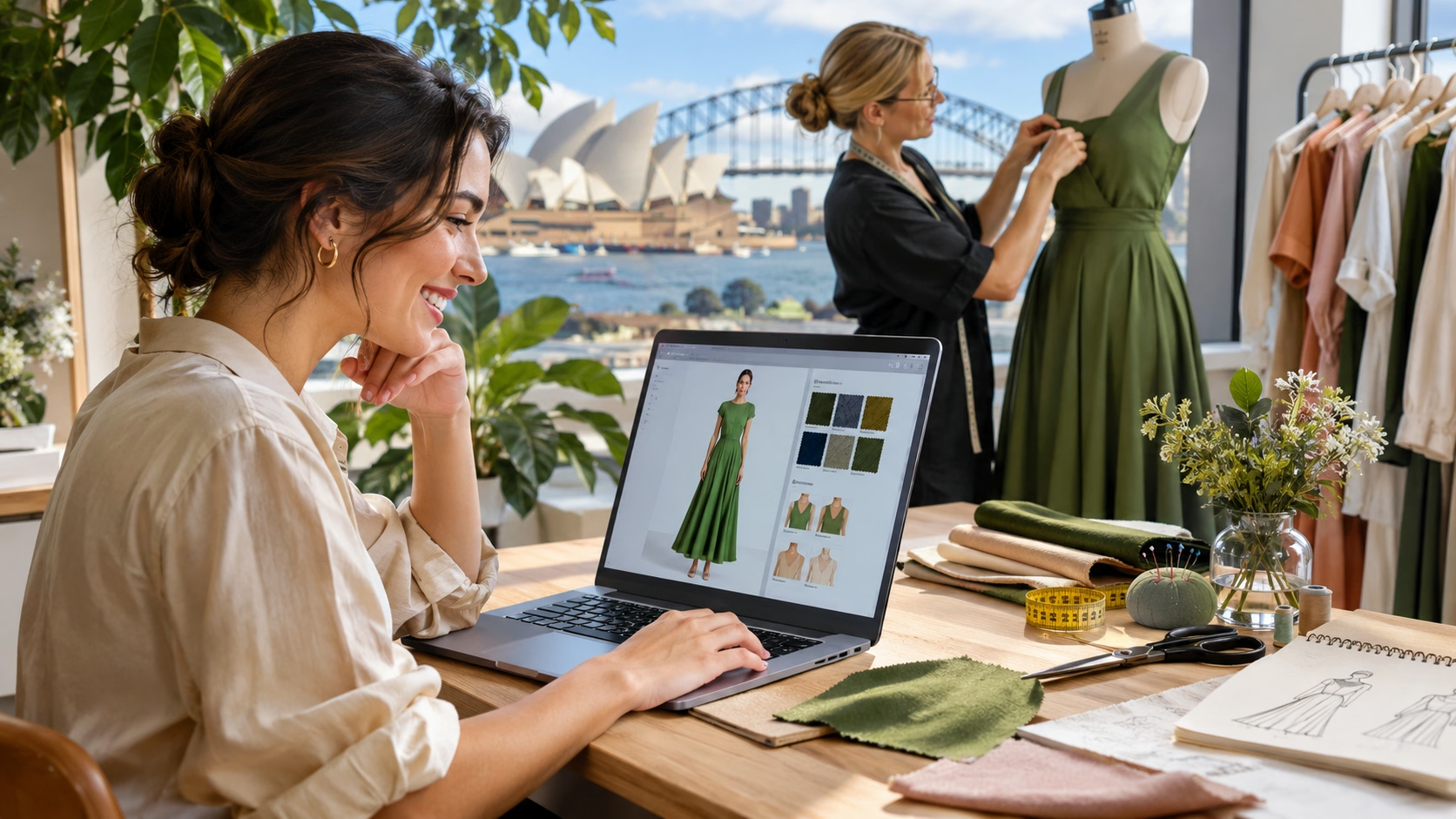
Made-to-order fashion is not automatically circular. A custom-made garment made from virgin synthetic fibres and discarded after a few wears is still waste. But the model is structurally aligned with circularity in ways that mass production is not. Made-to-order eliminates the overproduction that Seamless identifies as a primary source of waste: offshore minimum order requirements that force brands to order up to 30% more than they need, alongside unsold clothing volumes rising about 17% year on year . When production is demand-led, the surplus that becomes landfill is not created in the first place.
Seamless CEO Ainsley Simpson has framed the challenge in system terms: “We have an urgent clothing waste challenge, and in Australia we’ve also got overproduction and overconsumption” . Made-to-order addresses the overproduction side of that equation directly, while policy instruments such as the levy address the recovery and recycling side.
Local Production as Circular Infrastructure
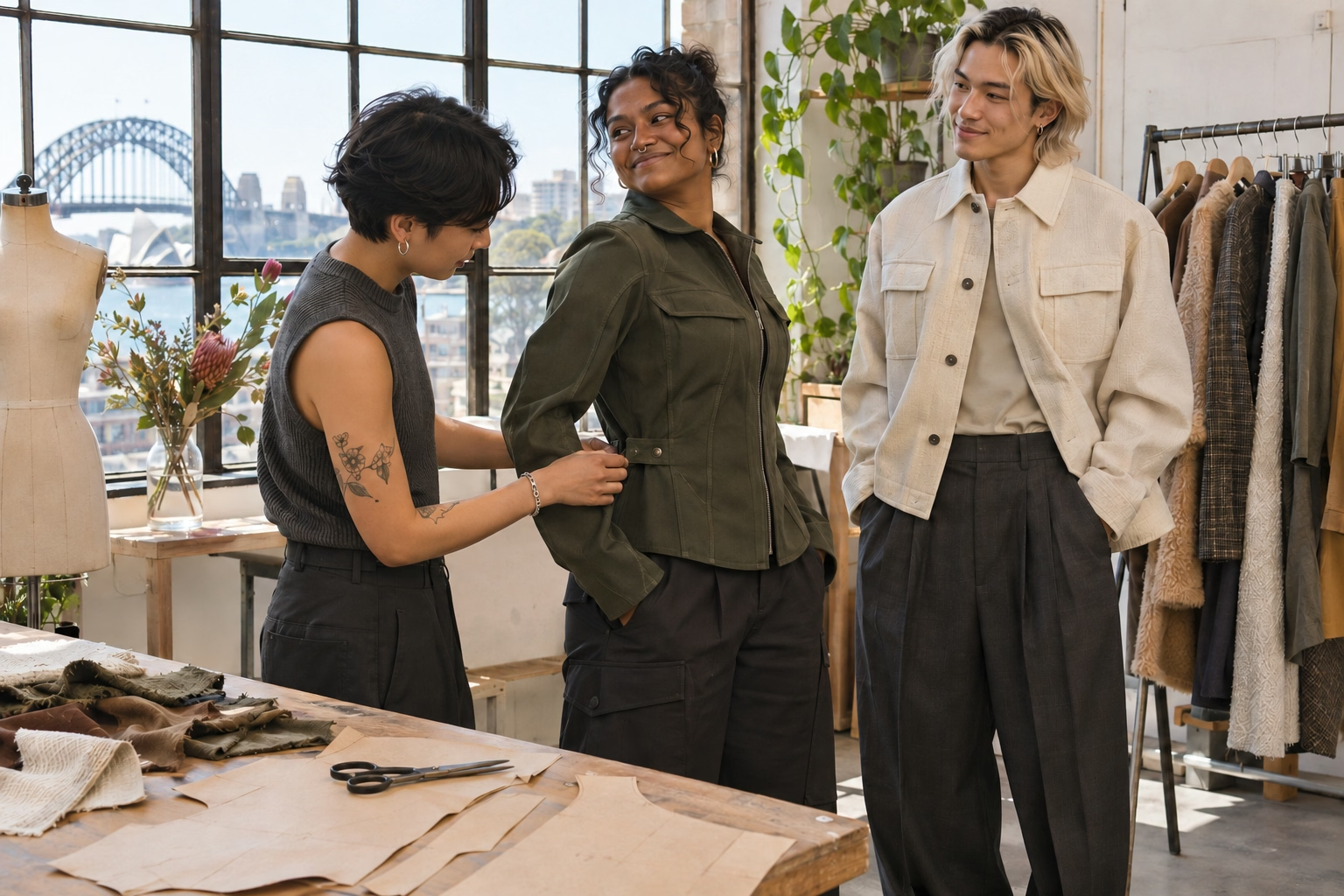
Circularity depends on proximity. Garments that are made locally are easier to repair, alter, and recover than garments manufactured across global supply chains with no traceable end-of-life pathway. Australian made-to-order labels that produce in Sydney or Melbourne are, in effect, building the local repair and remake capacity that a circular wardrobe requires. The production relationships that sustain these brands — cutters, machinists, and pattern makers working within the same city — are the same relationships that can support alteration, repair, and small-batch remanufacturing.
Consumer Signals Are Aligning With Policy
The market is moving in the same direction as the regulation. 49% of Australian consumers say they would boycott companies behaving unethically, and the Australian Fashion Council’s circular fashion initiative is explicitly designed to make sustainability measurable and transparent rather than rhetorical . Made-to-order brands that can demonstrate reduced waste, local production, and traceable supply chains are positioned to convert that consumer sentiment into market share.
The Next Phase of the Circular Wardrobe
Australia’s circular fashion transition will not be delivered by any single model. It will require policy, infrastructure, consumer behaviour, and production method to reinforce one another. Made-to-order fashion is the production method that removes surplus at the source. Seamless is the policy architecture that manages what remains. Together, they represent a coherent alternative to the linear, volume-driven system that has defined mass fashion for decades — and the Australian market, with its high per-capita clothing consumption and its first-mover stewardship scheme, is becoming a live testing ground for whether that alternative can work at national scale.