Australia’s video game industry has progressed from scattered pockets of development into a recognized creative field that shapes entertainment culture at home and abroad. The change is not only economic or technical; it is cultural. Games now influence how Australians tell stories, build communities, and define leisure.
Development over time: from dependence to independence
In earlier eras, Australian studios commonly relied on external publishers and contract work tied to global production schedules. That environment produced experienced talent but left many teams vulnerable to cancellations and shifting market priorities. As digital storefronts expanded and development tools improved, local creators gained more control. A small studio could test ideas, release globally, and refine the product through patches and updates—something nearly impossible in the physical-only retail age.
A spotlight on independent creativity
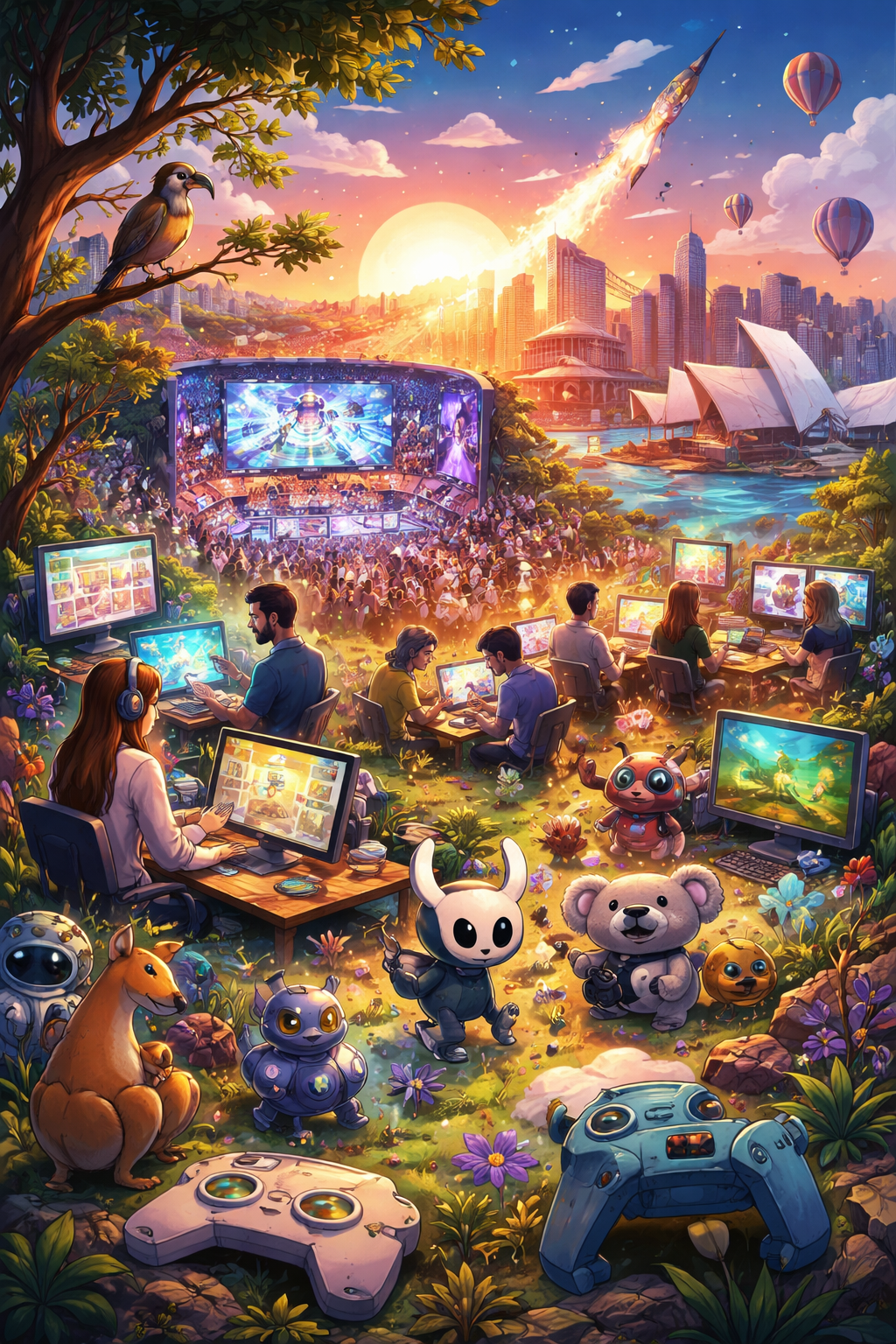
Independent studios became central to Australia’s reputation. When an Australian-made game breaks through internationally, it demonstrates that distance is no longer a barrier to cultural impact. Hollow Knight is frequently cited as an example of how meticulous design, striking aesthetics, and atmospheric storytelling can generate worldwide enthusiasm. Such successes help build confidence across the ecosystem: investors pay attention, aspiring developers commit to the craft, and community events grow in scale and ambition.
The broader ecosystem: multiple roles in a global industry
Australia’s industry now supports different studio types and career paths. Some teams focus on auteur-style premium games; others prioritize mobile releases and frequent content updates; and many operate as co-development partners for international publishers, providing specialized expertise in art production, engineering, QA, or live operations. This variety matters because it creates multiple entry points for workers and helps stabilize employment across unpredictable release cycles.
Support structures: funding, incentives, and training
Public institutions have increasingly recognized games as both cultural works and exportable digital products. State programs have offered grants and targeted initiatives, while federal policy has moved toward tax incentives intended to encourage eligible local game production. Education plays a parallel role: universities and vocational programs teach the technical and creative disciplines behind game-making, while community learning—game jams, meetups, mentorship—helps developers build portfolios and networks that translate into jobs.
How games reshape entertainment
Games have changed entertainment from something primarily watched to something participated in. They offer a spectrum of experiences: relaxing “cozy” play, intense competition, social worlds, or narrative journeys. They also merge with other media. Players listen to music while playing, watch streamers for comfort viewing, and participate in fandoms that resemble those around film franchises. Esports adds another layer—turning gameplay into performance and spectatorship, complete with teams, rivalries, and live events.
Cultural expression, community, and responsibility
Australian games can reflect local sensibilities—distinct humor, bold art choices, and storytelling that feels different from dominant global formulas. They also create community spaces where people collaborate, compete, and form friendships. With that influence comes responsibility: developers must consider healthy work practices, fair monetization, accessibility, online safety, and inclusive representation. These issues are increasingly part of how audiences judge the value of a game, not just its mechanics.
Future momentum will likely come from teams that balance artistic ambition with sustainable production—using new tools wisely, building strong communities, and crafting interactive entertainment that resonates globally while still carrying a clear Australian voice.