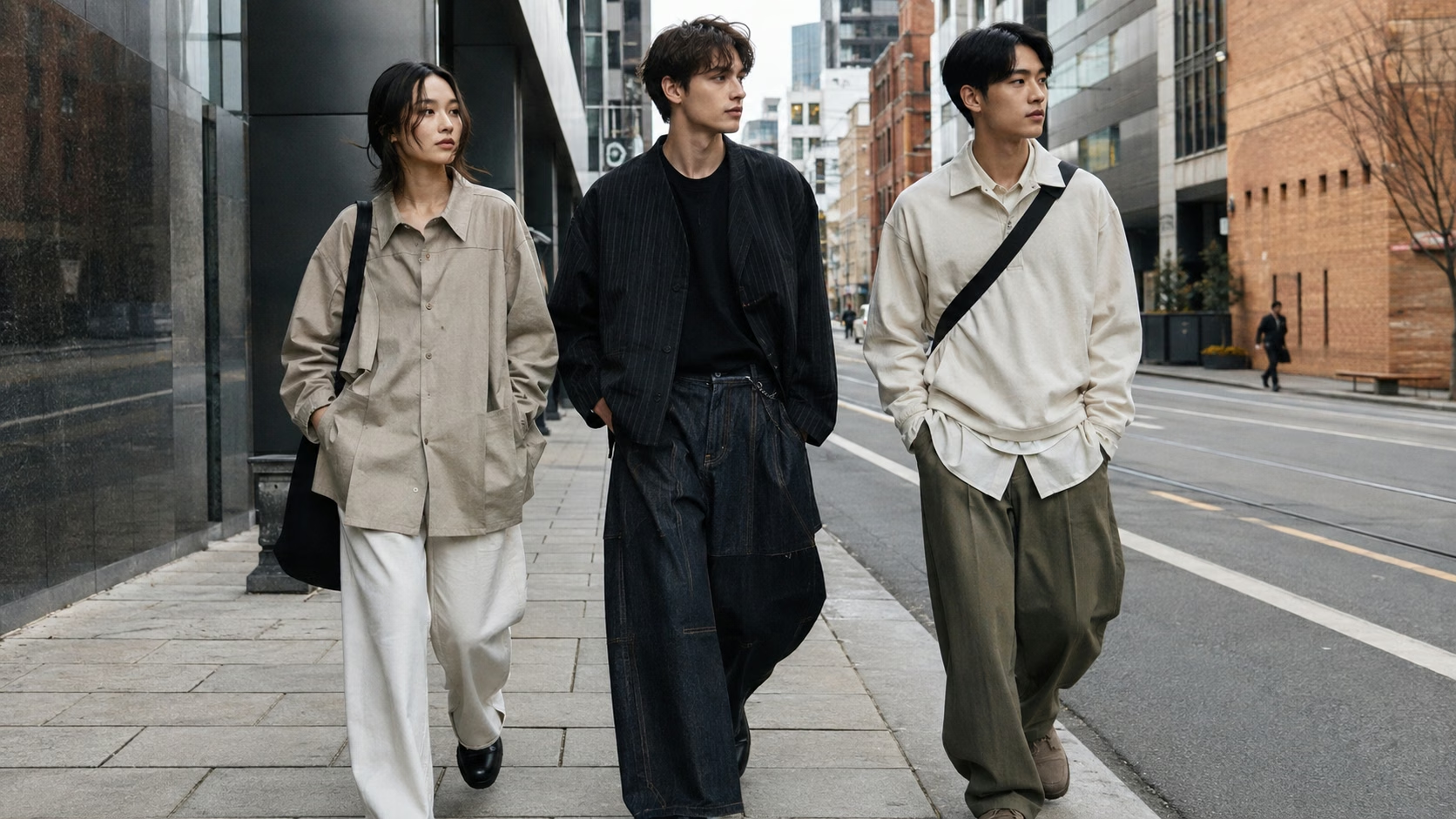
Fashion as Philosophy: A Search for Meaning
Beyond trends and aesthetics, a deeper current of Asian influence is stirring the Australian avant-garde. A new generation of conceptual designers is turning to ancient Asian philosophies to challenge the very purpose of clothing. Rejecting the relentless pursuit of perfection and novelty that fuels fast fashion, they are embracing ideas like Japan’s Wabi-Sabi and the Korean art of Pojagi to create pieces that are meditations on imperfection, impermanence, and process. This movement signals a maturation of Australian fashion, positioning it as a space for intellectual and spiritual inquiry, not just commerce.
Wabi-Sabi: The Beauty of Imperfection
Wabi-Sabi, a Japanese worldview centered on the acceptance of transience and imperfection, is becoming a guiding principle for these designers. In practice, this translates to garments that celebrate asymmetry, raw edges, and the natural flaws inherent in handcrafted textiles. Instead of hiding a knot in the yarn or a variation in dye, these features are highlighted as unique points of beauty. The use of natural, often locally sourced materials like raw wool, hemp, and organic cotton is central to this aesthetic. These pieces are designed to age gracefully, to be mended and cherished, developing a unique character over time that reflects the life of the wearer—a direct antithesis to the disposable nature of modern fashion.
Pojagi: The Art of the Seam
From Korea, the traditional art of Pojagi—a type of patchwork cloth used for wrapping and carrying objects—is providing another foundational concept. Traditionally made from leftover scraps of fabric, Pojagi is an inherently sustainable and creative practice. Avant-garde Australian designers are adopting its principles, creating garments from a patchwork of diverse materials—silk scraps, vintage denim, repurposed nylon—stitched together with visible, often decorative seams. These “seam-less” designs (in the sense of being continuous explorations rather than separate parts) highlight the beauty of construction and the story of the materials themselves. The resulting garments are three-dimensional, sculptural works of art.
Where Art, Fashion, and Craft Converge
The work emerging from this movement blurs the lines between art, fashion, and craft. These are not clothes for the high street; they are pieces destined for galleries, editorial spreads, and the wardrobes of true connoisseurs. Designers are deliberately slowing down their processes, using traditional hand-stitching and natural dyeing methods that can take weeks to complete. This focus on process is a form of quiet rebellion against an industry that values speed above all else.
The Role of Educational Institutions
Australian universities are playing a key role in fostering this intellectual approach. RMIT University in Melbourne, a leading design school, now offers dedicated courses examining the intersection of Eastern philosophy and contemporary fashion practice. A 2026 university prospectus highlights “the increasing importance of non-Western design paradigms in creating a more sustainable and thoughtful fashion future.” By equipping students with these conceptual frameworks, they are ensuring that this profound, philosophical influence from Asia will continue to shape the cutting edge of Australian design for decades to come.