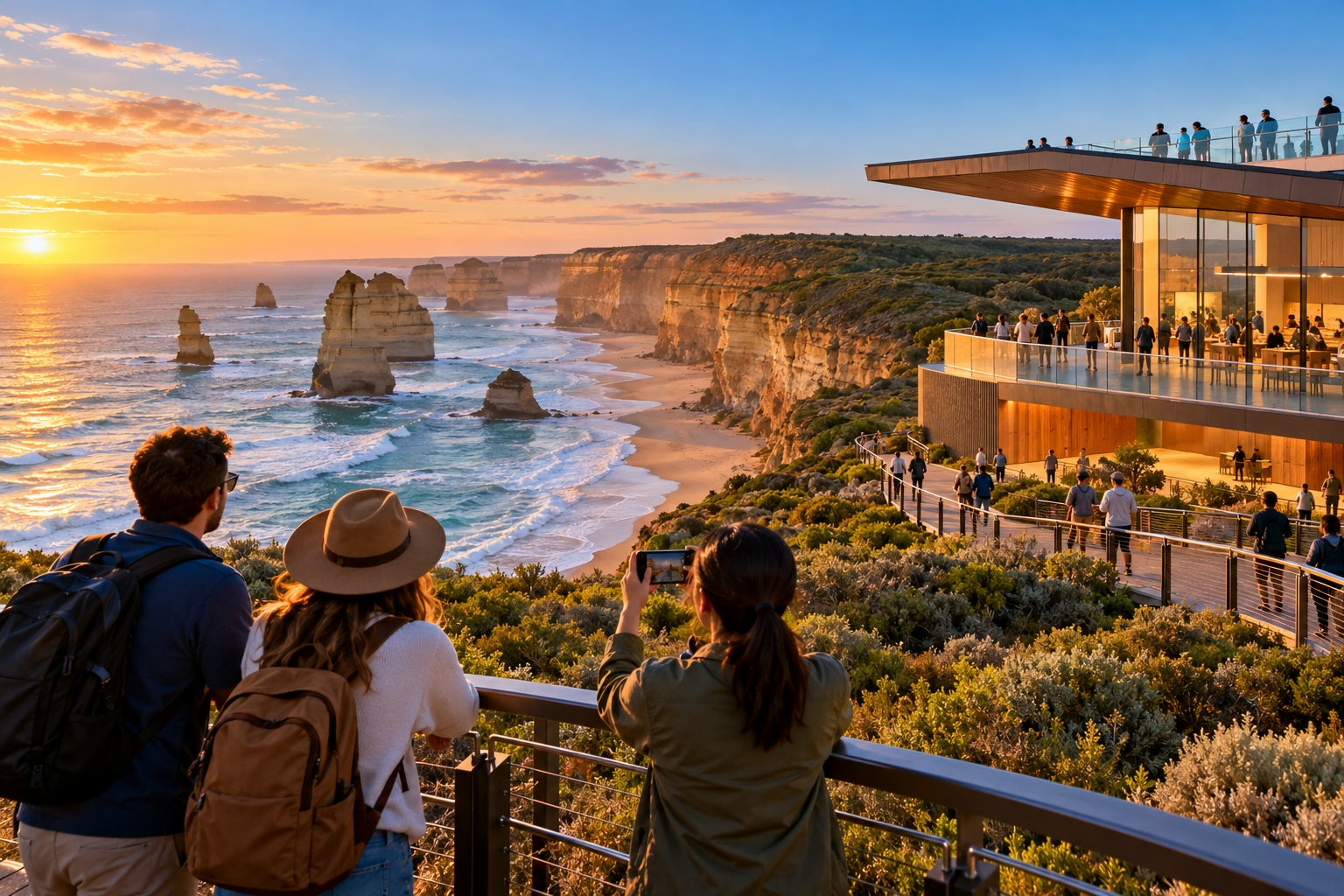
As Australia approaches the summer 2026/27 holiday period, the forward-looking data is striking. Nearly 2.5 million Australians intend to visit regional destinations, according to research published in October 2026 by Boomtown and SCAiQ. This includes almost 1.7 million metropolitan Australians with travel plans and more than 860,000 regional residents planning holidays within regional Australia. For accommodation providers, hospitality operators, retailers, and experience businesses, this is not a speculative trend. It is a demand pipeline that will materialise within months. The question is whether regional businesses are positioned to capture it.
Where they are going and what they will spend on
Destination preferences are concentrated in the eastern states. Regional NSW and the ACT lead with 17% of planned regional holidays, followed by Queensland at 14% and Victoria at 10%. Coastal regions, countryside experiences, and accessible short-break destinations remain the strongest draws, particularly for travellers departing from major cities. Spending intentions are broad-based: 83% of prospective regional holidaymakers plan to eat at local cafés and restaurants, 55% expect to shop at local businesses, and 48% plan to purchase local experiences. The economic benefit therefore extends well beyond accommodation, reaching restaurants, independent retailers, attractions, and activity operators.
The conversion challenge
Intentions do not automatically become revenue. The research notes that 31% of Australians had yet to finalise their Christmas and summer holiday plans, leaving a substantial segment open to influence. Conversion will depend on pricing, service availability, and the ability of local businesses to respond to seasonal demand. For smaller tourism enterprises, summer represents an important revenue window, but it also exposes capacity constraints: staffing shortages, limited booking systems, and inconsistent online presence can turn demand into missed opportunity. The regional businesses that thrive will be those that treat summer as a planned operational campaign, not simply a period of expected footfall.
The strategic context
The summer outlook sits within a larger national trajectory. Domestic overnight trips reached 113.0 million in the 12 months to December 2025, with total domestic spend of $153.2 billion. Total tourism spend, including international, reached $192.4 billion, and the sector supported 737,000 filled jobs. Regional dispersal is no longer a niche strategy. It is a core component of how Australia’s visitor economy grows. For regional operators, the message from the data is unambiguous: the customers are coming, they are spending, and they are actively seeking the kinds of local, authentic experiences that regional Australia is uniquely positioned to provide. The opportunity lies in execution—converting intent into bookings, bookings into spending, and spending into sustainable local prosperity.


