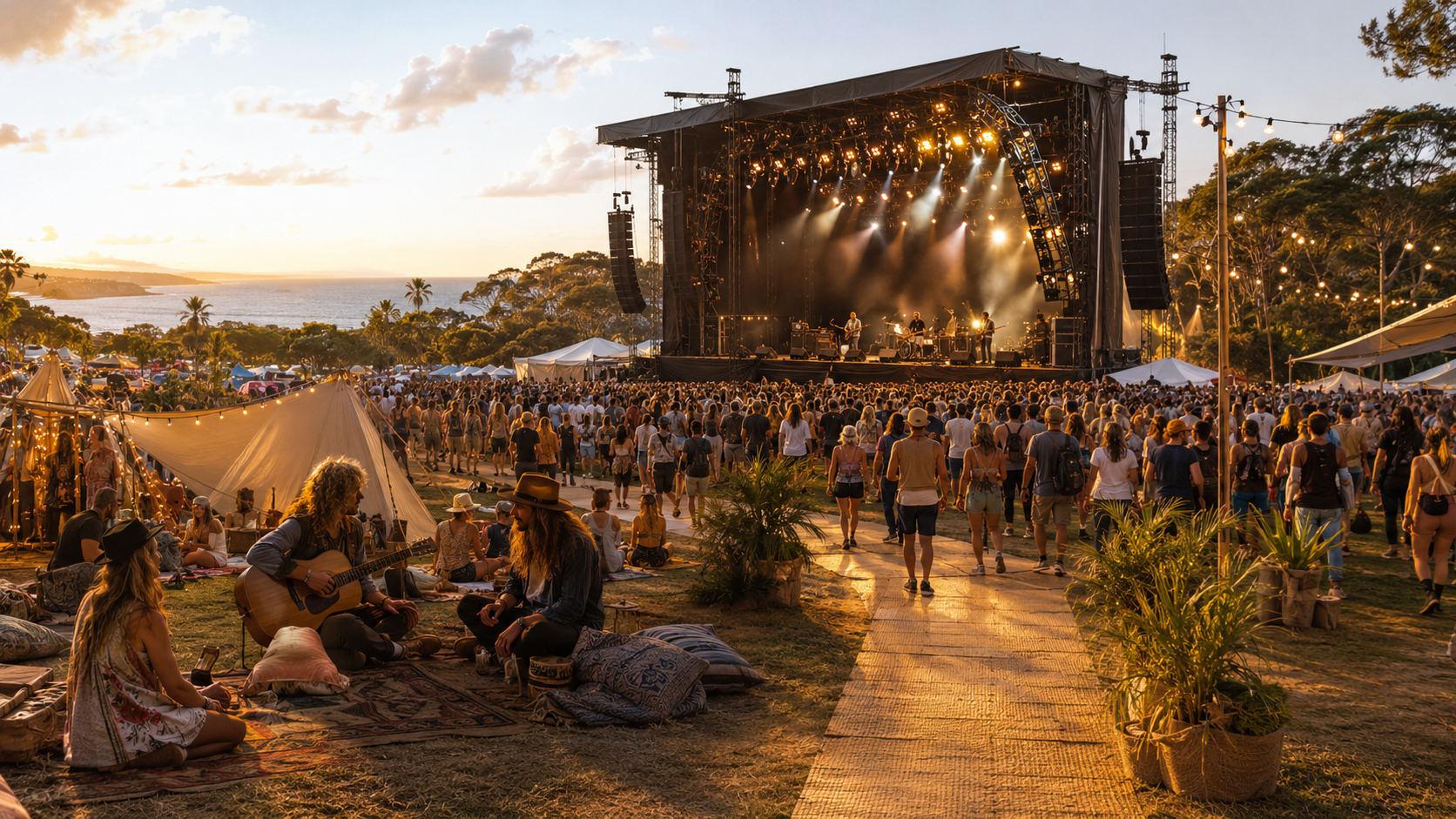
A Festival Market Under Pressure
Australia’s biggest music festivals enter 2026 with both opportunity and uncertainty. Demand for live music remains strong, but the business of running large events has become more complex. Organisers must deal with higher artist fees, expensive infrastructure, insurance pressure, climate concerns and audiences who are more careful with discretionary spending.
That makes 2026 an important test year. The question is no longer whether Australians love festivals. They clearly do. The more important question is which festivals can offer enough value to convince fans to buy tickets early, travel interstate and commit to multi-day experiences.
Why Bluesfest Remains a Benchmark
Bluesfest Byron Bay has earned its place as one of Australia’s most recognisable music festivals because it focuses on credibility. While many festivals chase viral attention, Bluesfest has built its reputation on artists with deep catalogues, strong live performance skills and cross-generational appeal.
Its identity is especially important in 2026 because heritage festivals are competing in a digital-first entertainment market. Younger fans discover music through short-form video, while long-time festivalgoers often value atmosphere, musicianship and community. Bluesfest sits at the intersection of those expectations.
A successful 2026 model would likely include international touring acts, Australian icons and carefully selected rising performers. The festival’s strength is not just its lineup, but its ability to make live music feel like a cultural gathering rather than a one-night transaction.
Splendour in the Grass and the Value of Youth Culture
Splendour in the Grass occupies a different but equally powerful space. It has historically been one of Australia’s most influential contemporary festivals, known for major headliners, camping culture and its strong connection to fashion, art and youth identity.
In the current market, Splendour’s challenge is sharper. Large destination festivals require fans to spend on tickets, transport, accommodation, food and time away from work or study. That means the 2026 edition must feel essential. A lineup alone may not be enough. Audiences will expect smoother entry systems, clear weather planning, strong food and beverage options, safe camping facilities and a festival environment that feels worth the cost.
The Regional Advantage
Byron Bay and northern New South Wales remain powerful festival destinations because they offer more than stages. They provide a lifestyle setting: beaches, tourism, accommodation, local food and a recognisable creative identity. That destination appeal helps Bluesfest and Splendour stand apart from city-based events.
However, regional festivals also face logistical challenges. Transport capacity, accommodation prices and local infrastructure can influence whether fans decide to attend. In 2026, these practical details may be as important as the headline acts.
The Wider Australian Festival Landscape
Other major events across Australia are also reshaping audience expectations. Urban festivals are attractive because they require less travel and often cost less overall. Electronic and boutique events are building loyal communities through specific music identities. New Year’s festivals continue to attract fans looking for holiday experiences.
This means Bluesfest and Splendour must compete not only with each other, but with every entertainment option available to young and older audiences.
Why 2026 Could Redefine the Sector
The festivals that thrive in 2026 will be those that combine strong programming with operational trust. Fans want to know what they are paying for, how they will get there, what happens in bad weather and whether the event can deliver a safe, memorable experience.
Bluesfest and Splendour remain central to the story because they represent two major models: the artist-led heritage festival and the culture-led contemporary mega-festival. Their performance in 2026 will say a great deal about where Australia’s live music industry is heading next.