The way frozen food enters Australian homes has shifted dramatically, propelled by a permanent leap in online grocery adoption and sophisticated data personalization. Statista’s 2026 digital market outlook shows that frozen food e-commerce sales have expanded at 18% year-on-year, outpacing overall supermarket online growth, as consumers become comfortable entrusting the cold chain to digital platforms (Statista Frozen Food Australia 2026).
Dark Stores and Micro-Fulfillment for Instant Gratification
Quick-commerce has reached the freezer. Specialised dark stores equipped with sub-zero chambers now promise delivery of frozen meals within 30 minutes. Milkrun’s 2026 pivot from fresh-only to a full frozen range, including ice creams and ready-to-heat pasta bakes, leverages these micro-fulfillment hubs located just kilometres from dense urban populations. By eliminating the traditional retail store floor, the integrity of frozen products remains intact until the moment a delivery rider collects the insulated bag.
Meal Kits Embracing Frozen Components
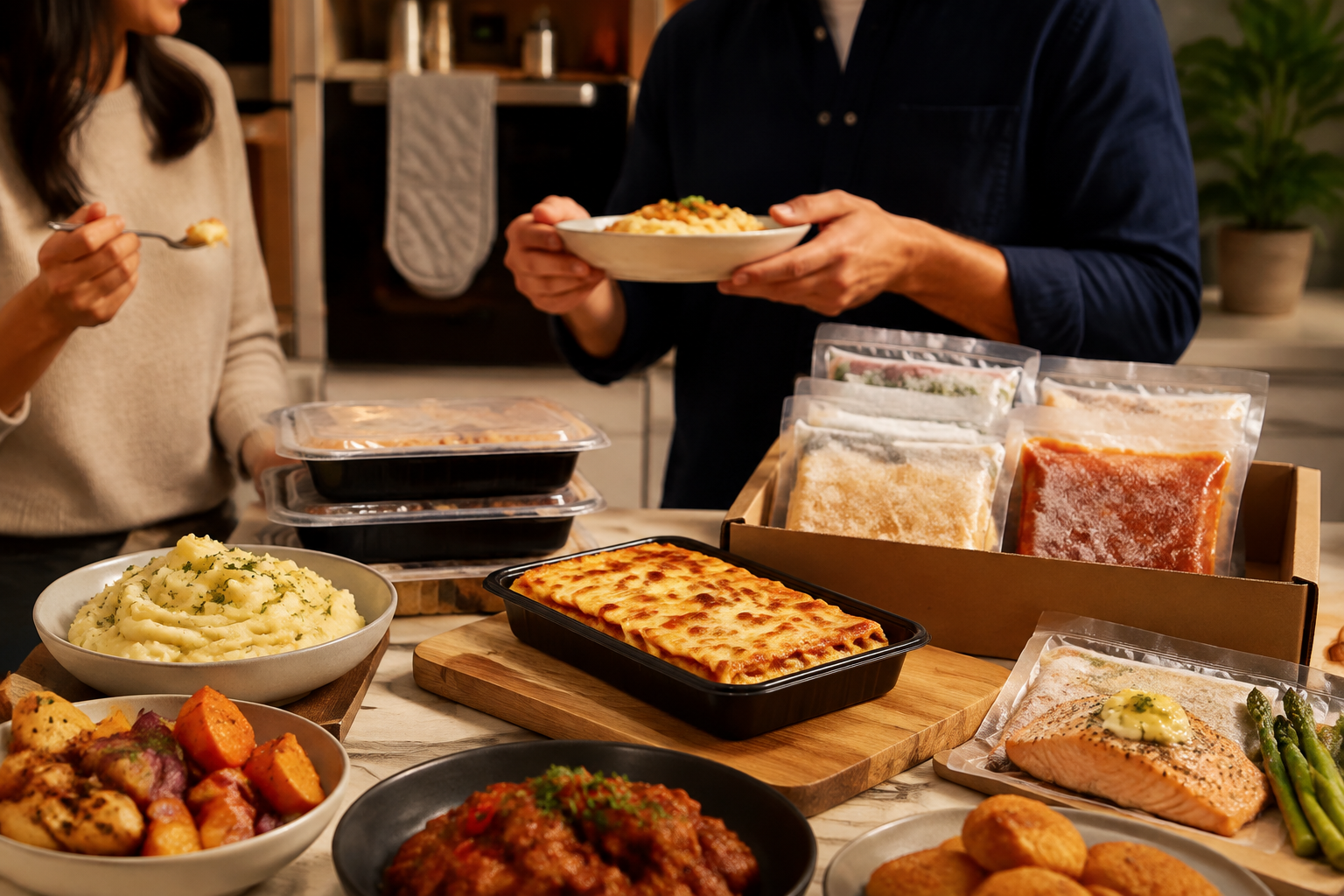
Even the meal kit sector, pioneered by HelloFresh and Marley Spoon, is integrating frozen ingredients to reduce waste and complexity. HelloFresh’s “Fast & Frozen” add-on, trialled in Melbourne in May 2026, allows subscribers to order pre-made frozen curries and side dishes alongside their fresh ingredients kit. This hybrid model acknowledges that the weeknight dinner dilemma often requires a blend of scratch cooking and fail-safe freezer support.
AI-Driven Personalization and Subscription Models
Artificial intelligence is the invisible hand curating the frozen aisle online. Coles Online and Woolworths Metro60 platforms now deploy machine learning algorithms that analyse purchase history, weather patterns, and even local event data to push relevant frozen food offers. A consumer who buys frozen pizza every Friday might receive a discount on gourmet gelato; a heatwave in Brisbane triggers promotions on frozen fruit smoothie packs. This personalization is lifting frozen conversion rates by up to 23%, according to retail analytics firms.
Digital-Only Frozen Brands Rising
Digitally native vertical brands are bypassing physical shelves altogether. The Adelaide-based frozen dog food brand “Paws Frozen” operates entirely on a subscription model, delivering raw frozen patties for canines fortnightly with customised meal plans generated via an app-based questionnaire. While pet food is a niche, its growth signals how subscription e-commerce can reconfigure frozen supply chains for any category, from human baby purees to single-serve vegan stews.
The digital deep freeze is no longer an experimental side channel; it is the fastest-growing frontier of the Australian frozen food industry. As AI sharpens its predictive accuracy and logistics networks become more resilient, the friction between craving a frozen meal and having it appear at the door will disappear, cementing e-commerce as the default interface for a new generation of freezer stockists.