Bypassing the Supermarket Shelf
For decades, the path to scale in Australian chocolate ran through Coles and Woolworths. Today, a new generation of craft producers is rewriting that playbook, building direct relationships with consumers and pursuing export markets where Australian provenance commands a premium.
E-commerce and direct-to-consumer channels now represent 10–13% of chocolate sales in Australia, up from under 5% pre-2020, driven by gifting subscriptions, artisan brands, and seasonal flash sales. This shift has profound implications for how premium chocolate brands build awareness, loyalty, and margin.
The DTC Advantage for Craft Producers
For craft producers and niche brands, mastering the direct-to-consumer channel is not merely an alternative sales route—it is a strategic imperative. The ability to build a loyal community through subscription models, exclusive offerings, and immersive digital experiences fosters direct relationships and higher margins than wholesale or retail partnerships typically allow.
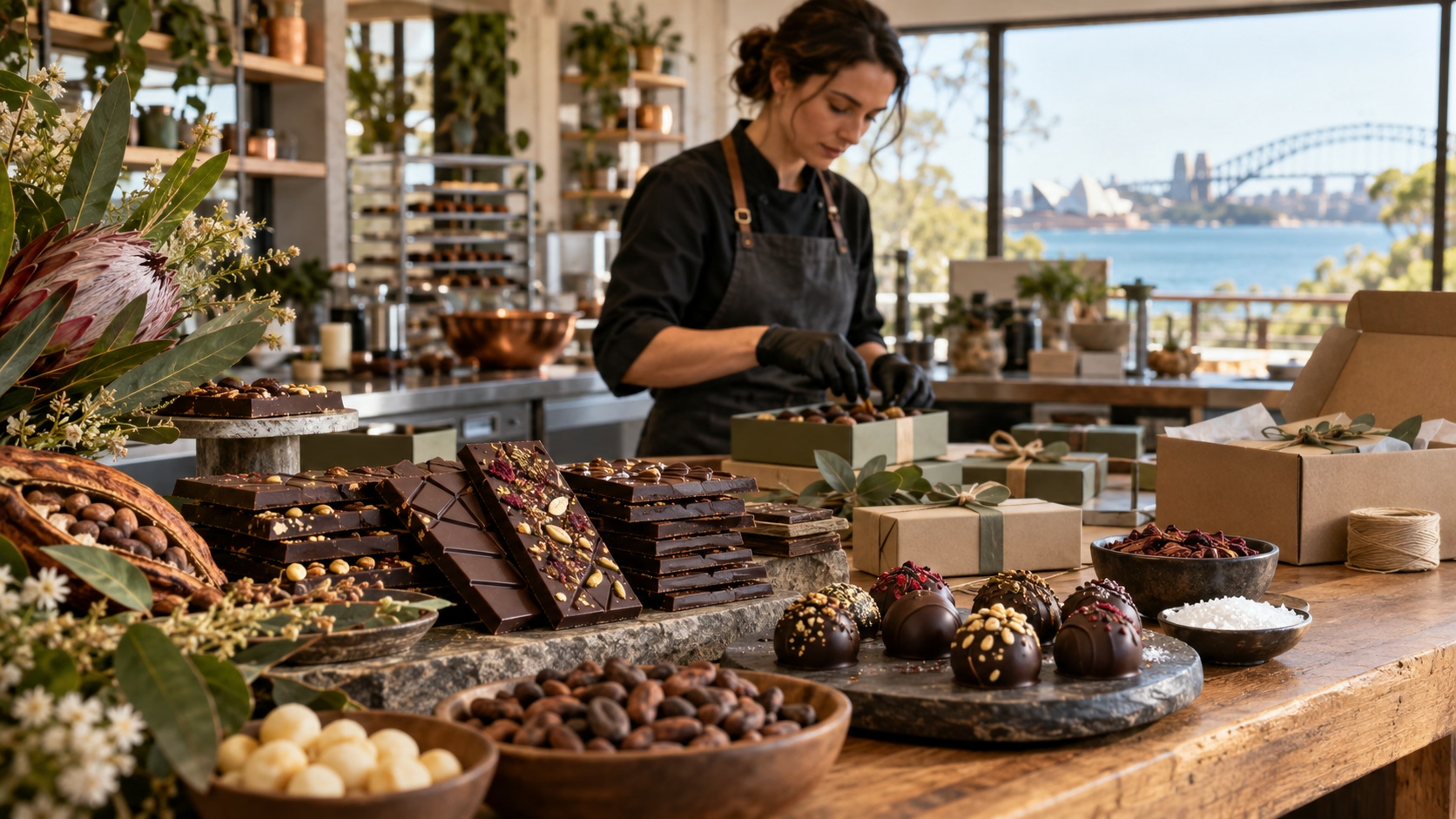
Koko Black, Melbourne’s premium chocolatier established in 2003, has leveraged its strong brand identity—combining European couverture techniques with Australian native ingredients like lemon myrtle and Davidson plum—to cultivate a dedicated DTC following alongside its retail presence. The brand’s ability to tell a coherent story about craft, provenance, and Australian identity has proven particularly effective in the DTC space, where storytelling drives conversion.
Export: Japan and Southeast Asia as Profit Pools
The export market, especially to Japan and emerging Southeast Asian economies, remains a crucial profit pool for Australian manufacturers capable of delivering consistent, high-quality products. Australian provenance carries significant cachet in these markets, particularly when paired with native ingredients such as macadamia, wattleseed, and lemon myrtle that cannot be sourced elsewhere.
For craft producers, the strategic advice is clear: pursue export opportunities selectively, focusing on markets like Japan where Australian provenance and quality are valued, potentially through partnerships with established local distributors. The Asia-Pacific region offers a particularly compelling opportunity, with Singapore projected to remain the fastest-growing premium chocolate market in the region, reaching USD 261.44 million by 2034.
The Traceability Premium in Export Markets
In international markets, traceability and origin stories are not merely marketing assets—they are prerequisites for premium positioning. Brands that invest in QR-code traceability from farm to bar, paired with storytelling around specific cooperatives in Ecuador or Madagascar, can command price premiums of 40–60% above standard premium bars.
This presents a natural advantage for Australian bean-to-bar producers like Bahen & Co, whose direct relationships with farms across Central and South America are central to their brand narrative. In export markets, this traceability is not an add-on—it is the foundation of the value proposition.
Formalising Operations for Scale
To successfully scale DTC and export operations, craft producers must formalise their operations and governance, including robust food safety systems, financial controls, and clear sustainability reporting to attract investment and partnerships. The informal, artisanal practices that define craft production at small scale must be translated into systems that can support consistent quality, regulatory compliance, and reliable fulfilment across multiple markets.
The Future of Australian Chocolate Is Multi-Channel
The most successful Australian chocolate brands of the next decade will not choose between retail, DTC, and export—they will integrate all three into a coherent omnichannel strategy. Retail provides scale and visibility; DTC delivers margin and consumer insight; export opens access to high-value markets where Australian provenance commands a premium. The brands that master this integration, while maintaining the authenticity and craftsmanship that justify their premium positioning, will define the next chapter of Australia’s chocolate industry.