Mainstreaming Without Losing Identity
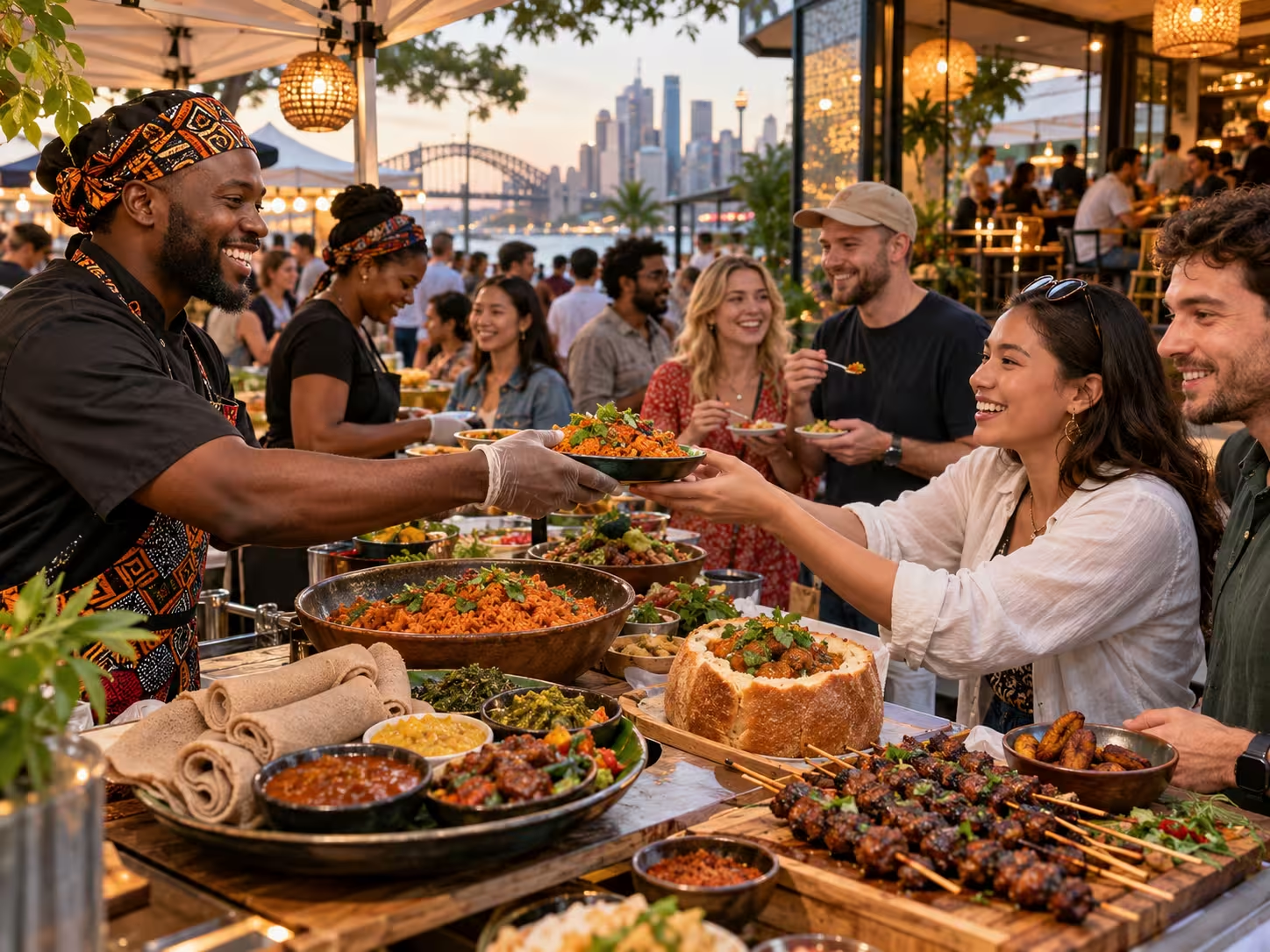
African cuisine in Australia is entering a new phase. It is no longer a novelty or a niche. It is becoming part of the mainstream food conversation. Supermarkets stock harissa and plantain chips. Meal-kit companies offer jollof rice recipes. Food delivery apps feature African restaurants in their top categories. This mainstreaming brings opportunities and risks. The opportunity is scale, investment, and cultural recognition. The risk is dilution, appropriation, and loss of community ownership. The next few years will determine which African food businesses thrive and which fade. According to IBISWorld’s 2026 industry reports, the Australian food and beverage sector is shifting toward ethnic, health-conscious, and experience-driven offerings. IBISWorld
Fine Dining and Chef Collaborations
One clear trend is the continued rise of African chefs in fine dining. Collaborations between African and non-African chefs are becoming common. These dinners introduce new ingredients and techniques to wider audiences. They also position African cuisine as worthy of critical attention. Expect to see more tasting menus, wine pairings, and chef residencies. Some chefs will open small, high-end venues with limited seats. Others will focus on catering and private events, where margins are higher and overhead is lower. The fine dining route is not for everyone, but it elevates the entire category.
Meal Kits, Retail, and Packaged Foods
African cuisine is moving into retail. Packaged spice blends, marinades, and frozen meals are appearing in independent grocers and online stores. Meal kits allow customers to cook African dishes at home without sourcing specialty ingredients. This trend is driven by convenience and curiosity. It also creates new revenue streams for restaurants and chefs. A popular restaurant might license its suya spice or jollof base to a retailer. This extends brand reach beyond the dining room. However, packaging, food safety, and distribution require different skills. Partnerships with food manufacturers can help.
Technology and Digital Discovery
Google Discover, TikTok, and Instagram are powerful discovery engines for African food. A single viral video can lead to sold-out pop-ups and weeks of bookings. Chefs are learning to optimize their online presence with SEO-friendly menus, location tags, and customer reviews. Delivery platforms also provide data on demand. This digital ecosystem lowers marketing costs and helps small operators compete with big chains. The next step is online cooking classes, subscription spice boxes, and virtual food festivals.
Community, Ethics, and Ownership
As African cuisine grows, questions of ownership and ethics become important. Who benefits from the boom? Are African-Australian entrepreneurs getting fair access to capital and leases? Are stories and recipes being credited? Community organizations and business networks are working to support African-owned enterprises. They provide mentoring, micro-loans, and advocacy. Ethical sourcing is also a priority. Chefs want to ensure that farmers, producers, and communities in Africa benefit from the global appetite for their food. This values-driven approach can be a competitive advantage.
Challenges on the Horizon
The future is not without obstacles. Rising rents, wage costs, and interest rates affect all hospitality businesses. African restaurants may also face unconscious bias from landlords, lenders, and customers. Supply chain disruptions can hit specialty ingredients hard. To survive, operators need strong financial literacy, diverse revenue streams, and supportive networks. They also need to train the next generation of chefs and managers. Apprenticeships and culinary scholarships can help.
The Long-Term Outlook
African cuisine in Australia is not a passing fad. It is a cultural and economic force. The pop-up phase proved demand. The restaurant phase proved viability. The next phase will prove scalability and sustainability. Whether through fine dining, food trucks, retail products, or digital platforms, African food will continue to shape Australian taste. The businesses that succeed will be those that honor tradition, innovate thoughtfully, and build community along the way.