Accessible Tourism Becomes an Important Economic Opportunity
Australia’s tourism industry is experiencing a growing emphasis on accessibility as businesses recognise the importance of welcoming travellers with different physical, sensory and cognitive requirements.
From major cities to remote natural attractions, tourism providers are examining how accommodation, transportation and recreational services can become more inclusive.
This development reflects a significant consumer market rather than a narrowly defined specialist travel segment.
According to Tourism Research Australia, travellers with accessibility needs accounted for approximately 70.5 million domestic and international trips during 2024, generating AUD 29.2 billion in tourism expenditure.
The research also found that 58% of nights and day trips involving travellers with accessibility needs occurred in regional Australia, compared with 44% for other travellers.
These figures highlight the importance of improving accessibility beyond metropolitan tourism centres.
Popular Australian Destinations Expand Accessible Experiences
Sydney remains an important destination for travellers seeking inclusive cultural and urban experiences.
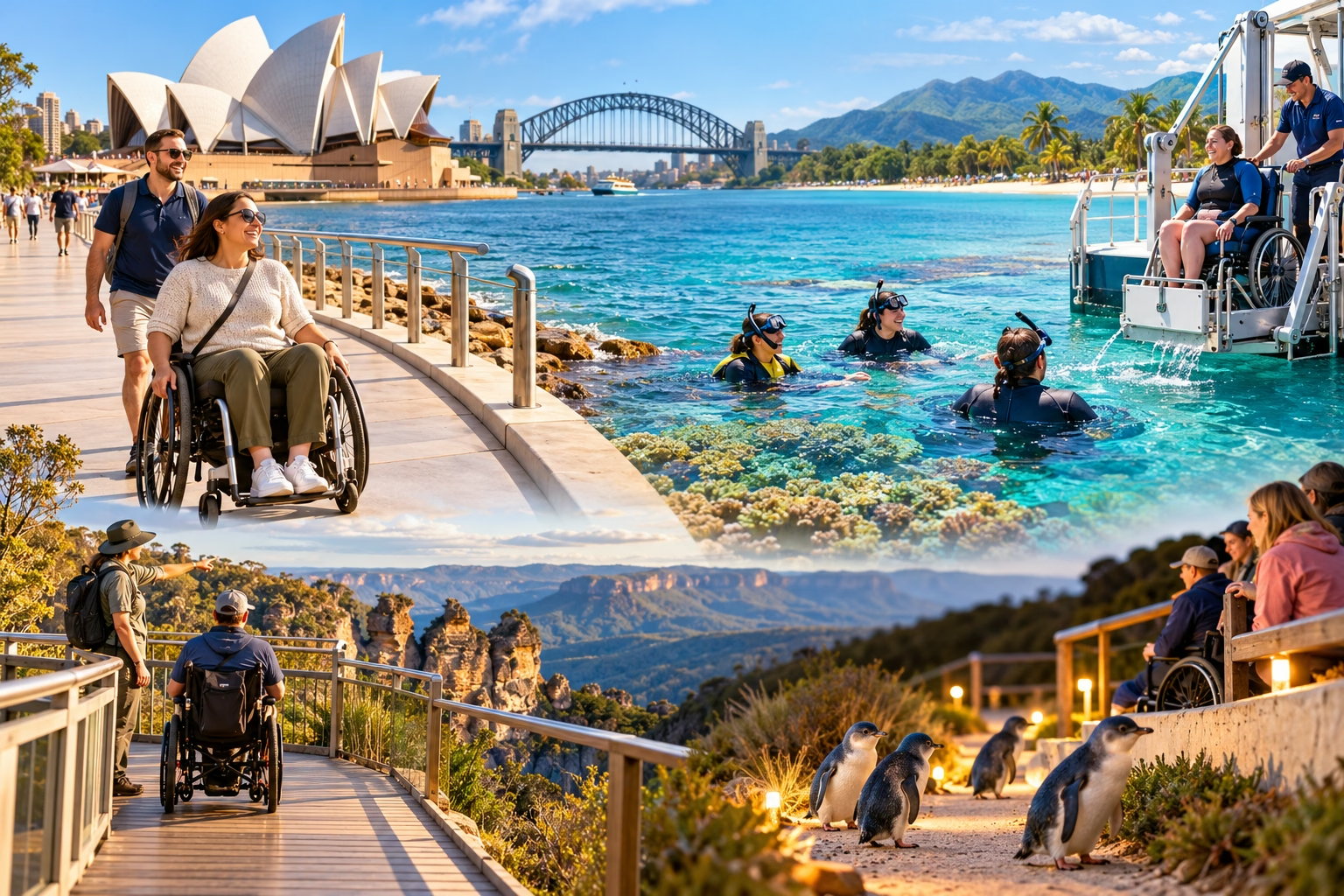
The Sydney Opera House provides mobility access tours and relaxed performances, helping visitors with different needs participate in cultural activities.
Bondi Beach offers a level promenade, while specialist services can support travellers interested in accessible sightseeing and surfing activities.
Outside Sydney, the Blue Mountains feature wheelchair-friendly walking routes and sightseeing opportunities, including the Three Sisters Walk.
Queensland offers another variety of experiences, particularly around Cairns and the Great Barrier Reef.
Quicksilver Cruises provides accessible facilities at Agincourt Reef, where a specialised water-powered lift supports selected visitors with mobility restrictions.
These attractions demonstrate how tourism operators can expand participation through targeted infrastructure and service improvements.
Victoria and the Northern Territory Emphasise Inclusive Nature Tourism
Victoria’s Phillip Island is recognised for providing accessible wildlife experiences.
Its Penguin Parade accommodates visitors with mobility requirements and sensory sensitivities through accessible viewing arrangements and supportive visitor facilities.
The attraction illustrates how destination accessibility increasingly includes considerations beyond wheelchair access.
In the Northern Territory, Uluru-Kata Tjuta National Park offers several wheelchair-accessible walking tracks, allowing visitors to encounter significant Australian landscapes and learn about their cultural importance.
Accessible tourism services in the Red Centre can also include specialised transport and guided experiences, although suitability depends on individual requirements.
These options provide opportunities for travellers to explore destinations traditionally associated with challenging terrain and extensive outdoor activities.
Government Investment Supports Accessibility Development in 2026
Recent government announcements indicate continued interest in expanding Australia’s inclusive tourism infrastructure.
In April 2026, New South Wales announced AUD 500,000 to support accessibility improvements at Sails Holiday Park in Lake Macquarie.
The project includes accessible accommodation, improved pathways and specialised aquatic equipment.
The government reported that bookings for the park’s existing inclusive accommodation had increased by nearly 22% annually since its introduction.
Meanwhile, Queensland announced AUD 2.1 million in funding for a proposed Brisbane River adventure tourism initiative featuring wheelchair-accessible activities.
Both developments illustrate how accessibility can influence investment decisions across accommodation and adventure tourism.
The official NSW Government announcement provides further details about the Lake Macquarie project.
What Travellers and Tourism Businesses Should Consider
Despite the expansion of accessible facilities, travellers should not assume that every destination offers identical services.
Confirming accessible transport, accommodation specifications, activity restrictions and assistance arrangements remains essential.
Tourism businesses can strengthen visitor confidence by publishing accurate accessibility descriptions, providing staff training and responding to individual requirements.
Australia’s accessible tourism development demonstrates how investments in infrastructure and inclusive services can create meaningful travel opportunities while strengthening regional economies and supporting a more competitive visitor industry.


