The Coming Data Deluge
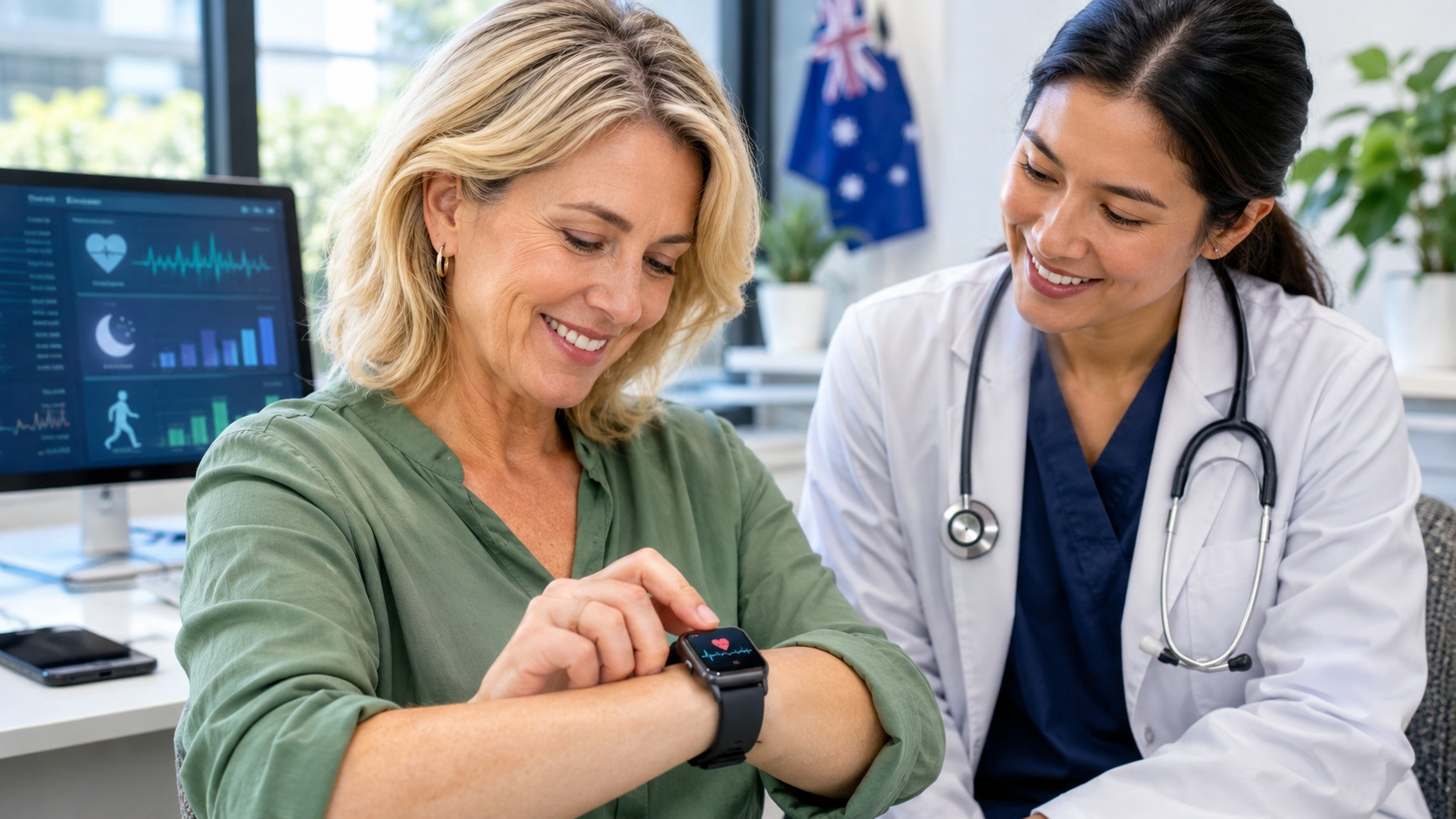
Australia is preparing to connect wearable devices directly to the national digital health infrastructure. New regulations expected to come into force by February 2027 will, for the first time, allow healthcare identifiers to be linked to smartwatches, fitness trackers, and biometric monitoring devices. The implications are enormous: data from an Apple Watch, Garmin, Oura ring, or continuous glucose monitor could flow into a person’s health record, making real-time physiological information a permanent part of their clinical history.
From Wrist to Record: The Integration Architecture
The regulatory change builds on broader digital health reforms aimed at embedding healthcare identifiers across health, aged care, and disability services so that information follows patients through the system. As Simon Cleverley of the Department of Health, Disability and Ageing explained at the HIC2026 conference, the goal is to enable scenarios where a person receiving a Support at Home package or Hospital in the Home service can share wearable data into their health record.
The ambition is not merely technical integration. Cleverley framed it as a shift away from the “break and fix” cycle of treating illness after it occurs, toward prevention enabled by continuous data.
Privacy Is Not a Footnote
The privacy architecture around this integration is still maturing. Section 77 of the My Health Records Act 2012 creates Australia’s only absolute data residency rule, applying specifically to My Health Record data. From 1 July 2026, certain reports must be uploaded to My Health Record by default unless an exception applies. With approximately 73 million records created and more than 21 million medication list retrievals per week as of April 2026, the scale of the national repository is substantial.
The wearable dimension introduces new risk surfaces. Continuous physiological data is more granular, more longitudinal, and more commercially valuable than episodic clinical records. It can reveal sleep patterns, stress levels, cardiac rhythm irregularities, and glucose variability—information that insurers, employers, and marketers may have incentives to access. The regulatory framework must therefore address not only data residency but also consent granularity, secondary use, and re-identification risk.
Precision Health Raises the Stakes
Analysts have warned that precision health will challenge Australia’s digital health systems unless privacy and governance frameworks are rethought now. Wearable-derived longitudinal data will sit alongside genomic sequences, biomarkers, and imaging data, creating a rich but sensitive phenotype profile for each individual. The FAIR data principles—findable, accessible, interoperable, reusable—are increasingly cited as the governing framework, but they do not resolve the fundamental tension between data utility and personal privacy.
The Trust Equation
The success of wearable integration into national health infrastructure will depend less on the technology than on public trust. If Australians perceive that their wrist-derived data is being used transparently, with meaningful control and robust security, adoption and engagement are likely to deepen. If they perceive a loss of control, the same devices that promised empowerment could become a source of anxiety and resistance.
The regulatory window between 2026 and 2027 is therefore critical. The laws enabling healthcare identifier linkage are already passed, but the operational and ethical guardrails are still being built. Getting that balance right will determine whether Australia’s wearable health infrastructure becomes a model of person-centred prevention—or a cautionary tale about the unintended consequences of always-on data.