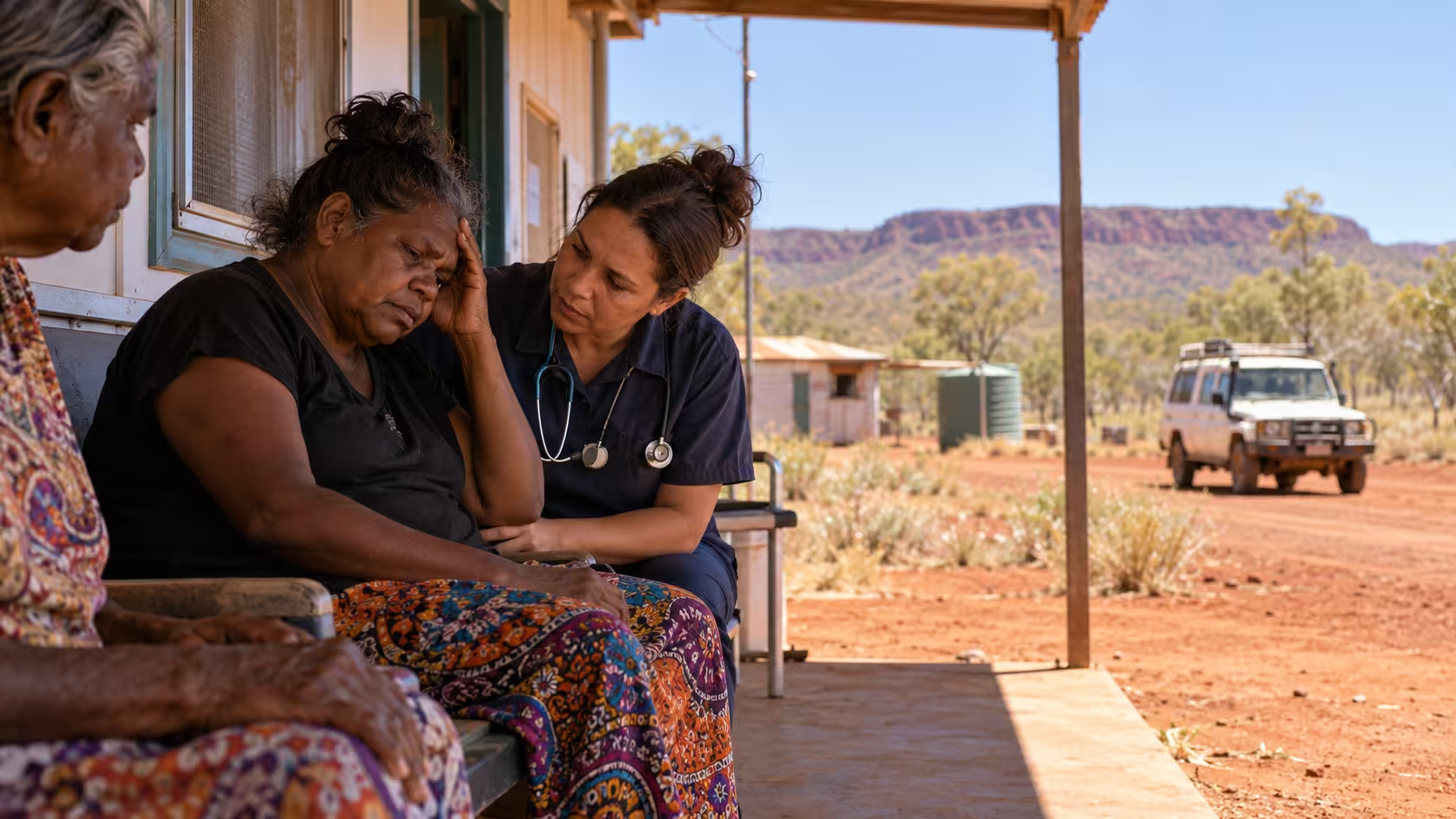
When Geography Determines Survival
In Australia’s Northern Territory, a vast expanse of remote communities and Aboriginal lands, there is no dedicated Long COVID clinic — the only jurisdiction in the country without one. For the Aboriginal communities that call this region home, the absence of specialist services is not merely an inconvenience; it is a matter of life and death.
Dr Andrew Nguyen, a Public Health Registrar and Infectious Diseases Physician with the Aboriginal Medical Services Alliance Northern Territory (AMSANT), has warned that Long COVID remains a significant and under-recognised health burden in remote communities. “The true impact in Aboriginal communities remains unknown due to major gaps in access, research and diagnosis,” he said, noting that Long COVID is likely to be under-diagnosed in the NT, particularly where essential diagnostic tests are not consistently accessible.
This diagnostic gap reflects a broader pattern of health inequity. Aboriginal and Torres Strait Islander peoples already face higher rates of chronic disease, lower vaccination coverage, and increased COVID-19 risk. The absence of Long COVID-specific services in the NT compounds these existing disparities, creating what Dr Nguyen describes as a situation where “if people can’t access the tests, they can’t get the diagnosis”.
The Statistical Invisibility Problem
Across Australia, the BMC Health Services Research review identified statistical invisibility as “the most fundamental challenge” in Long COVID care. Without an activated diagnostic code, services cannot reliably identify or follow people living with the condition, a limitation that disproportionately affects populations already marginalised within the healthcare system.
For Aboriginal communities in the NT, this invisibility is compounded by the lack of dedicated services. Dr Nguyen has noted emerging concern about possible links between COVID infection and increased deaths and acute illness among Aboriginal people since 2022, but no NT-specific data yet exists on how often these complications are occurring. “The fact that we have no Long COVID clinic in the NT tells us how little data, funding and attention have been directed to understanding the burden among Aboriginal communities,” he said.
Age, Gender, and Access
Inequities in Long COVID care extend beyond geography. Seventy-five percent of ME/CFS patients are women, and a quarter are housebound or bedbound, with research indicating impairment levels comparable to or exceeding those associated with multiple sclerosis, depression, or cancer. Diagnosis delays commonly extend across multiple years, limiting access to treatment and support services.
Older Australians face additional barriers. A study published in BMJ Open in 2026 found that older Long COVID patients experienced lack of validation, delayed multidisciplinary care, mental health deterioration, and difficulties navigating the healthcare system. These challenges may require particular attention to care coordination, validation, and support for comorbidities and social vulnerabilities.
Children are also affected. Research published in Vaccine in March 2026 estimated that by the end of 2022, seroprevalence was higher among children aged 5-11 years (85.6%) than among those aged 6 months-4 years (77.9%), with approximately 0.3% of the older group and 0.8% of the youngest experiencing Long COVID. The study suggested that vaccination can reduce the Long COVID burden in children, which should be considered in vaccine policy.
A Call for Equity-Focused Action
The path forward requires more than incremental reform. As the BMC Health Services Research review concluded, strengthening Australia’s response will require national leadership, investment in workforce training, sustainable funding for care coordination, improved public and professional awareness, and the establishment of primary care-led multidisciplinary pathways.
For Aboriginal communities in particular, Dr Nguyen has called for research to understand how Long COVID is affecting these populations and to support appropriate models of care. The OUTPOST study, which recruited over 1,500 people across Australia between 2024 and 2025, has established a First Nations Reference Group to ensure that Aboriginal perspectives inform research design and implementation.
As Anne Wilson, CEO of Emerge Australia, has emphasised, the systems that people living with Long COVID rely on are “still designed around fixed assumptions of functioning, attendance and recovery” — assumptions that fail to account for the fluctuating and unpredictable capacity of those with energy-limiting conditions. Until Australia’s healthcare system learns to accommodate this reality, the nation’s most vulnerable patients will continue to fall through the cracks.