Timing Your Journey
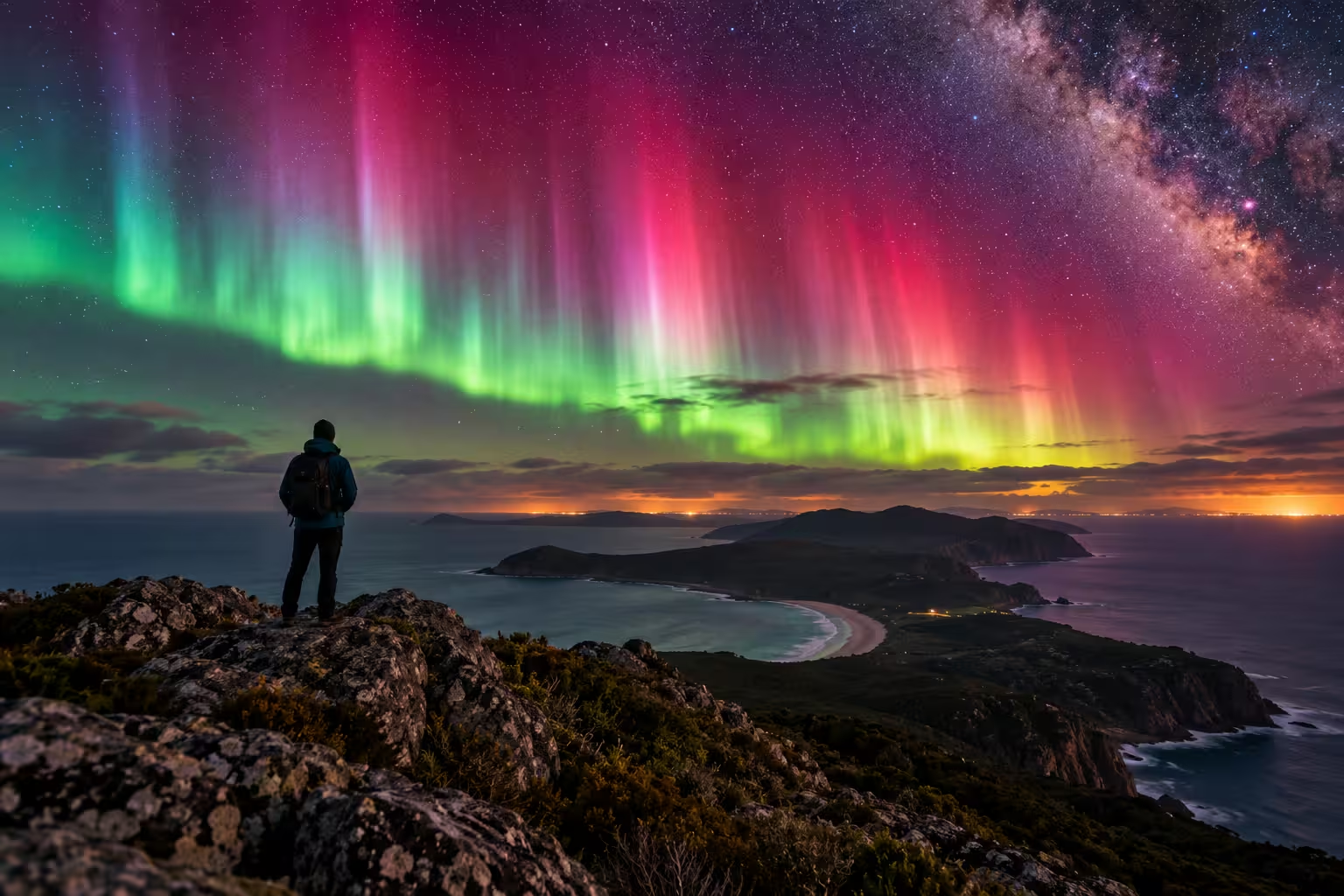
Australia’s dark sky calendar for 2026 is anchored by the solar maximum, which amplifies aurora activity and enhances planetary visibility. The Bureau of Meteorology has identified three peak aurora windows: 12–16 July, 10–14 August, and 8–12 September. For Milky Way viewing, the winter months (June through August) offer the most spectacular views of the galactic core, particularly around new moon phases when lunar light interference is minimal.
Tasmania remains the premier aurora destination, with locations like Kunanyi (Mount Wellington), Bellerive Beach, Goat Bluff, and Bruny Island offering accessible and reliable viewing. For mainland stargazing, the Warrumbungle National Park in NSW and the River Murray International Dark Sky Reserve in South Australia provide world-class dark sky experiences.
The Technology Toolkit
Successful dark sky travel requires some specific tools. Aurora forecast apps — such as My Aurora Forecast — provide real-time KP index readings that indicate geomagnetic activity levels. A KP index above 5 generally correlates with naked-eye aurora visibility in Tasmania.
For photography, modern smartphones in night mode can capture impressive results. A steady surface or tripod is essential. For more serious astrophotography, a digital SLR with a wide aperture (f/2.8 or wider) and manual exposure controls allows for longer exposures that reveal detail invisible to the eye.
Hipcamp’s updated search map, which integrates NASA’s 2026 Black Marble satellite data, allows travelers to filter campsites by night sky quality — a genuinely useful planning tool for those prioritizing darkness.
Choosing Your Route
A classic dark sky itinerary might begin in Sydney with a drive to Warrumbungle National Park (approximately 6 hours), spending two nights under the Southern Hemisphere’s first Dark Sky Park. From there, a flight to Adelaide connects to the River Murray reserve, just 90 minutes from the city.
For the aurora-focused traveler, Hobart serves as the base. Day trips to Mount Wellington and the South Arm Peninsula allow for flexibility, while a night or two on Bruny Island provides an immersive dark sky experience. The newly launched Starlit Tasmania tours offer guided access to Bortle 3 skies near Sorell, with telescope viewing and astrophotography instruction included.
For those seeking the ultimate outback experience, Karlu Karlu in the Northern Territory — now Australia’s third International Dark Sky Sanctuary — offers granite formations, cultural significance, and some of the darkest skies on the continent.
What to Bring
Red-light headtorches preserve night vision and are essential for any dark sky excursion. Warm layers are non-negotiable for winter stargazing, even in temperate regions. A star chart app or printed planisphere helps with navigation, though guided tours provide expert interpretation.
Perhaps most importantly, bring patience. Dark sky travel is weather-dependent. Clouds, moonlight, and geomagnetic conditions are beyond human control. The reward — a sky so dense with stars it feels almost solid — justifies the unpredictability.
The Community Experience
While solitary stargazing has its appeal, guided tours offer access to knowledge and equipment that enhance the experience. From Starlit Tasmania’s small-group sessions to the Cosmos Centre’s blend of science and Indigenous storytelling in Charleville, the guided dimension transforms observation into understanding.
For the 2026 traveler, the dark sky is not a destination but a journey — one that connects with a heritage of celestial observation stretching back tens of thousands of years.