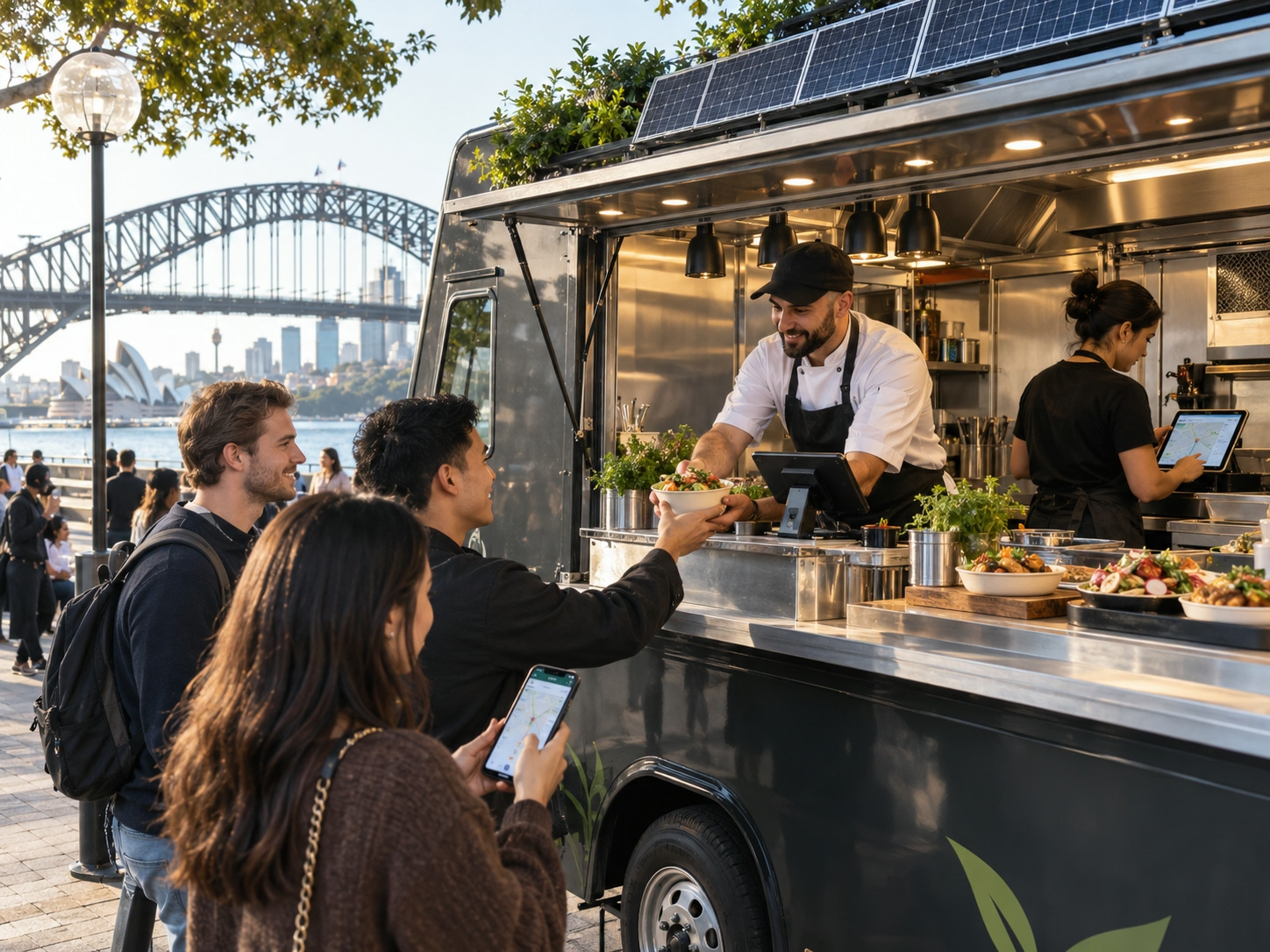
For many, the food truck is the final destination; for a select few, it is a high-leverage launchpad. In 2026, the Australian food industry is witnessing a wave of street food vendors transitioning from operating a single van to managing multi-million dollar food empires. The food truck has become the ultimate low-cost testing ground for restaurant concepts.
The Incubator Model
Investors and established hospitality groups are now viewing food trucks as “R&D labs.” Opening a traditional restaurant involves massive capital risk without proof of concept. A food truck allows a chef to refine their menu, build a brand identity, and accumulate a loyal customer base for a fraction of the cost. Brands like “Mr. Burger” in Melbourne and “Happy as Larry” pizza in Sydney have famously utilized this path, proving demand on the streets before opening physical locations.
This trajectory is becoming more structured. Restaurant groups are launching “ghost brands” on wheels, testing consumer response to specific cuisines in specific neighborhoods. If a truck performs well in a certain area for six months, the data supports opening a permanent venue nearby. This data-driven approach to expansion is reducing the failure rate of new Australian restaurants significantly.
Franchising the Dream
The next step in this evolution is franchising. Successful food truck operators are packaging their brand, recipes, and operational systems into franchise opportunities. This allows them to expand their footprint without the capital expenditure of buying a fleet of trucks themselves. For franchisees, it offers a lower-cost entry into the food business compared to a traditional fast-food franchise, with the added benefit of a proven concept.
Industry data suggests this is a growing segment. According to FranchiseED, mobile business opportunities are attracting a younger demographic of entrepreneurs who value flexibility and mobility over fixed-location businesses. The ability to move a franchise unit to follow demand—football games, festivals, beach crowds—is a unique selling point that traditional franchises cannot match.
Retail and Product Extension
Finally, the most successful food trucks are leveraging their brand equity to enter the retail grocery market. A truck famous for its signature sauce or spice blend can now be found on supermarket shelves. This transition from service to product manufacturing represents the pinnacle of scaling, turning a local street food favorite into a household name.