Public health education programs in Australia are created to improve community knowledge and encourage healthier choices. These programs help people understand the causes of illness, recognize early warning signs, and learn how to prevent avoidable health problems. Instead of relying only on hospitals and medical treatment, Australia uses education as a practical tool to support long-term wellbeing across the population.
A central theme of Australian health education is prevention. Many health problems can be reduced when people receive clear and reliable information early. Campaigns about nutrition, physical activity, smoking, alcohol, cancer screening, heart health, and diabetes prevention teach people how daily habits affect their future health. The goal is not to blame individuals, but to give them useful knowledge and connect them with supportive services.
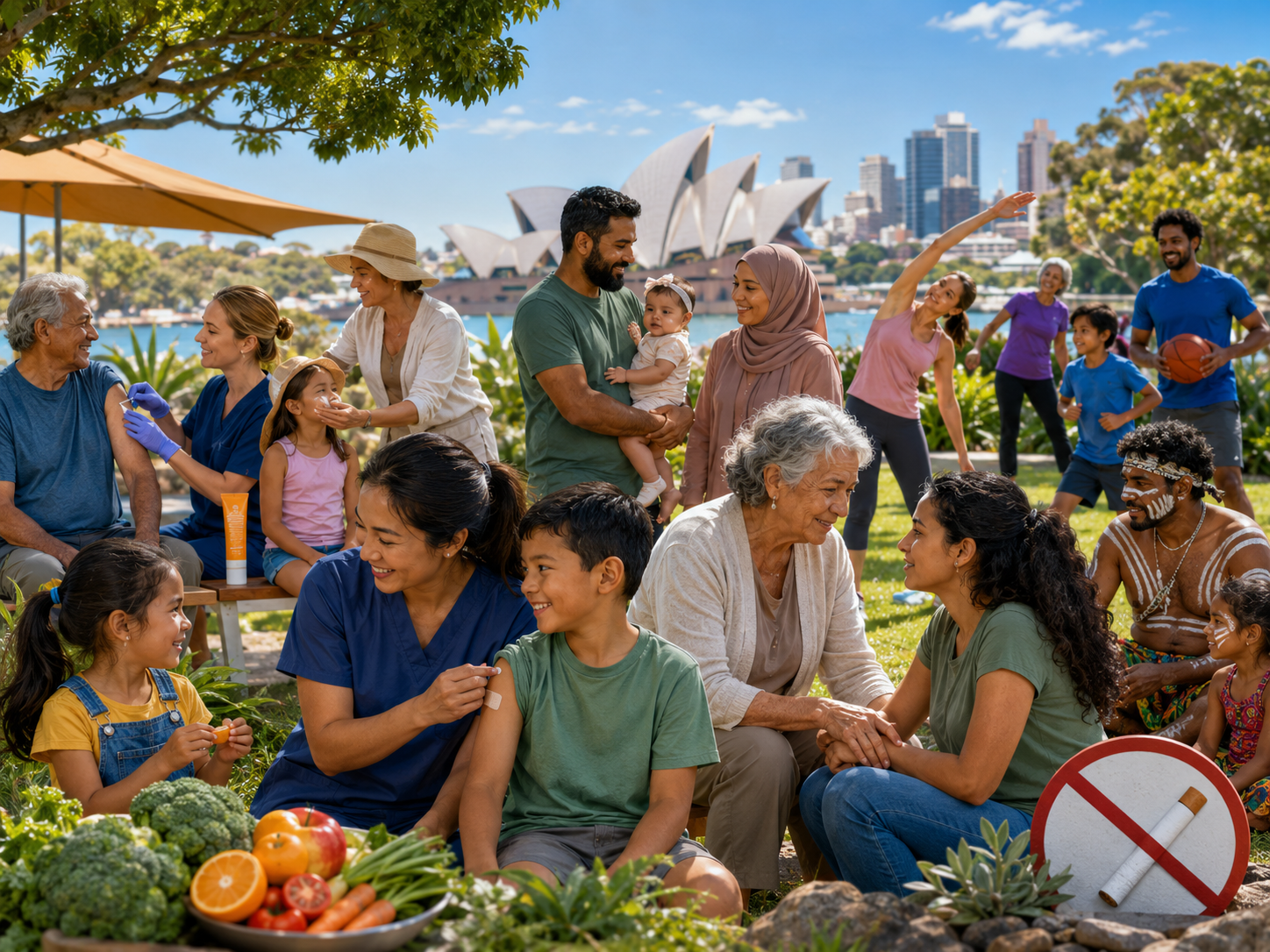
Tobacco-control education is one of the clearest examples. Anti-smoking programs explain the serious effects of cigarettes on the lungs, heart, blood vessels, and overall life expectancy. They also show how second-hand smoke can harm children, families, and people with existing health conditions. Services such as Quitline make the message stronger by offering practical help, advice, and encouragement for people who want to quit.
Sun safety education is also highly important in Australia. Because many Australians enjoy outdoor activities and the country receives strong ultraviolet radiation, public programs regularly remind people to protect their skin. SunSmart-style messages encourage sunscreen use, protective clothing, hats, sunglasses, and shade. These lessons are often taught from childhood so that sun protection becomes a normal part of daily life.
Vaccination awareness is another major area of public education. Immunisation programs help people understand how vaccines protect individuals and reduce the spread of infectious diseases. Educational materials are provided for parents, schools, healthcare workers, and community groups. When people understand vaccine benefits and safety, they are more likely to make informed decisions for themselves and their families.
Mental health education has become increasingly visible across Australia. Public campaigns now encourage open conversations about depression, anxiety, stress, grief, and suicide prevention. Services such as Beyond Blue, headspace, and Lifeline have helped people recognize that mental health support is available and that seeking help is a sign of strength. This kind of education is important because stigma can prevent people from speaking up.
Australia’s health education system also needs to serve a very diverse population. Many residents come from migrant and refugee backgrounds, while Aboriginal and Torres Strait Islander communities have distinct cultural identities and health experiences. Effective programs use respectful communication, translated materials, local partnerships, and community involvement. A message is more powerful when people feel that it understands their language, culture, and circumstances.
Schools, workplaces, and community organizations also play a strong role in spreading health knowledge. Students learn about hygiene, nutrition, exercise, emotional wellbeing, and safety. Employees may receive information about workplace injuries, mental health, healthy eating, and preventive checks. Local community centres can host workshops, screening events, and information sessions for families and older adults.
Digital tools have expanded the reach of health education. Websites, social media campaigns, online videos, and telehealth services allow people to access information quickly. However, reliable sources are essential because misinformation can create confusion. Clear communication from trusted health organizations helps the public separate evidence-based advice from misleading claims.
Public health education in Australia demonstrates that awareness can lead to better choices. When people receive accurate information in a format they can understand, they become more prepared to protect themselves and support others. Through prevention campaigns, inclusive communication, and accessible services, health education continues to strengthen public wellbeing across Australia.