The Death of the Generic Jersey
For decades, sports merchandise in Australia followed a predictable pattern: clubs released a home and away guernsey each season, fans bought them at the stadium or a local retailer, and the revenue was steady but uninspired. That model is now obsolete. The merchandise landscape in 2026 is defined by velocity, scarcity, and segmentation. Clubs are no longer selling uniforms; they are selling moments, and they are selling them to specific people at specific times.
The Limited Drop Model Arrives in Sport
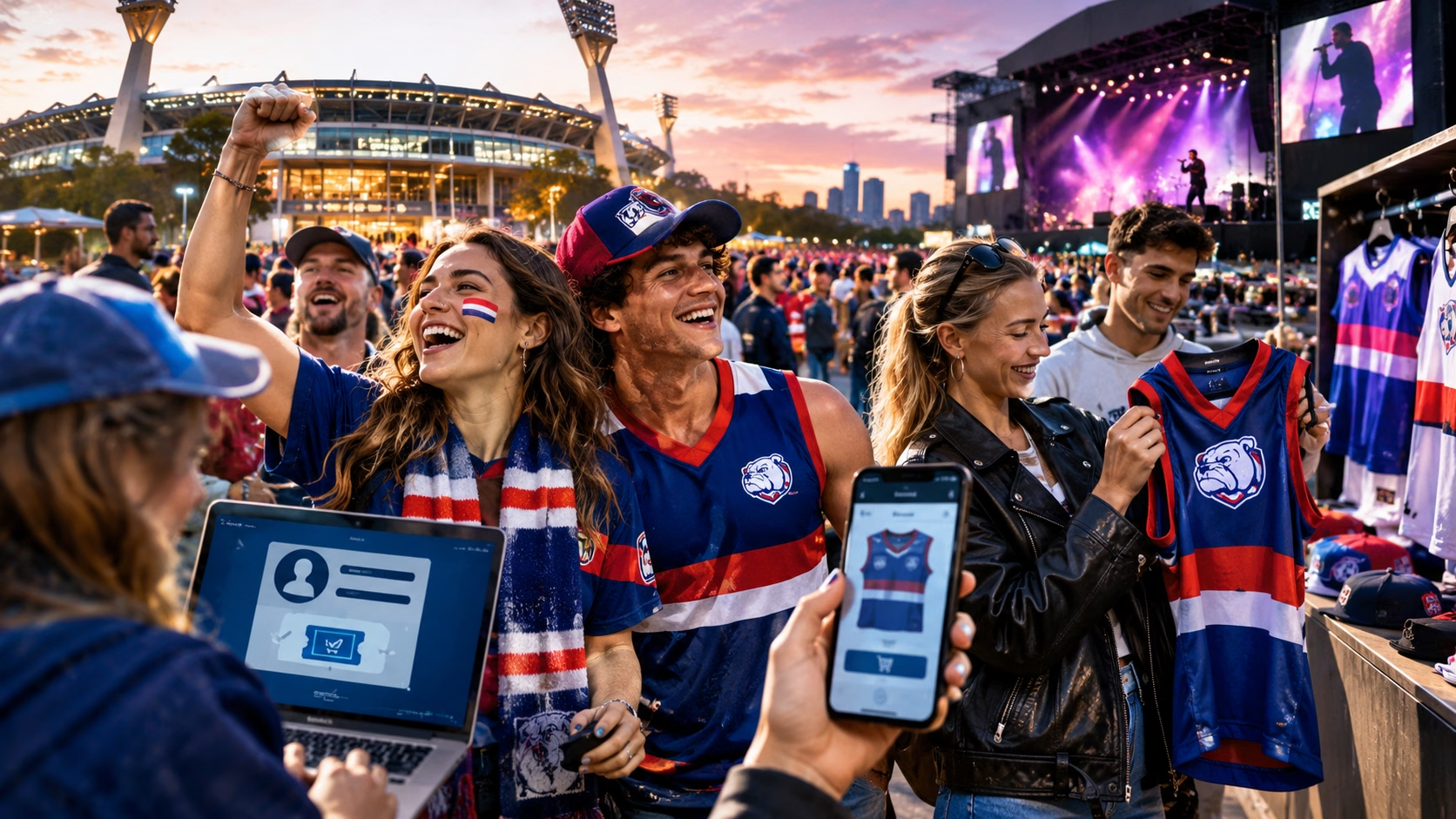
Borrowing from streetwear and sneaker culture, Australian clubs have embraced the “drop” model with enthusiasm. Collingwood, the AFL’s largest club by membership, has experimented with capsule collections released mid-season—a collaboration with a Melbourne-based designer, a heritage-inspired piece tied to a specific era, or a player-designed hoodie limited to 500 units. These items are announced on social media, sold through a dedicated drop portal, and often gone within hours. The strategy generates more than revenue; it generates conversation. A limited drop creates earned media, social sharing, and a sense of event that a standard retail restock never could.
Member-First, Public Second
The sequencing of merchandise releases has become a strategic lever. Adobe’s 2026 data showed that online traffic for football merchandise surged 53% during the finals period, but the most valuable traffic arrived in the first 24 hours of a drop—before the general public even knew it existed . Clubs are increasingly using their membership databases to create tiered access: platinum members get 48 hours, standard members get 24 hours, and the public gets what remains. This approach does two things simultaneously. It rewards the fans who have invested the most, and it creates a visible hierarchy of fandom that others aspire to join. The message is implicit but powerful: if you want the good stuff, you need to be a member.
Social Commerce and the Impulse Window
The infrastructure supporting Australian fan merchandise has also matured. Buy-now-pay-later services have become standard at checkout, with Afterpay’s 3.5 million active Australian users representing a significant share of the consumer base . Instagram and TikTok shopping features allow clubs to tag products in posts and stories, collapsing the distance between discovery and purchase to a single tap. The result is a dramatically shortened impulse window. A fan watching a Friday night game sees a player wearing a warm-up top, taps through to the club’s Instagram shop, and completes the purchase before the second quarter begins. The clubs that have integrated their social, e-commerce, and inventory systems to enable this flow are seeing conversion rates that would have been unimaginable a decade ago.
The Authenticity Premium
There is a countervailing force at work, however. As merchandise becomes more abundant and more aggressively marketed, fans are becoming more discerning about authenticity. The Australian Sports Commission’s data shows a slow but steady rise in merchandise participation, from 14% of Australians buying professional team gear in 2019/20 to 17% in 2024/25 . But within that growth, the mix is shifting. Generic, mass-produced items are losing ground to pieces that feel specific, limited, and connected to a story. A guernsey worn in a premiership-winning season, a collaboration with a local artist, or a piece designed by a beloved veteran player commands a premium because it carries meaning that a standard retail item cannot.
The Next Frontier
The next evolution in Australian fan merchandise is likely to be personalization at scale. Clubs are already experimenting with on-demand printing for names and numbers, and some are exploring augmented reality try-on features that allow fans to see how a piece fits before ordering. The underlying economic principle remains unchanged: fans will pay more for merchandise that feels like it was made for them, not just sold to them. The clubs that understand this will continue to grow their merchandise revenue without needing to convince fans to buy more—they will simply convince them to buy better.