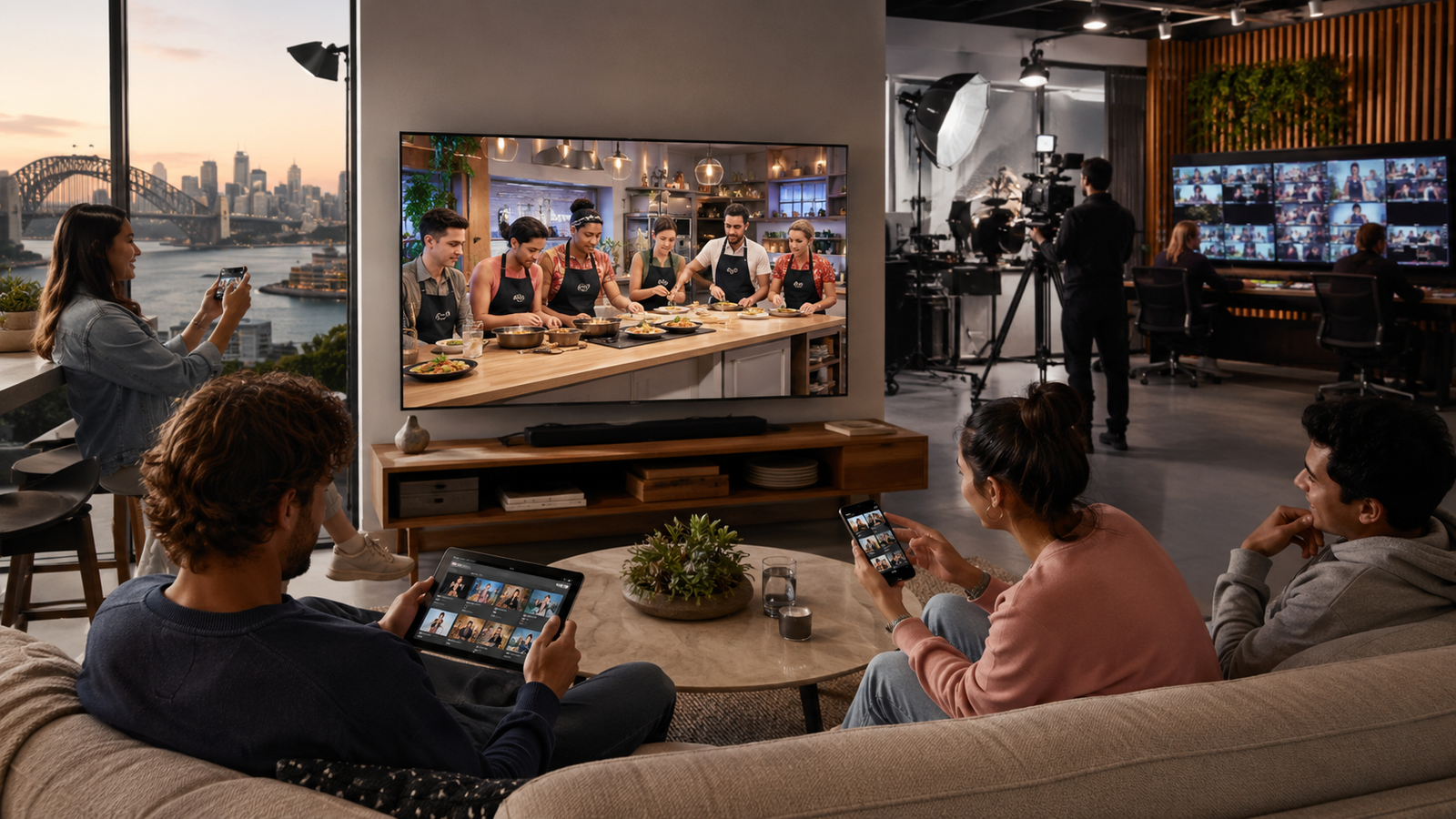
Australia’s television industry has entered a new era where reality programming has become one of the most influential forces shaping audience behavior, advertising strategies, and digital media development. From renovation competitions and cooking challenges to relationship-based entertainment, reality shows have evolved into cultural phenomena that extend beyond traditional television screens.
The growth of these programs reflects a wider transformation within Australia’s media environment, where broadcasters are adapting to competition from streaming platforms and changing viewer expectations. Reality television has become a strategic tool for networks seeking consistent audiences while creating content that can easily expand across digital platforms.
Reality Shows as Australia’s Most Effective Audience Engagement Strategy
Australian reality programs have developed strong connections with viewers because they focus on relatable human experiences. Unlike scripted dramas that require complex production processes, reality formats often highlight real personalities, emotional conflicts, competition, and unexpected outcomes.
Shows such as The Block, MasterChef Australia, and Married at First Sight Australia demonstrate how reality entertainment can dominate public discussions. These programs generate significant online conversations because audiences become emotionally invested in participants and frequently share opinions through social media.
The interactive nature of reality television has created a new relationship between producers and viewers. Audiences are no longer passive consumers; they influence popularity through online engagement, voting systems, reviews, and digital discussions.
Streaming Services Create New Opportunities for Australian Reality Content
The expansion of streaming services has provided additional platforms for Australian reality programs to reach wider audiences. While traditional broadcasters continue producing major reality shows, streaming companies increasingly invest in local productions to attract Australian subscribers.
According to the Australian Communications and Media Authority (ACMA), Australians continue to increase their use of online video services, creating significant pressure and opportunities for television providers.
Reference:
https://www.acma.gov.au/
This shift has encouraged television companies to rethink distribution strategies. Programs are now launched through multiple channels, including television broadcasts, streaming libraries, mobile applications, and social media platforms.
The Business Value Behind Unscripted Television Formats
Reality television has become attractive from a commercial perspective because of its flexibility and profitability. Production costs are generally more manageable compared with large-scale scripted dramas, while successful formats can generate long-term audience loyalty.
Advertising agencies also value reality programs because they often attract broad demographic groups. Lifestyle competitions, cooking shows, and social experiments provide opportunities for brands to integrate products naturally into entertainment content.
For example, renovation programs frequently collaborate with home improvement brands, while cooking competitions create partnerships with food and kitchen product companies. This relationship between entertainment and commercial strategy has strengthened the economic importance of reality television.
Digital Communities Are Extending the Life of Reality Programs
A major reason behind the continued success of Australian reality shows is their ability to exist beyond scheduled episodes. Television networks now use digital platforms to maintain audience interest through behind-the-scenes videos, interviews, short clips, and exclusive online content.
TikTok and YouTube have become especially valuable for reaching younger audiences who consume entertainment differently from traditional television viewers.
Reality television therefore functions as a complete digital ecosystem rather than a single broadcast product. Each episode creates opportunities for online conversations, viral moments, and additional content distribution.
The Future Direction of Australia’s Reality Television Market
The future of Australian reality television will likely depend on innovation in storytelling and technology integration. Producers are exploring new formats that combine traditional entertainment with interactive digital experiences.
As audiences continue moving between television, smartphones, and streaming platforms, successful programs will need to provide flexible viewing experiences while maintaining strong emotional connections.
Australia’s reality television industry demonstrates how unscripted entertainment has evolved from simple programming into a powerful engine for audience engagement, digital growth, and media transformation.