The glitz and glamour of the entertainment industry often mask an uncomfortable truth: fashion is one of the world’s most polluting industries. However, a significant shift is underway in Australia. The very celebrities and entertainers who benefit from the industry’s excess are now leveraging their platforms to demand accountability, championing a future where style does not come at the expense of the environment.
The Celebrity as Activist
Australian entertainers are uniquely positioned to influence the sustainability narrative. Figures like Cate Blanchett and various musicians have become vocal critics of “fast fashion” and advocates for circular fashion economies. The move towards sustainability is not just a moral stance; it is increasingly becoming a branding requirement. Modern fans expect their idols to be environmentally conscious, and a star who is seen in a “repeat outfit” is often celebrated rather than mocked—a cultural shift from previous decades.
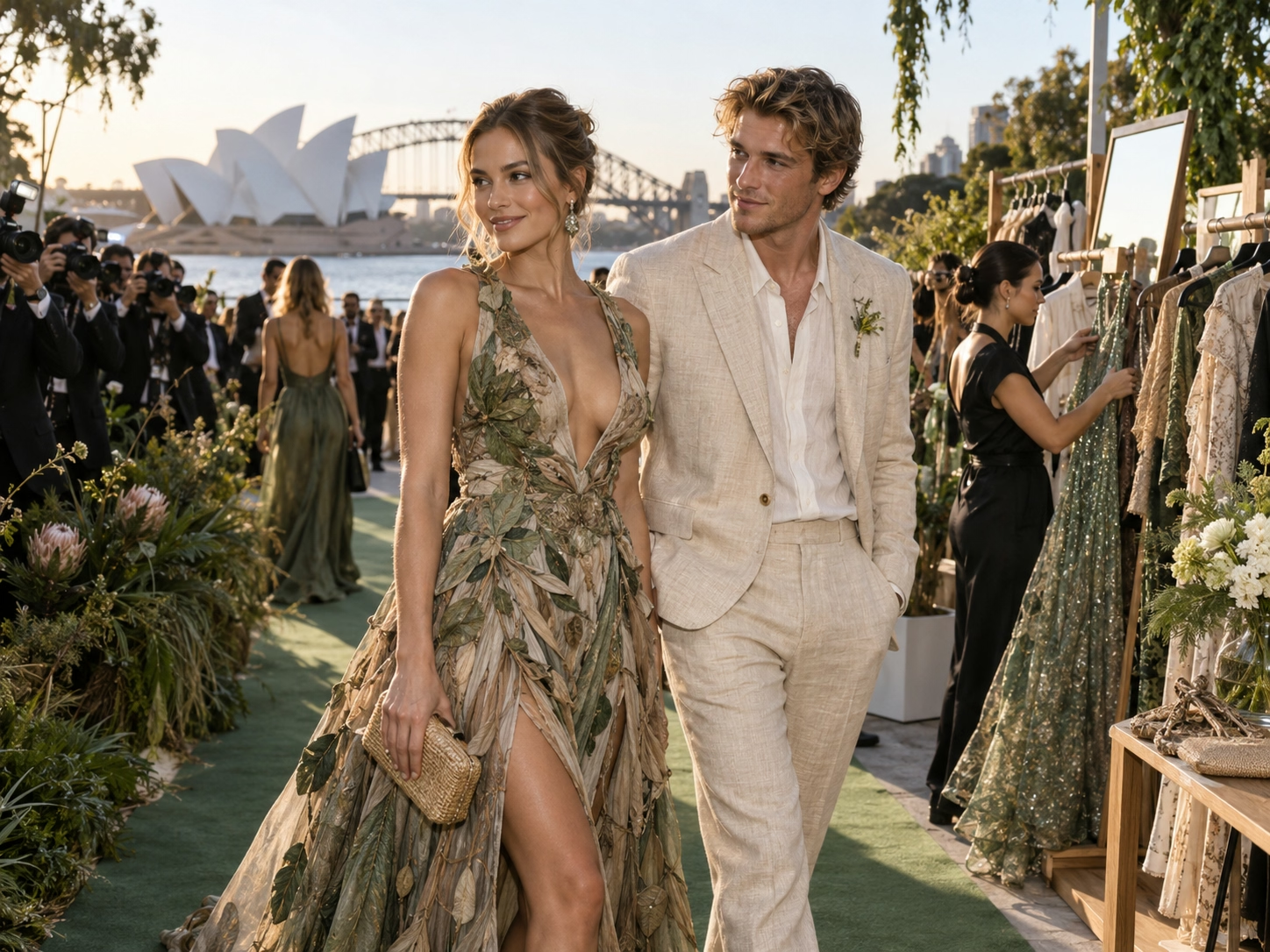
This has prompted a wave of innovation. Australian designers are now experimenting with regenerative agriculture for natural fibers, such as merino wool and organic cotton, and utilizing cutting-edge recycling technologies to turn textile waste into high-end couture. The highlight of this movement is often seen during major fashion weeks, where entire shows are dedicated to “slow fashion” principles.
The Economics of Eco-Luxury
The demand for sustainable fashion driven by the entertainment industry has created a new market segment: “Eco-Luxury.” This sector rejects the idea that sustainability means sacrificing aesthetics. Instead, it positions ethically sourced, durable garments as the highest form of luxury. The narrative pushed by celebrities is that buying one expensive, sustainable piece is superior to buying ten cheap, disposable ones.
This shift has significant economic implications. Australian wool growers and organic farmers are finding new premium markets because the entertainment industry has validated their products. A 2026 update from the Australian Fashion Council’s sustainability initiative highlights that brands with strong environmental credentials are outperforming their competitors in the export market. The “Australian Made” label is increasingly associated with ethical production, thanks in part to the endorsements of high-profile actors and musicians who insist on wearing local, sustainable brands.
The Challenge of Digital Consumption
However, the relationship between entertainment and sustainability is fraught with tension. The digital age demands content—constant novelty to feed algorithms and social media feeds. This “content hunger” directly contradicts the principles of slow fashion. An influencer cannot post the same outfit every day, yet they are expected to promote sustainability.
The solution emerging from the industry is the “rental revolution.” High-end rental platforms are booming, allowing celebrities and consumers alike to wear designer pieces for events without contributing to ownership waste. This model satisfies the need for visual variety in entertainment while dramatically reducing the carbon footprint of clothing.
The Australian entertainment industry is thus walking a tightrope, balancing the demand for fantasy and novelty with the urgent need for ecological responsibility. The message from the stars is clear: the most fashionable thing you can wear is a conscience, and the industry is finally beginning to dress the part.