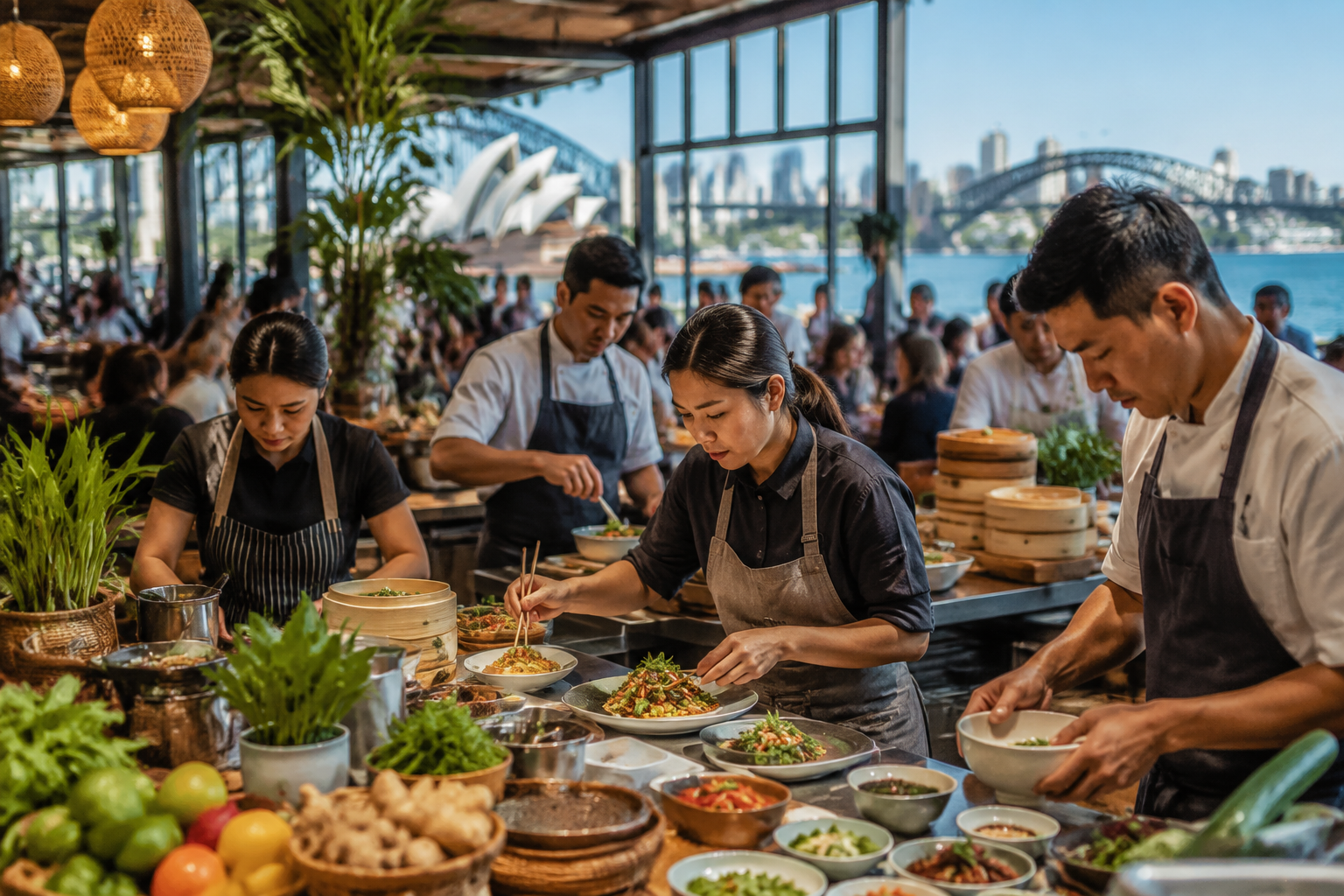
Australia’s restaurant industry has experienced a remarkable transformation as Asian migrant communities have introduced new culinary traditions, business models, and dining experiences. From family-owned restaurants in suburban neighborhoods to award-winning Asian fusion venues in major cities, migration has played a central role in expanding Australia’s food culture.
The influence of Asian communities is now deeply embedded in Australia’s hospitality sector. Asian cuisine has moved beyond being considered an alternative dining option and has become a fundamental part of everyday Australian eating habits.
Migration as a Driving Force Behind Australia’s Culinary Expansion
The arrival of migrants from Asia has significantly changed the availability and perception of international cuisine in Australia. Communities from China, Vietnam, India, Korea, Japan, Thailand, and Malaysia have established food businesses that preserve traditional recipes while adapting to local market demands.
During the second half of the 20th century, migration from Asian countries increased rapidly due to political changes, economic opportunities, and Australia’s evolving multicultural policies. Many migrants entered the hospitality sector because restaurants provided opportunities to build family businesses while maintaining cultural connections.
Chinese restaurants were among the earliest examples of migrant-owned food enterprises. Over time, Vietnamese pho restaurants, Japanese sushi bars, Korean barbecue venues, and Thai eateries became common features of Australian cities.
Asian Food Businesses Creating New Economic Opportunities
Asian migrants have contributed significantly to Australia’s small business landscape through restaurants, food markets, catering companies, and specialty grocery stores.
Many Asian food entrepreneurs started with small family operations before expanding into successful businesses. These establishments often become community meeting places where cultural traditions are maintained across generations.
A recent example is the growth of Korean cuisine in Australia. Korean barbecue, fried chicken, and fermented foods such as kimchi have gained popularity among younger Australian consumers. This trend has been supported by increased interest in Korean culture through entertainment, tourism, and social media.
According to Austrade, Australia’s food and agribusiness sector continues to benefit from growing demand for international flavors and premium food experiences. More information about Australia’s food industry development is available at: https://www.austrade.gov.au
How Asian Cuisine Changed Australian Consumer Habits
The impact of Asian migration can be seen in changing Australian eating patterns. Consumers today are more willing to explore unfamiliar ingredients, cooking methods, and cultural food traditions.
Foods that were once considered niche have become everyday choices. Sushi is now a common lunch option, Vietnamese banh mi is widely available in urban areas, and Asian supermarkets have become popular destinations for both migrant communities and Australian households.
The expansion of food delivery services has further accelerated this trend. Platforms such as Uber Eats and DoorDash have made Asian cuisine accessible beyond traditional restaurant districts, allowing smaller migrant-owned businesses to reach wider audiences.
The Rise of Authenticity and Cultural Storytelling
Modern Australian diners increasingly value authenticity and the stories behind food. Many restaurants highlight family recipes, regional cooking methods, and cultural heritage as part of their brand identity.
For migrant communities, restaurants serve a purpose beyond selling meals. They provide a way to maintain cultural traditions and introduce Australian society to different histories.
A Vietnamese restaurant may represent the journey of refugees rebuilding their lives, while a Chinese family restaurant may reflect generations of adaptation within Australia. These personal stories add emotional value to the dining experience.
Asian Influence and the Future of Australian Food Culture
The continued growth of Asian migration suggests that Australia’s food identity will become even more diverse in the future. Younger generations of migrant families are combining traditional knowledge with modern culinary creativity.
Many second-generation Asian Australian chefs are creating innovative menus that connect their heritage with contemporary Australian ingredients. This represents a new stage of culinary development where migration is not only preserving traditions but also creating new food movements.
Asian migration has fundamentally reshaped Australia’s restaurant industry by introducing diverse flavors, supporting entrepreneurship, and changing how Australians understand food. The country’s dining culture today reflects a combination of migration history, cultural exchange, and constant culinary innovation.